






Glass Hanging Bowl
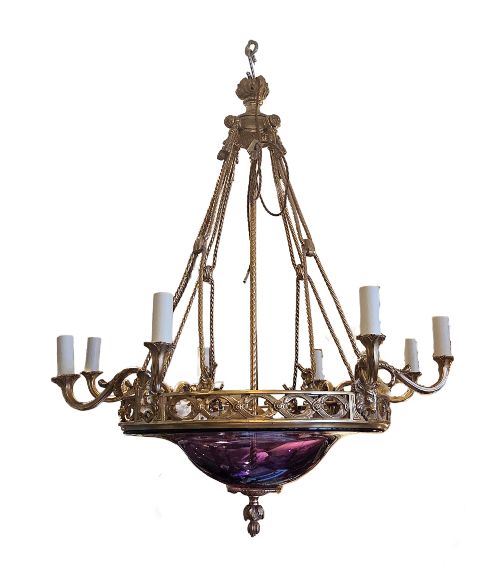
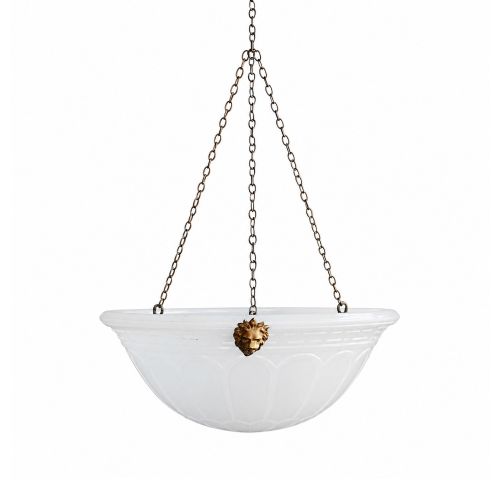
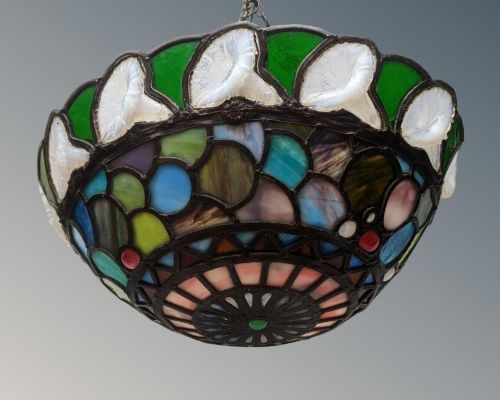
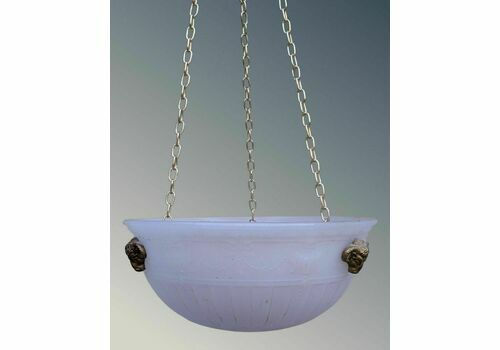
These glass hanging bowl designs catch the eye instantly and distribute a warm, ambient spread of light across a room.
Glass Hanging Bowl
A glass hanging bowl suspends by chains or a ceiling fixture, serving as a primary light source in domestic spaces. These pieces emerge in styles ranging from Victorian and Edwardian to Art Deco and Arts and Crafts, spanning the nineteenth century into the nineteen-thirties.
The selections on this page feature bowls formed from crystal, moonstone glass, frosted glass, and cut glass, often paired with metal mountings. Forms include pendant lights, ceiling lights, and plafonniers, reflecting both British and international workshops of the past.
Materials and construction
Makers shaped the bowls using traditional glassblowing and pressing techniques, frequently employing moulds to achieve deep relief or smooth curves. Crystal and moonstone glass provide distinct optical qualities, diffusing illumination softly or refracting it sharply through faceted surfaces.
The glass bodies integrate with metal components such as brass, bronze, and silver-plated mounts. Structural elements often incorporate decorative motifs like rams heads or neoclassical painted details, securing the bowl safely to ceiling suspensions.
Glass Hanging Bowl Retail Price Guide 2026
Typical asking prices for glass hanging bowl among the pieces listed under this phrase on Sellingantiques today, from the lower quarter to the upper quarter. They describe what is for sale here now, not the wider market.
Some Edwardian bowls feature cast brass rams heads peering out from the suspension mounts, keeping a watchful eye on the room below.
Assessing quality and execution
Quality rests upon the clarity and weight of the glass, alongside the precision of any hand-cut facets or enamel painting. Finer examples display crisp moulding lines and substantial metalwork that holds the suspension straight and true.
The artistry of the metal mounts and the harmony between the glass bowl and its suspension frame distinguish standard production items from superior works. Attention to detail in the casting of bronze or brass hardware signals higher workshop standards.
The Glass Hanging Bowl Glossary
- Plafonnier
- A ceiling-mounted bowl light that sits close to the ceiling rather than hanging on long drops. These fixtures direct illumination upwards and outwards.
- Moonstone glass
- An opaque, milky glass type that diffuses light evenly without harsh glares. It creates a soft, luminous glow reminiscent of moonlit quartz.
- Cut glass
- Glass decorated by grinding and polishing facets onto the surface to catch and refract light. This technique requires considerable skill to achieve symmetrical patterns.
- Pendant light
- A single light fixture suspended from the ceiling by a cord, chain, or metal rod. It positions the bowl at a chosen height within the room.
Glass Hanging Bowl: Frequently Asked Questions
What rooms suit a ceiling bowl light?
Pendant bowls work well in hallways, dining rooms, and living spaces where ambient downward illumination creates a welcoming atmosphere. Their low profile makes them practical for rooms with standard ceiling heights.
Matching the style of the bowl to the surrounding interior helps integrate the piece naturally into the space.
How do I clean an antique glass bowl?
Remove the bowl from its suspension if possible, and wash it gently in lukewarm water with mild soap. Avoid abrasive cloths that might scratch softer glass types or damage painted enamel details.
Metal mounts should be dusted dry or cleaned with appropriate metal care products, keeping moisture away from antique wiring and patinated surfaces.
How do I date an old glass bowl?
Dating relies on identifying stylistic markers such as neoclassical motifs, Edwardian cut patterns, or Art Deco geometric lines. The nature of the metalwork, including the type of brass or bronze used, also points to specific manufacturing eras.
Examining the manufacturing techniques and screw threads can reveal whether a piece originates from the nineteenth century or the nineteen-twenties.