



Glass Globe Desk Lamp
A glass globe desk lamp brings warm, sculptural illumination to a workspace, drawing together polished metals and glowing glass shades.
Glass Globe Desk Lamp
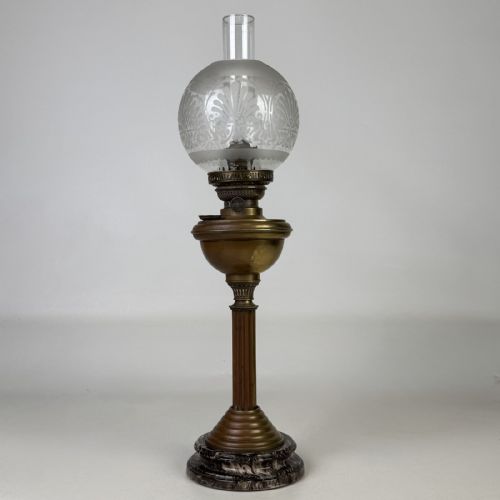
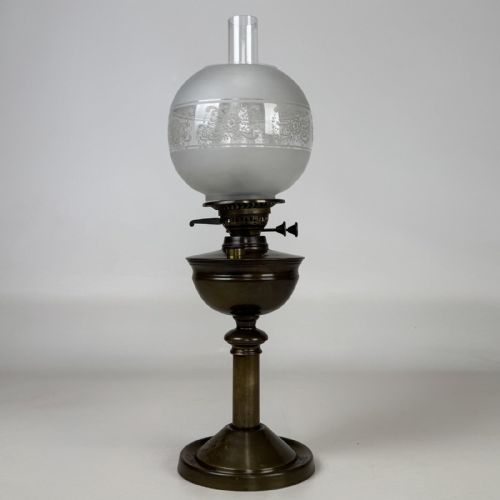
When you search for a glass globe desk lamp, you encounter a selection spanning the Victorian, Edwardian, and Art Deco periods, alongside nineteenth-century examples. These pieces merge functional task lighting with decorative figural and geometric forms, often integrating globe-like shades of frosted or opaline glass.
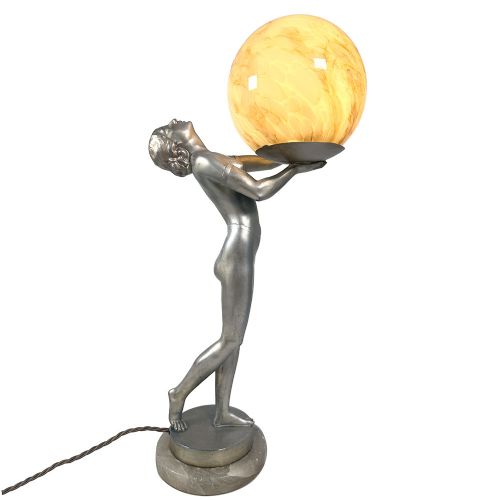
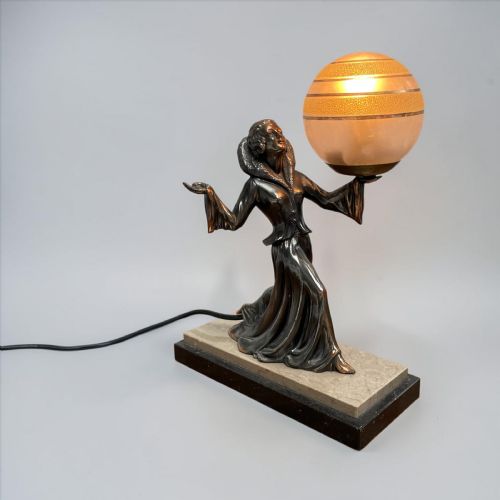
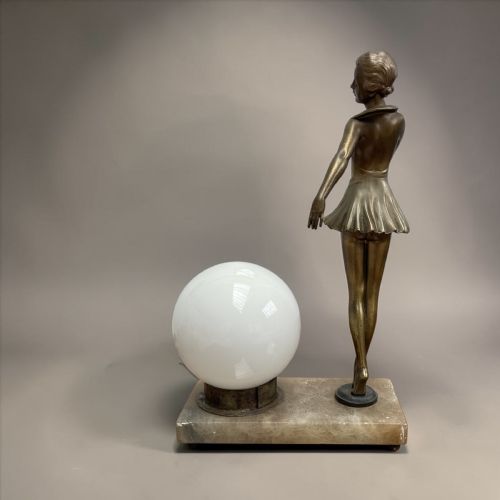
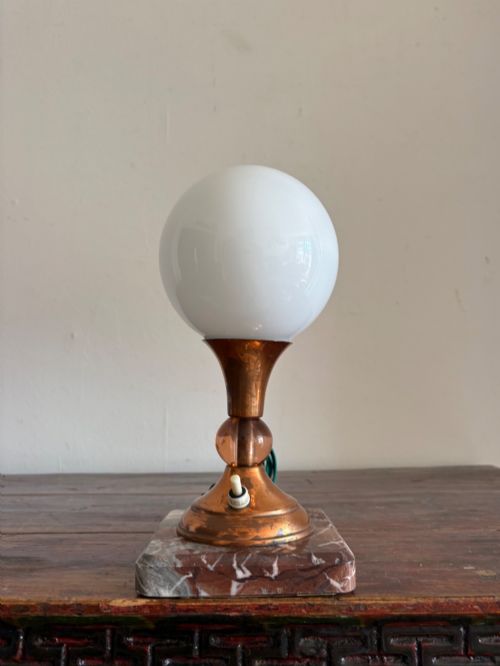
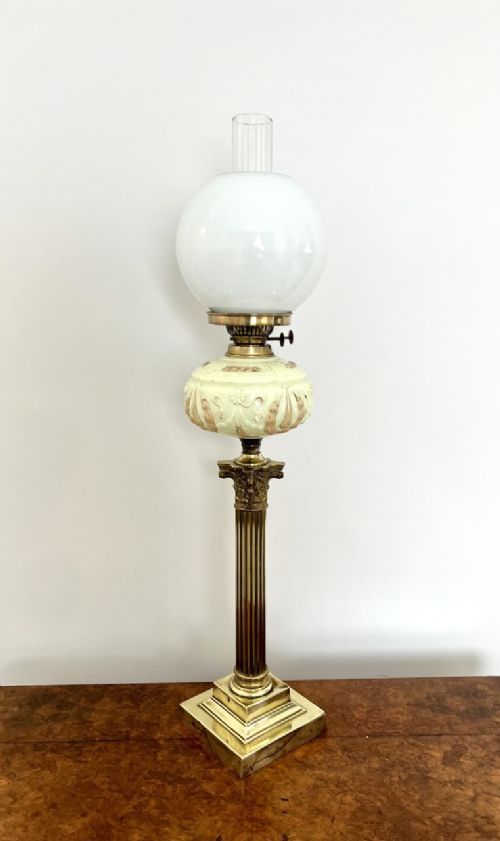
The most frequent iteration on this page is the Art Deco table lamp from the nineteen-thirties, frequently featuring metal figures or marble bases paired with spherical or hemispherical shades. Alongside these, converted oil lamps from the Victorian and Edwardian eras demonstrate an earlier approach to desktop and table illumination.
Origins stretch from English workshops to French foundries, encompassing diverse materials such as spelter, bronze, brass, and chrome. The overarching form remains consistent in its focus on a central luminous globe supported by sculptural or architectural bases.
Materials and construction
Makers constructed bases from heavy materials including marble, onyx, granite, and cast metals like spelter, bronze, brass, and chrome to anchor the elevated weight of the glass shades. Early examples relied on turned brass and heavy bronze, whereas nineteen-thirties pieces introduced modern plastics such as bakelite and catalin alongside chromium plating.
Shades utilise specialist glass techniques, predominantly opaline or frosted finishes, designed to diffuse the light source evenly across a desk or table. Metal components are cast, chased, and mounted to stone plinths, while older oil lamps incorporate structural brass burners and collars designed to hold the glass securely.
Glass Globe Desk Lamp Retail Price Guide 2026
Typical asking prices for glass globe desk lamp among the pieces listed under this phrase on Sellingantiques today, from the lower quarter to the upper quarter. They describe what is for sale here now, not the wider market.
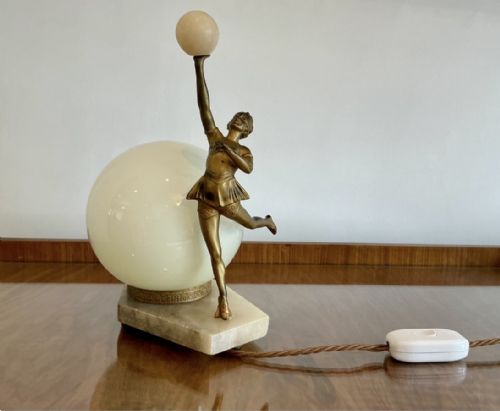
Several nineteen-thirties night lights feature athletic figures and domestic animals, including greyhounds and Alsatians, keeping watch beside the glowing globe.
Distinctions in craftsmanship
Quality rests in the fidelity and weight of the casting, particularly in figural subjects where fine anatomical detail and crisp surface chasing distinguish superior work from mass production. The integration between the heavy stone base and the metal superstructure indicates the original manufacturing ambition.
The nature of the glass shade dictates visual success, with thick opaline and heavily frosted globes offering superior light diffusion compared to simpler alternatives. Cohesion between period materials, such as genuine marble bases paired with matching chrome or bronze fittings, defines the more successful survivals.
Gaggenau
The Glass Globe Desk Lamp Glossary
- Opaline glass
- A type of semi-translucent white glass that diffuses light softly. It became popular for nineteenth-century oil lamp shades and twentieth-century lighting.
- Spelter
- A zinc alloy commonly used as a cost-effective substitute for bronze in decorative figures. It is frequently painted or electroplated to resemble more expensive metals.
- Bakelite
- An early thermosetting plastic utilised in twentieth-century electrical fittings and lamp bases. Its dense composition allows for rich colours and smooth moulding.
- Faience
- Tin-glazed earthenware used for decorative pottery bases. It provides a ceramic canvas for intricate enamelling and colour.
Glass Globe Desk Lamp: Frequently Asked Questions
How do I distinguish an Art Deco lamp from a Victorian one?
Art Deco lamps typically feature geometric lines, bakelite or chrome elements, and stylised figural representations from the nineteen-twenties and thirties. In contrast, Victorian examples rely on traditional brass casting, floral motifs, and proportions derived from nineteenth-century oil lamps.
Examining the base materials and switch mechanisms helps clarify the manufacturing era. Earlier pieces often show the threaded collars and wick housings typical of converted oil burners.
What is an opaline glass shade?
Opaline glass is a milky, semi-translucent material formulated to soften and scatter light without creating harsh glare. It was widely utilised across the nineteenth and early twentieth centuries for task and ambient lighting.
This glass type appears frequently on both converted oil lamps and twentieth-century desk pieces. Its density varies, giving different qualities of illumination.
Are these lamps converted from oil lamps?
Several pieces originate as nineteenth-century or Edwardian oil lamps that have been subsequently adapted for electrical use. This conversion process typically involves wiring a lamp holder through the existing burner assembly.
Such pieces retain their original brass or bronze reservoirs and heavy cast bases. The adaptation allows period lighting to function within modern interiors.
How should I clean a vintage metal and glass lamp?
Glass shades benefit from gentle washing in warm, soapy water to remove dust without harming frosted surfaces. Metal and stone bases require dry dusting and careful avoidance of harsh chemical polishes that might strip patination.
Particular care is needed around patinated spelter or bronze finishes to preserve the original surface texture. Ensuring the lamp is unplugged before cleaning is essential.