


Glass Cage Chandelier
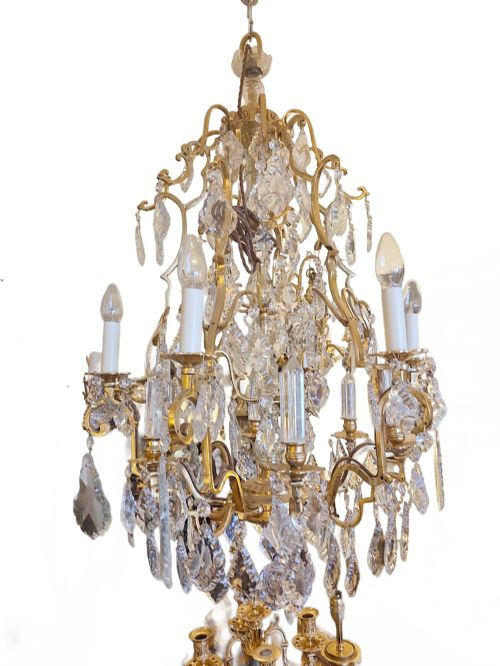
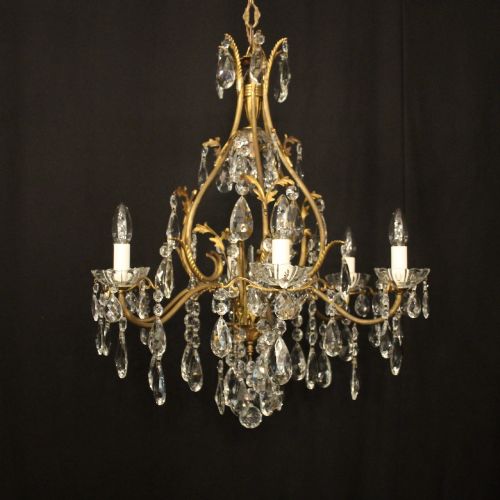
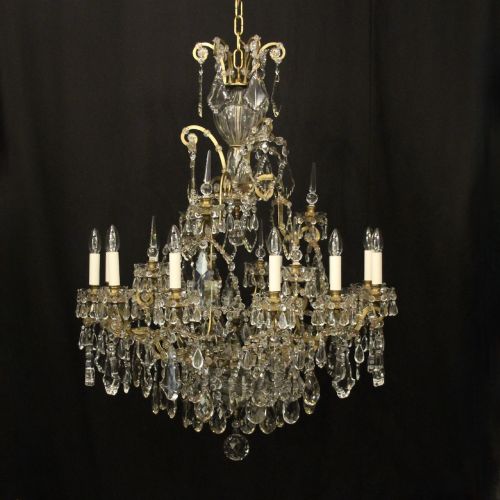
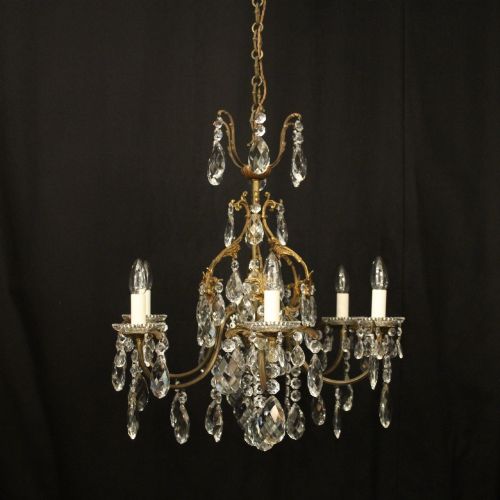
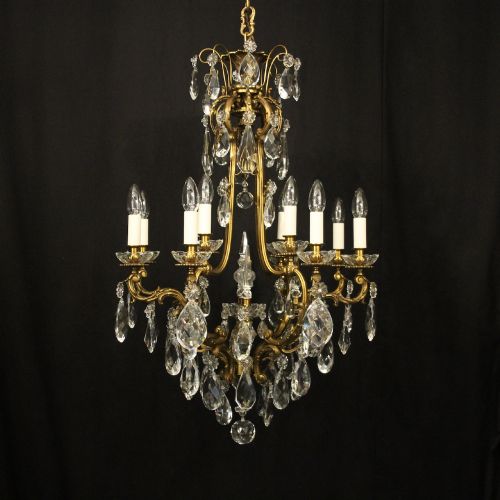
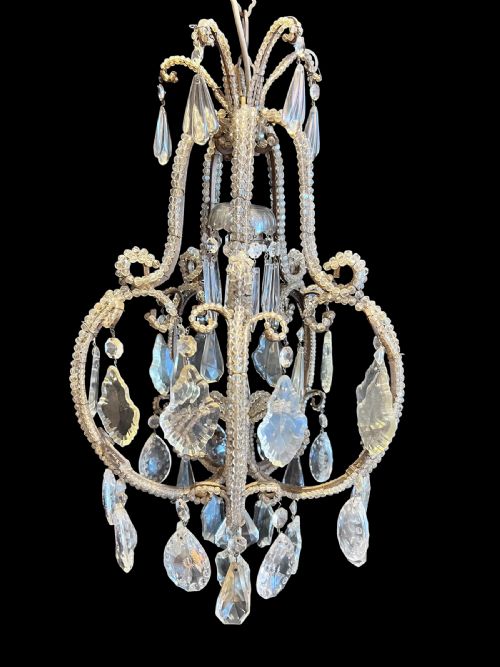
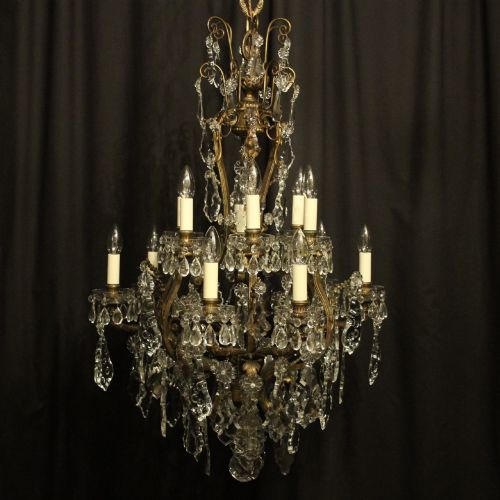
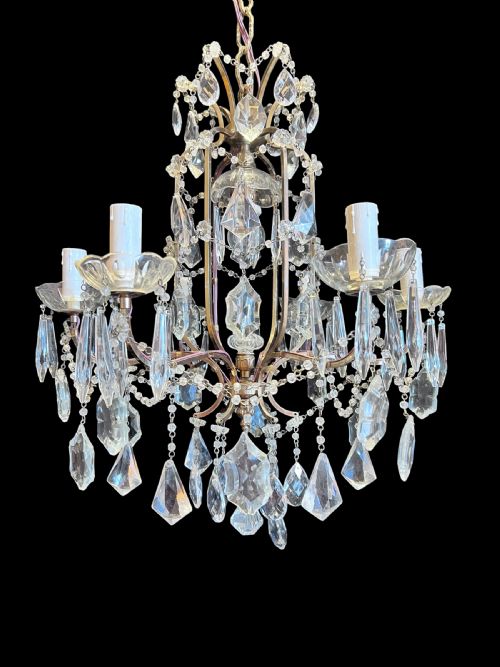
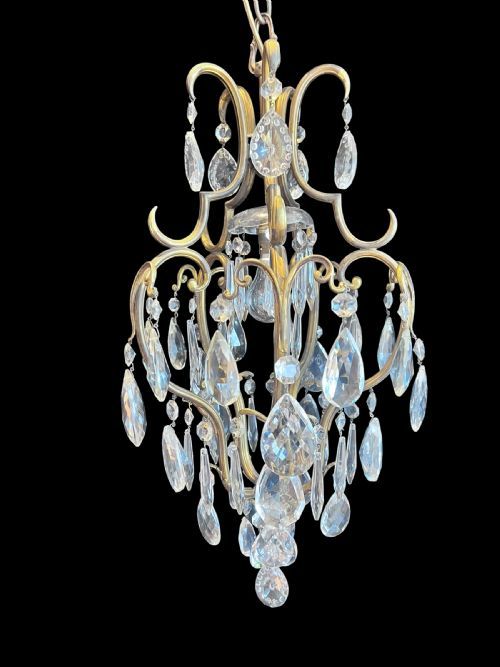
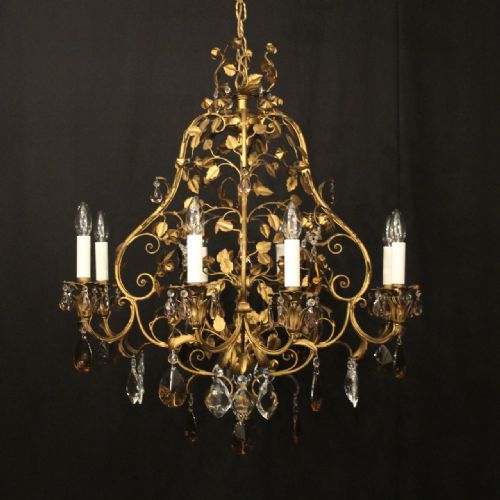
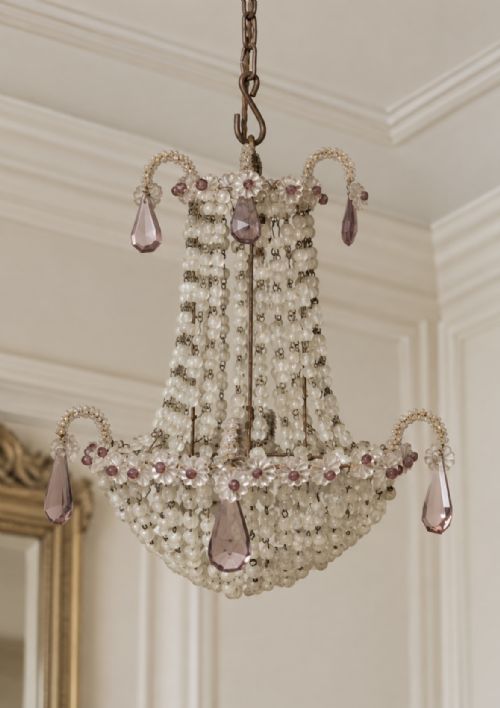
A glass cage chandelier brings exceptional crystal brilliance and structured form to a room, offering a dramatic focal point derived from classic French and Italian designs.
How they were made
Maker's workshops constructed the foundational frames using cast and forged metals including brass, bronze, dark brass, gilt metal, toleware, and iron. Many of these metal armatures received gold or silver gilding to enhance reflection from surrounding illumination.
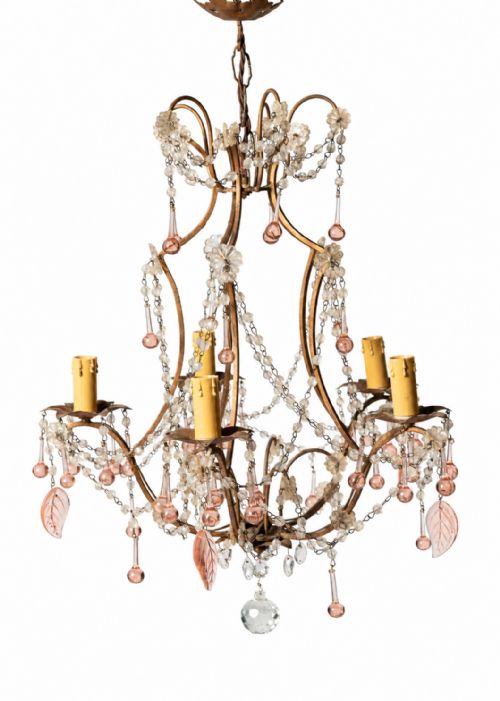
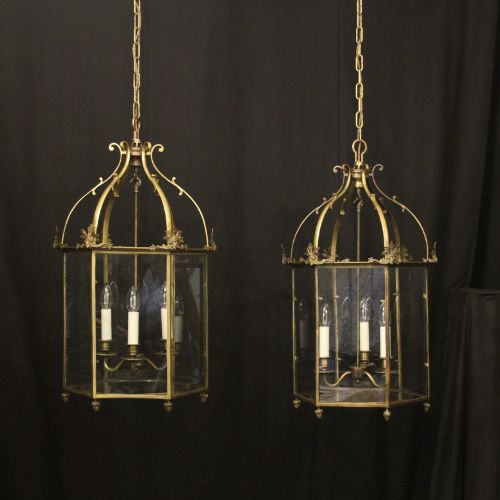
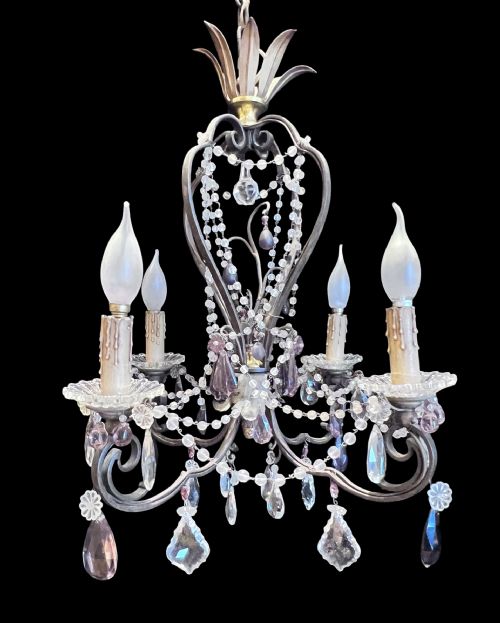
Artisans wired or pinned cut glass, crystal drops, beads, prisms, and coloured fruits to the metal cages, sometimes incorporating bevelled glass panels into enclosed hall lantern formats.
What varies in quality
Quality rests upon the crispness of the metal casting and the density of the crystal elements. Finer examples display intricately chased bronze frames, substantial cut glass drops with sharp facets, and harmonious proportions across every arm and tier.
The integrity of the original assembly and the richness of the gilding separate standard production pieces from exceptional ones. Heavier gauge brass and bronze frames support dense arrangements of crystal without sagging or misaligning.
Glass Cage Chandelier Retail Price Guide 2026
Typical asking prices for glass cage chandelier among the pieces listed under this phrase on Sellingantiques today, from the lower quarter to the upper quarter. They describe what is for sale here now, not the wider market.
Some early twentieth-century examples come adorned with hanging coloured fruits nestled amongst the crystal prisms.
La Mason Bagues
The Glass Cage Chandelier Glossary
- Cage chandelier
- A style of lighting fixture featuring a metal skeleton draped entirely in crystal drops, beads, and chains that obscure the central frame.
- Cut glass
- Glass shaped by grinding and polishing facets onto the surface to refract light into multiple prismatic colours. This technique appears extensively across drops and pendants.
- Gilded bronze
- Bronze metal treated with a thin layer of gold leaf or gold paint applied to the surface. It provides a durable, lustrous finish that resists tarnishing.
- Hall lantern
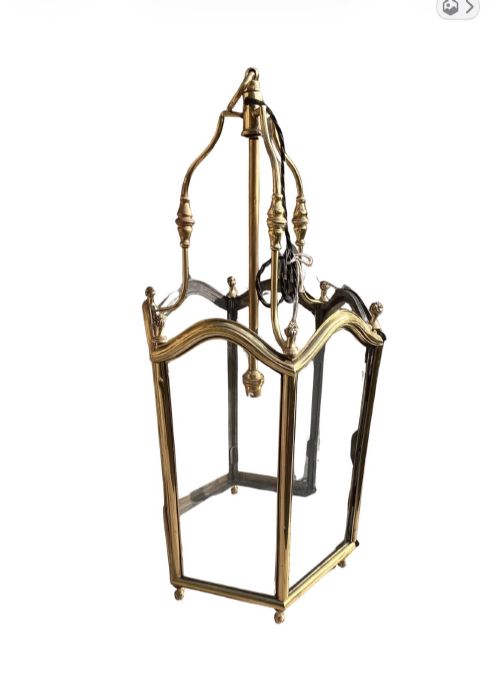
- A ceiling-mounted lighting fixture enclosed in glass panels, historically designed to illuminate narrow entranceways and corridors.
- Prism
- A geometric piece of cut glass or crystal designed to refract and disperse light. Prisms hang from the arms and tiers to intensify illumination.
Glass Cage Chandelier: Frequently Asked Questions
How do I hang a cage chandelier?
These fixtures suspend from ceilings using chains and ceiling roses connected to reinforced electrical boxes. Professional installation is essential due to the combined weight of the metal frame and glass components.
Ensure the hanging height suits the room proportions and clearance requirements for walking underneath safely.
What periods do these chandeliers cover?
The available pieces predominantly date from the Victorian and Edwardian eras through to the 1920s and 1930s. Construction styles reflect nineteenth-century revival aesthetics alongside early twentieth-century French and Italian craftsmanship.
Stylistic cues like gilt bronze casting and cut glass configurations help distinguish the specific decades.
How should I clean crystal fixtures?
Maintenance involves gentle cleaning of individual glass drops and metal frameworks using specialised glass cleaner and a soft lint-free cloth. Spraying solutions directly onto the fixture should be avoided to protect the internal wiring and metal finishes.
Regular dusting preserves the refractive quality of the cut glass and crystal prisms.
Where do these chandeliers originate?
The listings feature significant design influences from France and Italy, encompassing regional traditions such as Florentine, Venetian, and French Rococo. These pieces reflect historical styles including Chateau and Classical design motifs.
Workshops in these regions utilised local brass, bronze, and crystal to build distinct hanging lanterns and multi-arm chandeliers.