



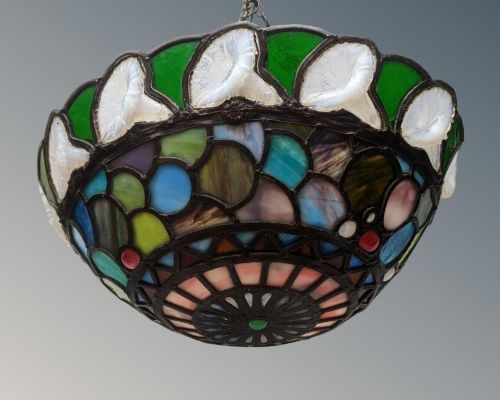


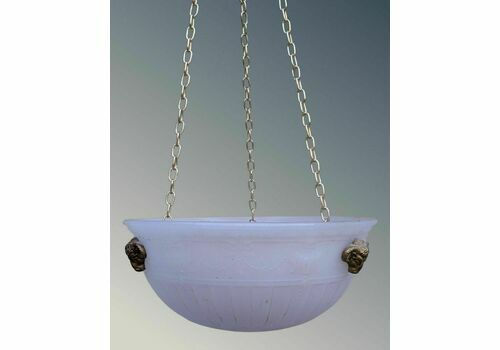

Glass Bowl Ceiling Pendant
A glass bowl ceiling pendant provides direct, diffuse illumination while hanging close to the room, drawing the eye upward with period charm.
Glass Bowl Ceiling Pendant
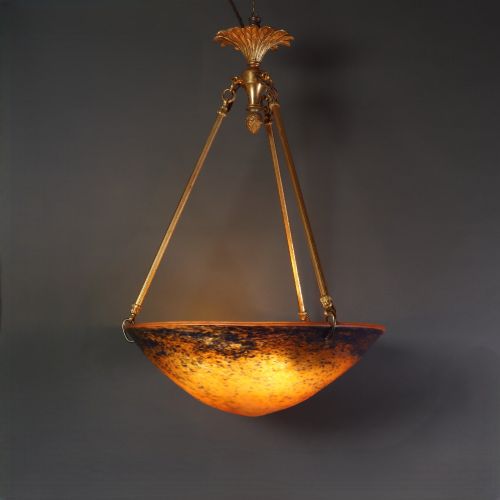
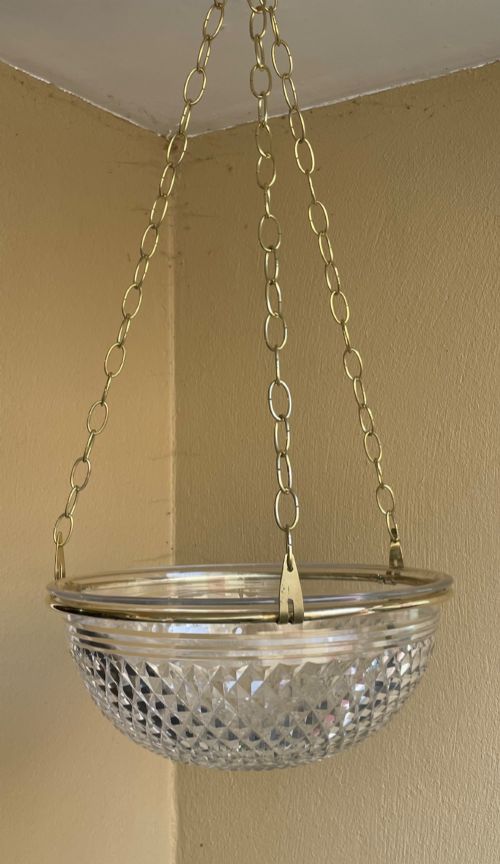
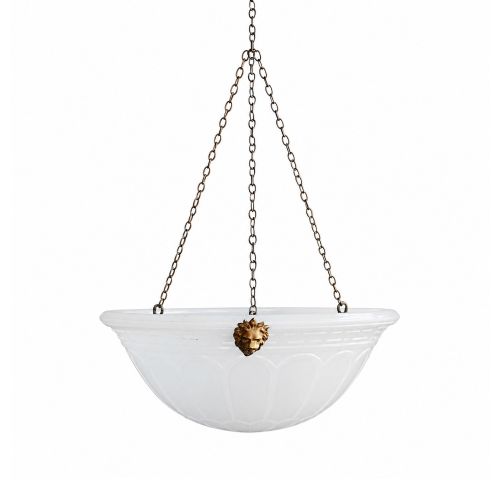
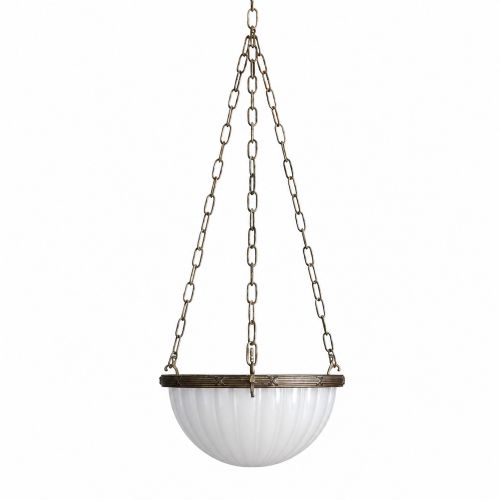
A glass bowl ceiling pendant takes many forms across the Victorian, Edwardian, and Art Deco periods, ranging from simple dish lights to elaborate plafonniers. These hanging fixtures distribute light evenly across a space through suspended glass bowls secured by metal mounts or chains.
The selections available run from early nineteenth century examples to nineteen thirties opalescent designs. Buyers often encounter Edwardian cut glass dishes alongside nineteen twenties moonstone glass and geometric Art Deco shades.
Makers utilised various hanging methods, from brass chains to bronze fittings, positioning the glass bowl securely beneath the ceiling rose. Each period brings distinct styling, whether neoclassical painted glass or heavy Arts and Crafts crystal bowls.
Materials and construction methods
Craftsmen shaped these pendants using blown, moulded, or cut glass combined with structural metalwork such as brass, bronze, and silver plating. The glass bowls feature surface treatments including frosting, opalescence, enamelling, and deep cutting to manipulate the light.
Metal mounts, chains, and rams head fixtures support the heavy glass bowls securely from above. Joinery relies on fitted brass galleries, bolted struts, and suspended cord sets that integrate the electrical or historical gas fittings.
Glass Bowl Ceiling Pendant Retail Price Guide 2026
Typical asking prices for glass bowl ceiling pendant among the pieces listed under this phrase on Sellingantiques today, from the lower quarter to the upper quarter. They describe what is for sale here now, not the wider market.
Listings feature glass bowl ceiling pendants spanning from the mid nineteenth century through to the nineteen thirties, encompassing Edwardian, Art Deco, and Arts and Crafts movements.
Distinctions in quality and finish
Quality depends heavily on the depth and crispness of the glass cutting, the weight of the crystal or opalescent material, and the integrity of the metal mounts. Finer pieces display hand-cut facets that catch the light sharply, whereas standard production relies on smoother, moulded surfaces.
The proportion between the glass bowl and its metal suspension hardware dictates the aesthetic success of the fixture. Heavy cast bronze or silver-plated frames with intricate detailing elevate a pendant above simpler brass and wire suspensions.
Verrerie Des Vosge·Jefferson
The Glass Bowl Ceiling Pendant Glossary
- Plafonnier
- A ceiling-mounted or tightly suspended bowl light that directs illumination downward into a room. This French term appears frequently across early twentieth century listings.
- Moonstone Glass
- A milky, translucent white glass that produces a soft, glowing diffusion of light. It gained popularity during the nineteen twenties for its atmospheric qualities.
- Opalescent Glass
- Glass containing mineral additives that create a milky appearance with milky-blue or fire-like highlights when lit. It is a signature material of Art Deco design.
- Cut Glass
- Glass decorated by grinding facets and patterns into the surface using a rotating wheel. This technique maximises sparkle and refraction in Edwardian and Victorian fixtures.
- Suspension
- The metal chains, rods, or cords that hold the glass bowl at the correct height from the ceiling. It includes structural galleries and canopies.
Glass Bowl Ceiling Pendant: Frequently Asked Questions
How do I hang a heavy glass bowl pendant?
These fixtures require secure anchoring directly into ceiling joists or robust plaster using appropriate hooks and mounting plates. The weight of the glass bowl and metal hardware demands professional wiring and structural support.
Once secured, the hanging height is adjusted via the suspension chains or rods to suit the room dimensions and ceiling clearance.
What rooms suit a glass bowl ceiling pendant?
Pendant bowls work well in hallways, dining rooms, and bedrooms where ambient, downward illumination creates a welcoming atmosphere. Their low profile makes them suitable for rooms with standard ceiling heights.
Larger variations provide sufficient spread for living spaces, while smaller dish lights fit narrower corridors and landings.
How do I identify an Art Deco glass pendant?
Art Deco pendants feature geometric motifs, stylised patterns, and opalescent or frosted glass bowls. The metalwork often exhibits clean, streamlined shapes characteristic of the nineteen thirties.
These pieces contrast with the ornate brass castings and deep cut crystal typical of earlier Victorian and Edwardian examples.
Are these pendants suitable for modern wiring?
Most antique and vintage pendants can accommodate modern electrical components while retaining their original brass or bronze fittings. Rewiring ensures safety and compliance with current electrical standards.
Qualified electricians can easily adapt historical suspensions to accept standard contemporary bulbs.