

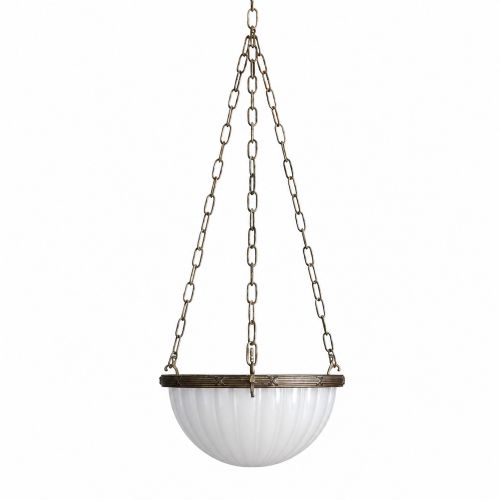


Glass Bowl Ceiling Lamp
A glass bowl ceiling lamp brings direct, diffused overhead illumination to a room, drawing the eye upwards through its form and material.
Glass Bowl Ceiling Lamp
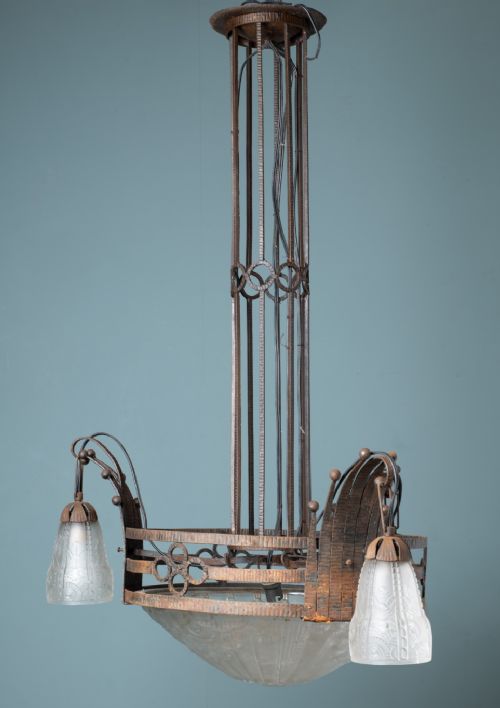
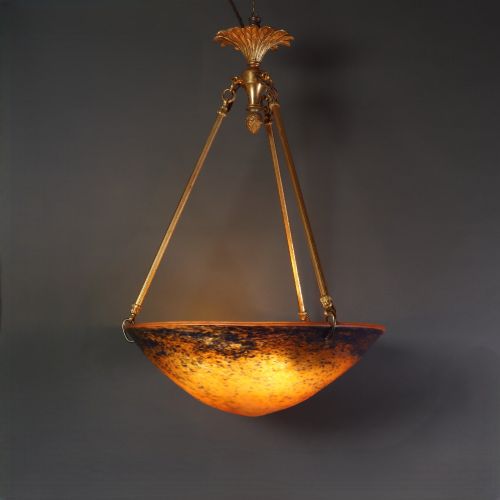
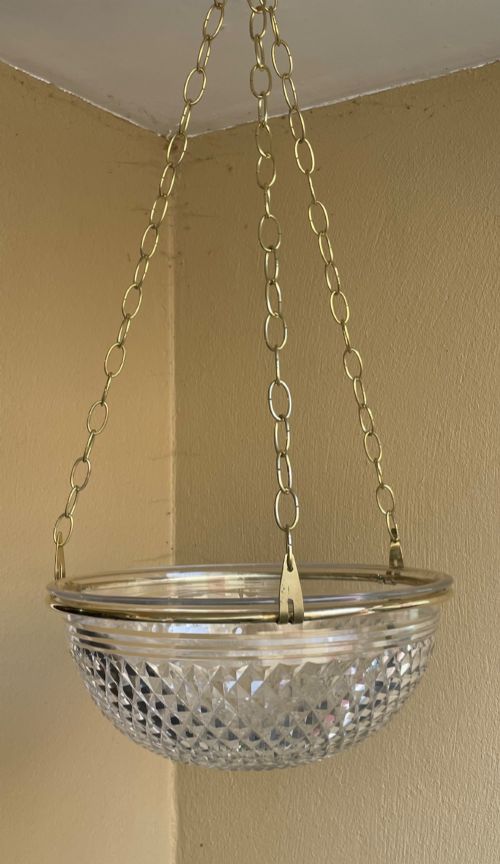
A glass bowl ceiling lamp suspends a shallow or deep glass vessel from the ceiling by chains, cords, or metal mounts to diffuse light evenly across a space. When searching for a glass bowl ceiling lamp, a buyer encounters forms ranging from simple Edwardian cut glass dishes to geometric Art Deco plafonniers.
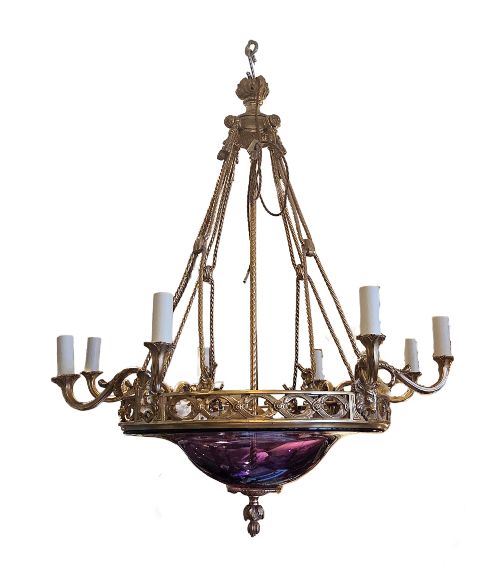
Configurations include flush ceiling lights, pendant lights, and chandeliers where the bowl serves as the primary diffuser or shade. Origin and period vary, with English examples appearing alongside continental works from makers such as Charles Schneider and Verrerie Des Vosges.
Materials and construction
Makers shaped the glass bowls through moulding, cutting, or pressing to achieve smooth opaline surfaces or heavily faceted crystal patterns that catch the light. Frosted and mirrored finishes alter the quality of illumination, diffusing harsh glare into a soft glow.
The glass bodies are held by metal mounts, bands, and chains fashioned from brass, bronze, copper, or silver-plated metal. These structural elements often display stylistic details characteristic of their period, from Neoclassical rams' heads to Arts and Crafts hammered textures.
Glass Bowl Ceiling Lamp Retail Price Guide 2026
Typical asking prices for glass bowl ceiling lamp among the pieces listed under this phrase on Sellingantiques today, from the lower quarter to the upper quarter. They describe what is for sale here now, not the wider market.
Listings feature glass bowl ceiling lamps across periods from the 1850s through to the 1930s, utilising brass, bronze, crystal, and opaline glass.
Factors of quality
Quality rests in the depth and crispness of the glass cutting, the weight of the metal mountings, and the integration between bowl and suspension hardware. Heavier crystal and thick opaline or frosted glass demonstrate superior material substance compared to thin, pressed alternatives.
The integrity of the metalwork, whether cast bronze, chased brass, or solid copper, distinguishes standard commercial production from finer artistic output. Signed works by recognised glass houses show superior attention to surface finish and proportion.
Charles Schneider·Verrerie Des Vosge
The Glass Bowl Ceiling Lamp Glossary
- Plafonnier
- A ceiling-mounted or shallow suspended bowl light, popular during the Art Deco period. These fixtures sit close to the ceiling or hang on short chains.
- Opaline
- A type of semi-translucent glass, often milky white or pale pastel, used to soften and diffuse light evenly. It was widely utilised in nineteenth and early twentieth-century lighting.
- Cut glass
- Glass decorated by grinding facets or patterns into the surface with a wheel, enhancing the refraction of light. Finer pieces exhibit deep, sharp geometric cuts.
- Flush ceiling light
- A fixture mounted directly against the ceiling without a hanging cord or chain, keeping the bowl close to the plaster. This form suits rooms with lower ceiling heights.
- Chandelier
- A branched hanging light fixture designed to hold multiple bulbs or candles, here featuring a central bowl element. These provide substantial illumination for larger spaces.
Glass Bowl Ceiling Lamp: Frequently Asked Questions
How do I hang a bowl ceiling lamp?
These lamps typically suspend from the ceiling using chains, rods, or cords attached to a central metal canopy. Professional installation ensures the ceiling joists can support the combined weight of the glass bowl and metal frame.
Height adjustment depends on room proportions and ceiling clearance. Dining areas and hallways often allow the bowl to hang lower than busy walkways where headroom matters.
What rooms suit a bowl ceiling light?
Pendant bowls and plafonniers work well in hallways, bedrooms, and dining rooms where diffused, downward illumination creates an ambient atmosphere. Their enclosed or semi-enclosed forms cast soft light across the ceiling and walls.
Low-ceilinged rooms benefit from flush or semi-flush variants that save vertical space while maintaining decorative presence. Larger multi-bulb chandeliers suit high-ceilinged reception rooms.
How do I clean a glass bowl lamp?
Careful removal of the glass bowl from its metal mountings allows for gentle washing in warm, soapy water. Avoid harsh abrasives that can scratch frosted or mirrored surfaces.
Metal components require dusting with a dry cloth to preserve finishes like brass, bronze, or silver plate. Check that all screws and galleries remain secure when reassembling the fixture.
How do I date an antique glass lamp?
Stylistic indicators such as geometric stepped motifs point towards Art Deco origins from the 1920s and 1930s. Heavier cast bronze mounts and elaborate cut glass often suggest earlier Victorian or Edwardian manufacture.
Examination of the wiring, fixings, and any maker signatures on the glass rim provides further clues to age. English and continental production methods evolved distinctly across the nineteenth and twentieth centuries.