

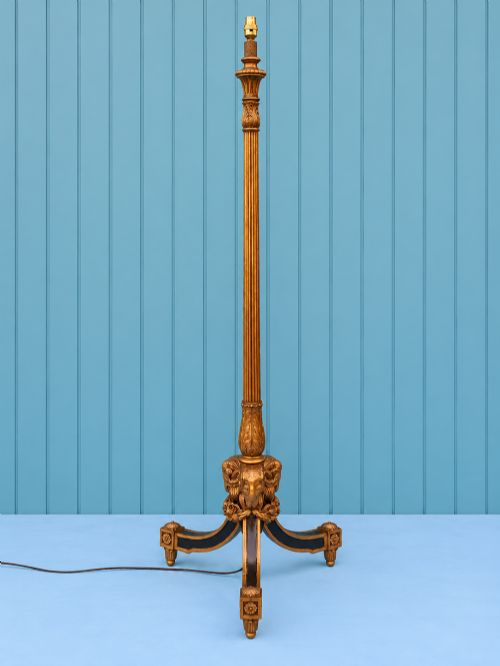
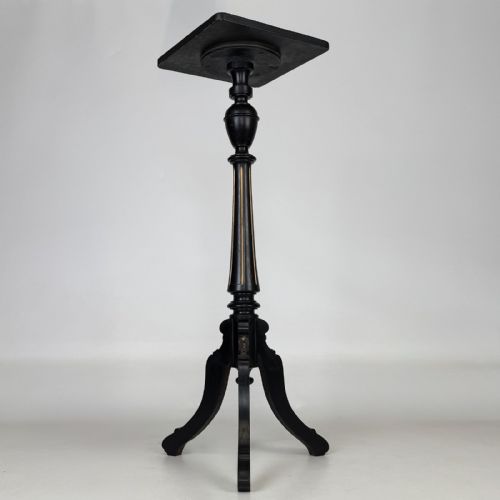
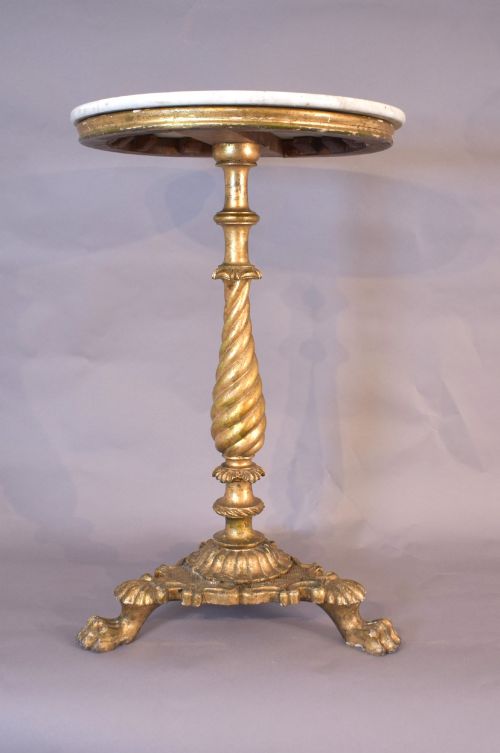
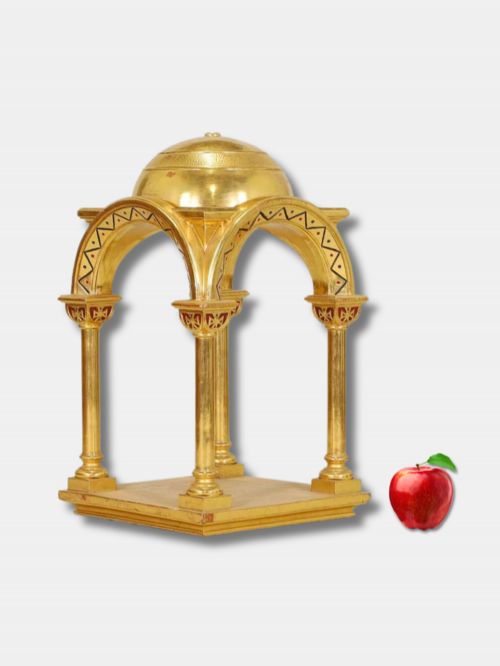


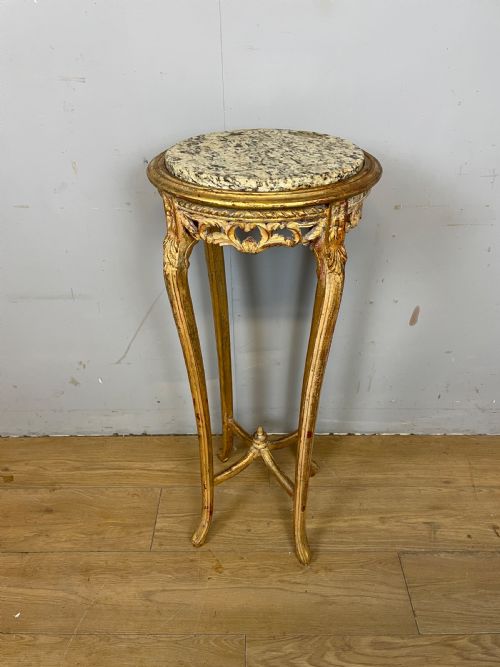

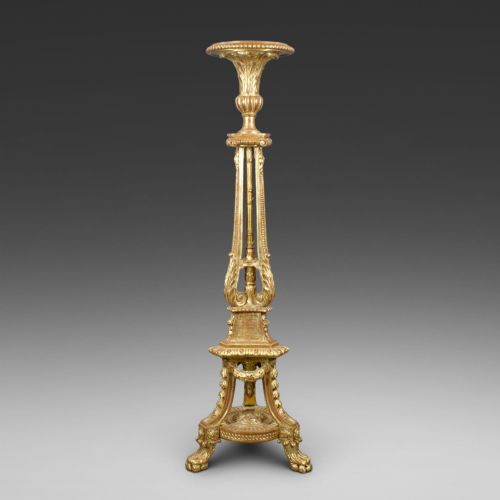


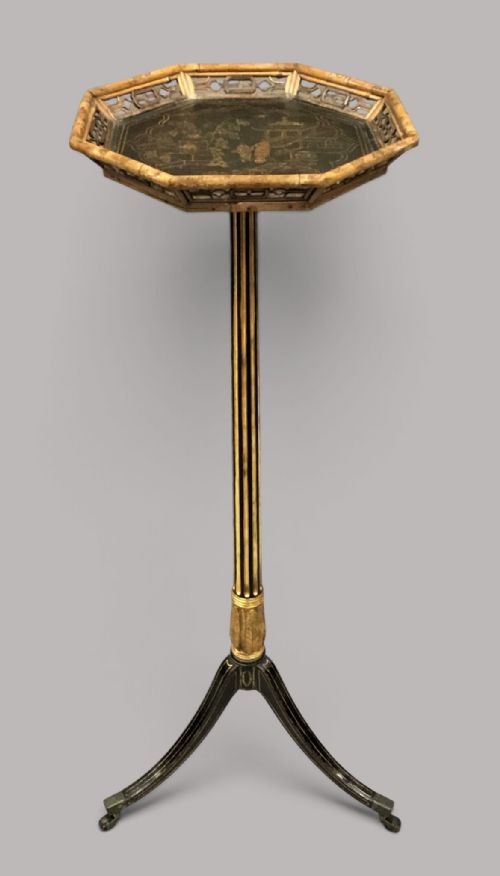

Gilt Wood Column Stand
A gilt wood column stand raises an urn or a bronze into the light, bringing vertical discipline and bright gilding to a room.
Gilt Wood Column Stand
When you search for a gilt wood column stand, you look for a tall support that lifts decorative objects, plants or lamps above the floor. The examples on this page span the eighteenth, nineteenth and early twentieth centuries, drawing on French, Italian, Swedish and English design traditions.
The forms here include torchères, plant stands, pedestals and plinths, alongside architectural miniatures and standard lamps. Most pieces rely on carved wood finished in gold leaf, paint or gesso, while some pair ebonised timber with gilt brass or marble tops.
How they were made
Makers shaped these supports from carved wood, applying layers of gesso to smooth the surface before laying fine gold leaf by hand. Many pieces combine structural timber with applied ornament, paint and sometimes inset marble tops to bear weight while retaining decorative refinement.
Workshop methods shifted across the periods represented, from eighteenth-century carved timber to nineteenth-century gesso mouldings and early twentieth-century standard lamps. Surface finishes range from bright gilded leaf to ebonised wood set with gilt brass mounts.
Gilt Wood Column Stand Retail Price Guide 2026
Typical asking prices for gilt wood column stand among the pieces listed under this phrase on Sellingantiques today, from the lower quarter to the upper quarter. They describe what is for sale here now, not the wider market.
Listings feature pieces spanning the eighteenth to the twentieth centuries, utilising gesso, carved wood, marble, and giltwood across French, Italian, Swedish, and English traditions.
What varies in quality
The distinction between ordinary and exceptional work lies in the depth of the carving and the purity of the surface preparation. Sharp relief work beneath the gold leaf demonstrates a confident hand, whereas softer, shallower moulding points to mass production.
Proportion and stability dictate the merit of a tall stand, since narrow proportions demand precise joinery to remain upright. The handling of the gesso and the burnishing of the leaf determine how the surface catches the light over time.
Gillow & Co.·François Linke
The Gilt Wood Column Stand Glossary
- Giltwood
- Timber coated with gold leaf or gold paint over a prepared ground. It defines the bright reflective surfaces seen across many pedestals and torchères.
- Torchère
- A tall ornamental stand designed to hold a light, plant or decorative object. Originating in the seventeenth century, the form persisted into the Edwardian era.
- Gesso
- A plaster mixture applied to wood to create a smooth surface for gilding. Skilled application ensures sharp detail in the carved ornament beneath.
- Ebonised
- Wood stained or painted black to imitate ebony. This dark finish frequently appears alongside gilt highlights in nineteenth-century pieces.
- Parquetry
- Geometric patterns of wood veneer inlaid into a surface. It adds textural contrast to the gilt and painted columns.
Gilt Wood Column Stand: Frequently Asked Questions
What were gilt wood column stands used for?
These tall stands served primarily to elevate lighting, portrait busts, urns or exotic plants within principal reception rooms. By raising objects to eye level, they drew attention to decorative arts and introduced vertical architecture into an interior.
Over successive periods, their domestic role expanded from holding torchères and candles to supporting heavy marble vases, floral displays and, eventually, standard electric lamps.
How do I place one in a modern room?
A tall stand works best in an empty corner, beside a fireplace, or framing a doorway where it introduces height without taking up floor space. Keep the top relatively uncluttered so the carved detail and gilding remain the focus.
Pantries and low ceilings call for more compact torchères, while lofty spaces can accommodate substantial nineteenth-century pedestals topped with heavy urns or lamps.
How do I tell an 18th-century stand from a later copy?
Eighteenth-century and early nineteenth-century stands generally display hand-carved timber construction with organic tool marks visible beneath the gesso layers. Later revival pieces often rely on heavier machine-moulded composition ornament and standardised joinery.
Examine the underside and joints for timber shrinkage, oxidation of the base metals, and the hand-applied craquelure of the gold leaf over the underlying gesso.
What is the difference between a torchère and a pedestal?
A torchère traditionally denotes a light stand with a slender shaft designed to carry a candle or lamp, whereas a pedestal or plinth is built with a broader, weight-bearing top meant for heavy sculpture or urns. In practice, historical terminology often overlaps as makers adapted forms for plants and decorative objects.
On this page, you will find items listed under both names, spanning simple tripod plant stands to grand architectural columns.