

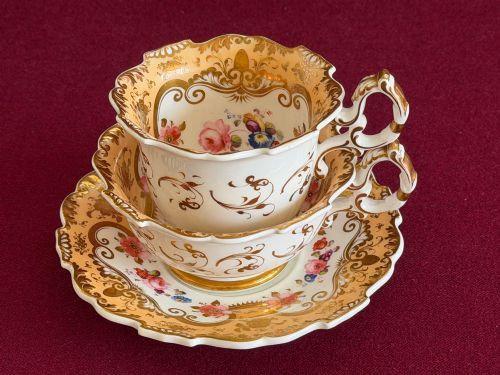
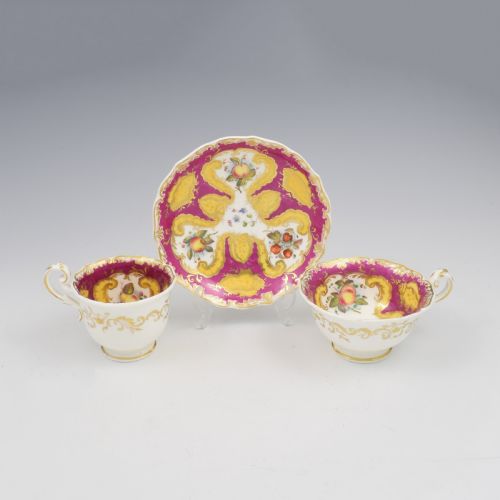


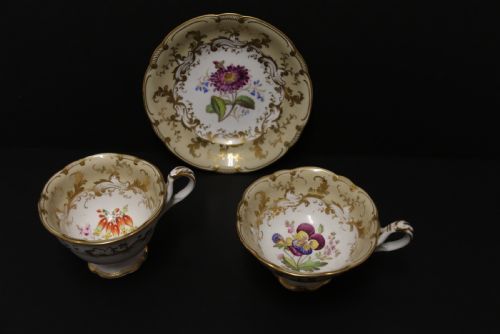


Gilt Porcelain Trio
A gilt porcelain trio brings together a cup, coffee cup and saucer decorated with gold, offering a complete tabletop setting from the Georgian to the Edwardian eras.
Gilt Porcelain Trio
When you search for a gilt porcelain trio, you encounter sets comprising a teacup, a coffee cup and a matching saucer, often fashioned from fine bone china or porcelain. These items emerge from Georgian, Regency, Victorian, Edwardian and early twentieth century workshops.
The configurations on this page include standard teacup sets alongside tea and coffee ware items and cabinet trios, sometimes accompanied by decorative vases or lustre ware. Many examples display handpainted motifs paired with gold leaf or gilding.
Makers represented in these listings span John Rose Coalport, Worcester, H and R Daniel, Royal Worcester, Davenport and Wedgwood, showing the variety of English ceramic output across different periods.
How they were made
Potters shaped these items using porcelain, bone china or earthenware, applying glazes before firing the ceramic bodies in kilns. Artisans then added handpainted enamel details and gold leaf or gold gilding by hand.
Decoration often involved specific patterns such as the Marquess of Anglesey type, fluted shapes, Shrewsbury shapes or ordinary lustre designs. Artisans finished the surfaces with careful applications of gilding to rims, handles and panels.
Gilt Porcelain Trio Retail Price Guide 2026
Typical asking prices for gilt porcelain trio among the pieces listed under this phrase on Sellingantiques today, from the lower quarter to the upper quarter. They describe what is for sale here now, not the wider market.
Styles represented span the Georgian, Regency, Victorian, Edwardian and Art Nouveau periods.
What varies in quality
The refinement of the porcelain body and the precision of the handpainted brushwork distinguish standard items from superior works. Finer examples display crisp moulding, such as fluted shapes or distinct Shrewsbury forms, alongside intricate enamel painting.
The application and preservation of the gold leaf or gilding also separate pieces, with heavier, more detailed gold work indicating higher workmanship. The attribution to known factories like Coalport, Worcester or Daniel elevates the standing of an individual set.
John Rose Coalport·Worcester Porcelain·H and R Daniel·Royal Worcester·Davenport·Wedgwood
The Gilt Porcelain Trio Glossary
- Trio
- A matched set consisting of a teacup, a coffee cup and a saucer. These three pieces were designed together for social tea and coffee drinking.
- Bone China
- A type of soft-paste porcelain containing bone ash, known for its bright white body and durability. It allowed makers to produce thinner, more refined vessels.
- Gilding
- The application of gold leaf or gold powder to the surface of porcelain. It provides metallic decoration around rims, handles and painted scenes.
- Enamel
- A glass-like substance fused to the surface of fired porcelain during a secondary kiln firing. It provides the vivid colours seen in handpainted floral and pictorial patterns.
- Lustre
- A metallic glaze that produces an iridescent or pearlescent sheen on ceramics. Wedgwood utilised this technique on decorative items.
- Cabinet Trio
- A decorative set intended primarily for display in a cabinet rather than for daily table use. These pieces often exhibit higher artistic detail and delicate gilding.
Gilt Porcelain Trio: Frequently Asked Questions
What is included in a gilt porcelain trio?
A standard trio includes three matching components: a teacup, a coffee cup and a saucer. In eighteenth and nineteenth century settings, the inclusion of both a tea cup and a taller coffee cup was common.
These pieces were produced together as a matched set, sharing the same porcelain body, pattern and gilding.
How do I date a porcelain trio?
Dating relies on identifying the factory mark on the base, the shape of the cups, and the style of the decoration. Georgian and Regency pieces often feature distinct handle shapes and handpainted floral motifs without printed factory marks.
Victorian and Edwardian examples frequently incorporate registered design numbers, specific maker stamps, and brighter enamel palettes.
Can I use these trios for drinking tea?
While these items were originally made for domestic use, antique porcelain requires careful handling due to its age and delicate nature. Hand washing in warm water without harsh detergents preserves the handpainted enamel and gold leaf.
Many collectors prefer to display cabinet trios or reserve them for occasional gentle use rather than daily dining.
What does blush ivory mean?
Blush ivory refers to a soft, matte cream-coloured ceramic body developed by Royal Worcester in the late nineteenth century. It provides a subdued background for delicate handpainted floral decoration and raised gold gilding.
This finish is characteristic of the aesthetic taste popular during the late Victorian and Edwardian periods.