



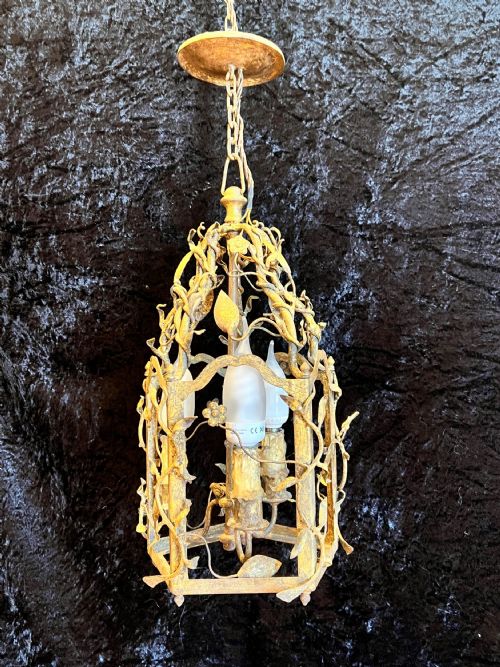


Gilt Iron Lighting
These gilt iron lighting fixtures combine gilded metal, wrought iron, and glass to illuminate interiors with continental flair.
Gilt Iron Lighting
Buyers seeking gilt iron lighting encounter a variety of fixtures spanning the nineteenth and early twentieth centuries, particularly from Italian and French origins. The selection comprises chandeliers, wall lights, floor candlesticks, table lamps, pendant lights, and standard candlesticks.
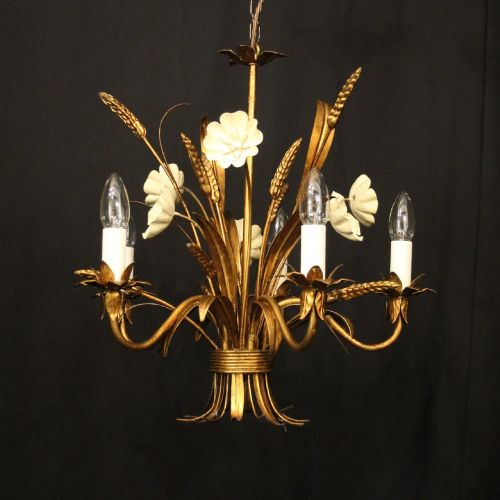
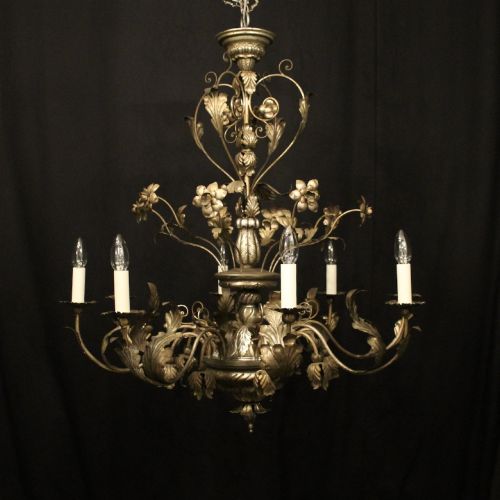
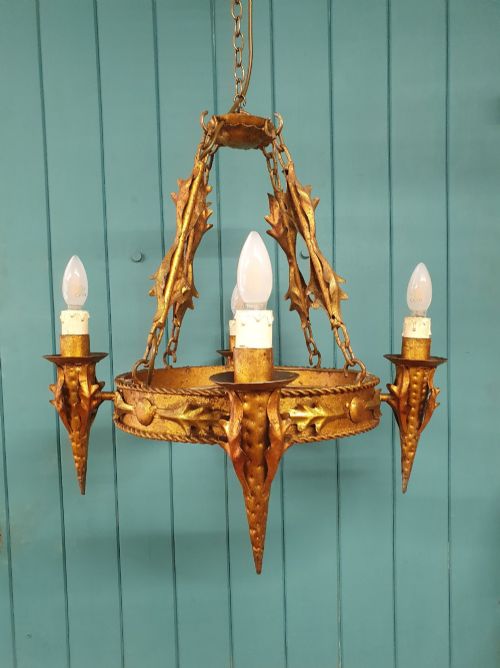
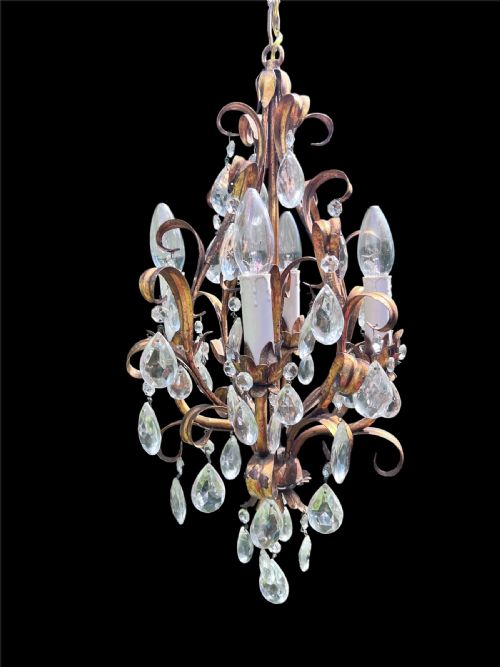
Chandeliers dominate the offerings, often taking forms such as multi-light configurations, leafy crystal models, and wheatsheaf designs. Italian Florentine and French styles appear frequently alongside occasional Continental Baroque and Gothic Revival pieces.
How they were made
Craftsmen utilised wrought iron and cast iron as structural bases, shaping them into elaborate forms like leafy branches, rustic lanterns, and coronets. These iron frameworks were subsequently treated with gold leaf, gesso, and gilt metal finishes to create a metallic sheen.
Many designs incorporate glass components, including crystal drops and floral elements, alongside polychrome paint additions. Wood and porcelain also feature in specific table lamps and candlestick figures to introduce contrasting textures.
Gilt Iron Lighting Retail Price Guide 2026
Typical asking prices for gilt iron lighting among the pieces listed under this phrase on Sellingantiques today, from the lower quarter to the upper quarter. They describe what is for sale here now, not the wider market.
What varies in quality
The degree of refinement in the ironwork and gilding sets examples apart, ranging from simple metal stands to intricate Florentine and Rococo creations with detailed floral and leaf motifs. The presence of hand-applied polychrome paint and high-grade crystal drops distinguishes finer pieces.
Origin and stylistic attribution also influence the character of each fixture, with specific French chateau and Italian provincial designs showing distinct regional craftsmanship in their scrollwork and candle arms.
The Gilt Iron Lighting Glossary
- Gesso
- A plaster-like mixture applied to a base before gilding to provide a smooth surface for gold leaf. It allows for intricate relief details on chandeliers and wall lights.
- Wrought iron
- Iron beaten or bent into shape by hand tools, utilised for the structural arms and frames of lighting fixtures. This material permits strong yet slender load-bearing components.
- Polychrome
- Decoration executed in multiple colours, frequently found alongside gilt finishes on Italian and French pieces. It adds visual depth to carved foliage and metal surfaces.
- Coronet
- A small crown-shaped fixture top, often seen on nineteenth-century chandeliers. It crowns the upper framework above the central stem and light branches.
Gilt Iron Lighting: Frequently Asked Questions
How do I clean a gilt iron chandelier?
Dust gently with a soft brush to protect the delicate gold leaf and painted surfaces.
Avoid using liquid cleaners or harsh chemicals that can strip the gesso and metallic finish.
What periods do these lights come from?
The listings include pieces dating from the nineteenth century through the early decades of the twentieth century.
Examples span specific years such as eighteen-sixty, nineteen-ten, nineteen-twenty, and nineteen-thirty.
Are these fixtures suitable for low ceilings?
Wall lights, flush mounts, and smaller lanterns provide suitable illumination without requiring significant vertical clearance.
Larger multi-light chandeliers need higher ceilings to balance their physical drop and spread.
Can modern bulbs be used?
Most antique fixtures accommodate modern candelabra-base bulbs with appropriate wattage ratings.
Rewiring may be necessary depending on the age and origin of the electrical components.