




Gilt Glass Scent Flask
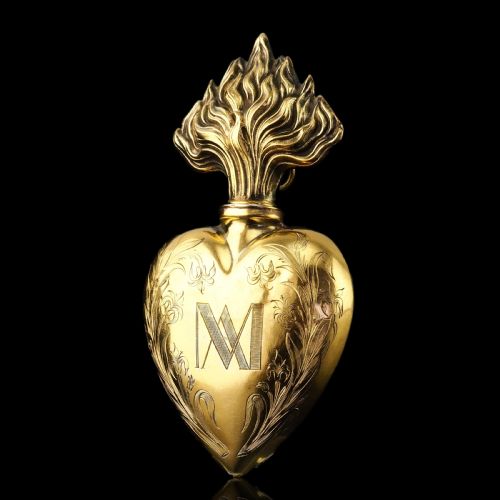
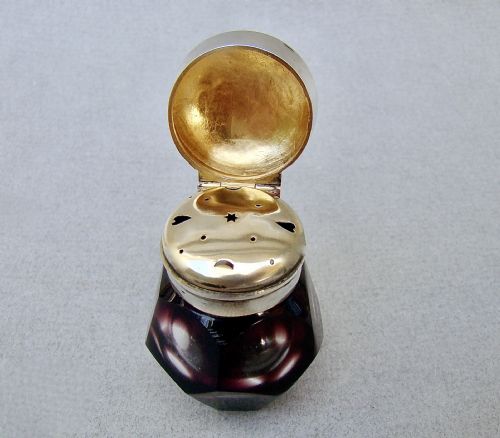
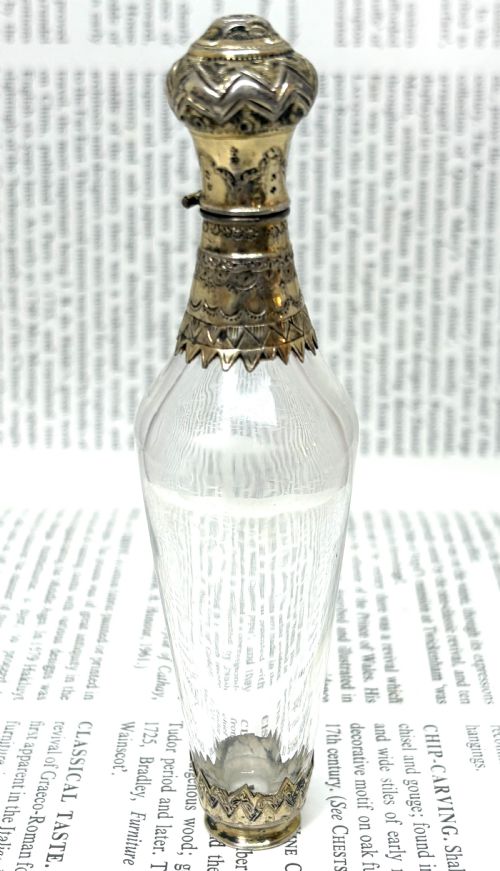
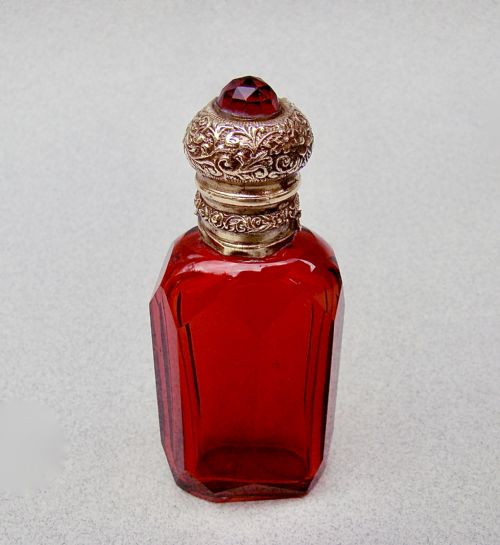
These gilt glass scent flask pieces combine precious metal mounts with brilliant glass bodies, offering a portable vessel for personal fragrance.
Gilt Glass Scent Flask
A gilt glass scent flask brings together cut or coloured glass bodies and gold-mounted collars, hinges or lids. Collectors seek these items for their pocket-sized utility and decorative craftsmanship during the nineteenth century.
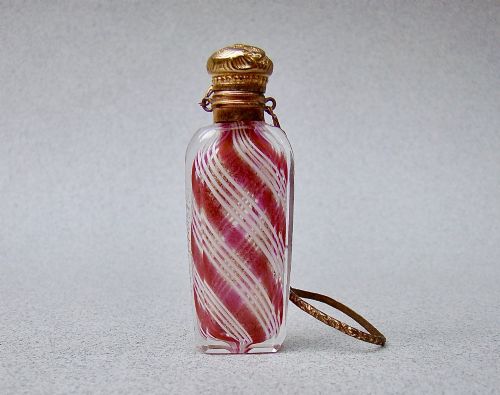
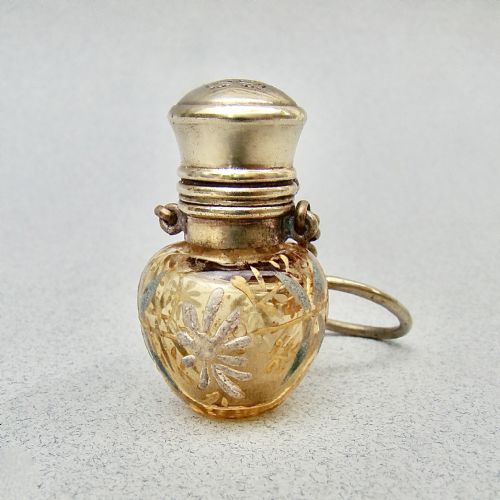
The selections available here range from Victorian British examples to French specimens associated with nineteenth-century makers. Forms span straightforward pocket bottles to heart-shaped flasks and chatelaine containers intended to hang from a belt.
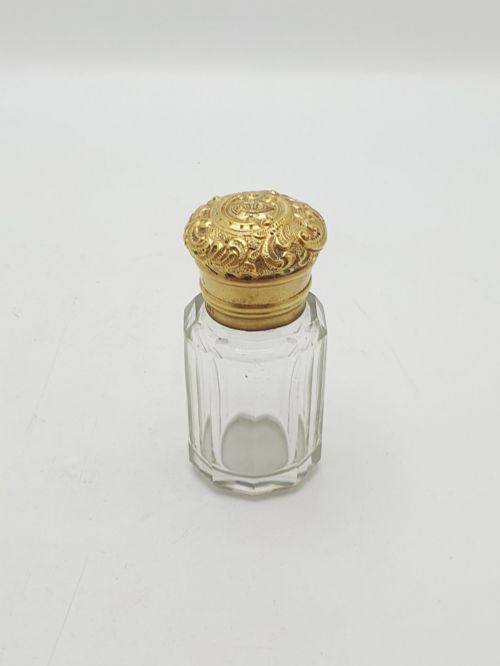
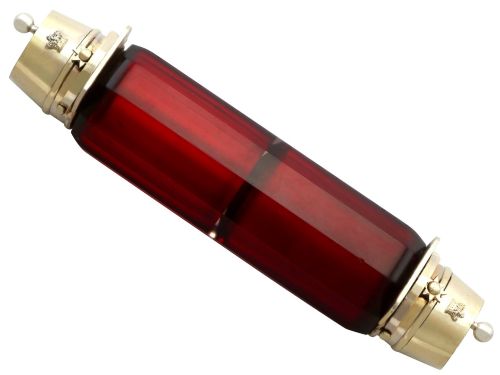
Common material combinations feature clear cut glass, ruby glass, and amethyst glass paired with sterling silver gilt, silver-gilt, or ormolu mounts. Certain pieces incorporate additional decorative elements such as guilloche enamel or murrine glass details.
Materials and construction
Makers shaped the vessels using glass-blowing and cutting techniques, producing faceted surfaces or rich coloured matrices in shades of red and purple. Artisans then fitted these glass bodies with custom metal collars and hinged caps.
Mounts utilise silver gilt, sterling silver, or ormolu, often secured to the glass neck with internal cork stoppers or screw mechanisms. Specialised workshops added decorative embellishments like enamel work or murrine patterns directly into or onto the body.
Gilt Glass Scent Flask Retail Price Guide 2026
Typical asking prices for gilt glass scent flask among the pieces listed under this phrase on Sellingantiques today, from the lower quarter to the upper quarter. They describe what is for sale here now, not the wider market.
Several gentleman's bottles included lockable mechanisms, ensuring no one else could tamper with your preferred cologne.
Assessing quality in antique flasks
Quality rests upon the crispness of the glass cutting, the depth of the ruby or amethyst colour, and the precision with which the metal mounts fit the glass neck. Superior examples demonstrate substantial metal gauge and tight closure of the hinged lid.
Artistic complexity further distinguishes the work, seen in specialised glass techniques such as murrine canes or detailed guilloche enamel panels. Maker attribution or assay marks add historical clarity to the finished object.
S Morden Co·Franchini Bigaglia·Moser
The Gilt Glass Scent Flask Glossary
- Silver Gilt
- Silver that has been coated with a thin layer of gold. This technique provides the rich appearance of solid gold while utilising a silver base for structural mounts.
- Ormolu
- A finely ground high-carat gold-bronze alloy used for decorative mounts. French makers frequently applied this technique to nineteenth-century luxury items.
- Guilloche Enamel
- A decorative technique where translucent enamel is layered over mechanically engraved metal. It produces repetitive geometric patterns beneath coloured glass surfaces.
- Murrine
- Coloured patterns made by stretching heated glass canes and slicing them crosswise. These cross-sections reveal intricate mosaic designs embedded within the glass body.
- Chatelaine
- A decorative belt hook worn to suspend utilitarian items such as scent bottles and keys. These pieces feature loops or chains designed for suspension.
Gilt Glass Scent Flask: Frequently Asked Questions
What periods do these flasks represent?
The pieces span the nineteenth century, with specific examples dated across the Victorian era and the early twentieth century.
Most items originate from British and French workshops active between eighteen hundred and nineteen ten.
How were these flasks carried?
Owners slipped smaller bottles into pockets or reticules for daily use during outings.
Chatelaine examples hung directly from a decorative belt hook, keeping the scent close at hand.
What metals are used on the mounts?
Mounts predominantly feature silver gilt, sterling silver, or ormolu framing the glass necks and hinged lids.
These metals provided durability and a polished finish to secure the stopper.
Are the glass bodies coloured?
Many flasks utilise clear cut glass, while others showcase rich ruby glass or deep amethyst tones.
Specialist techniques like murrine glass also introduce multicoloured mosaic patterns into the design.