


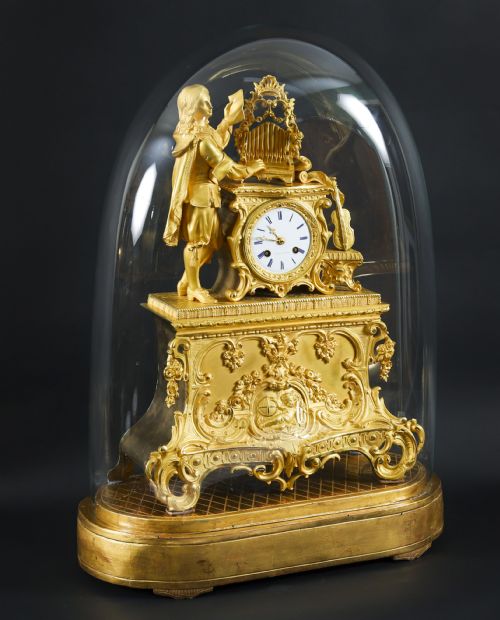


Gilt Figural Clock
A gilt figural clock combines timekeeping with sculptural bronze, bringing classical mythology and romantic allegories directly onto the mantelpiece.
Gilt Figural Clock
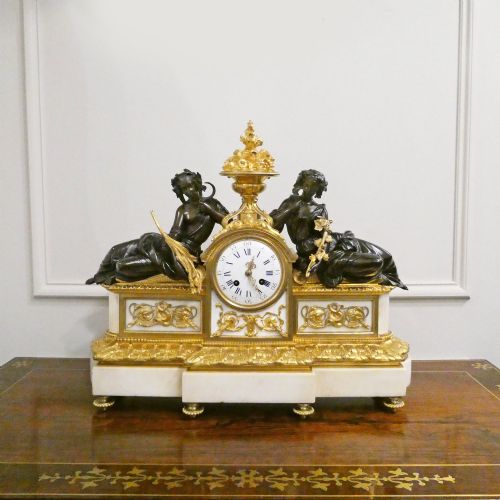
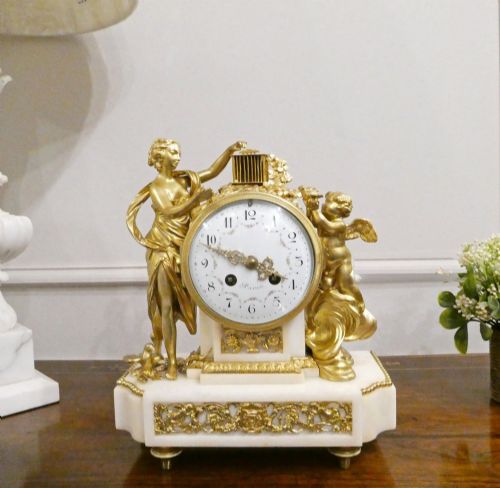
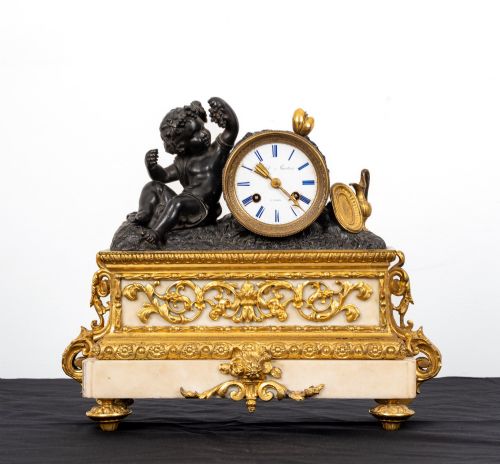
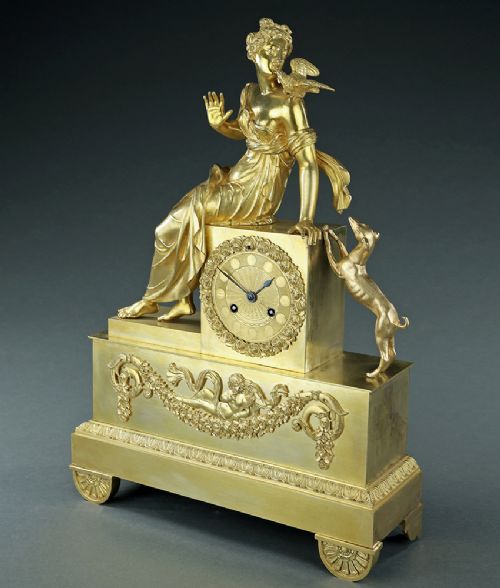
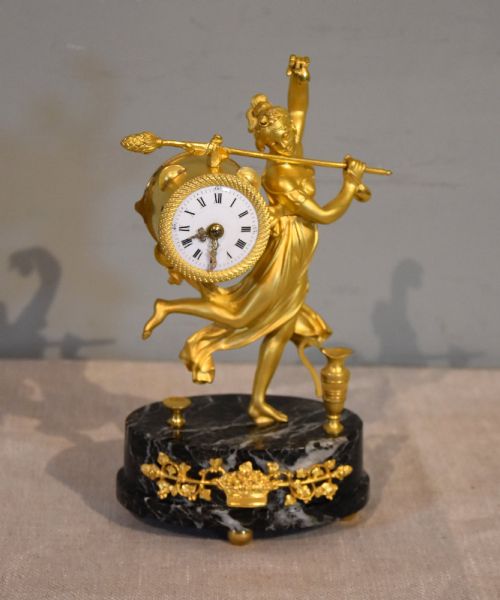
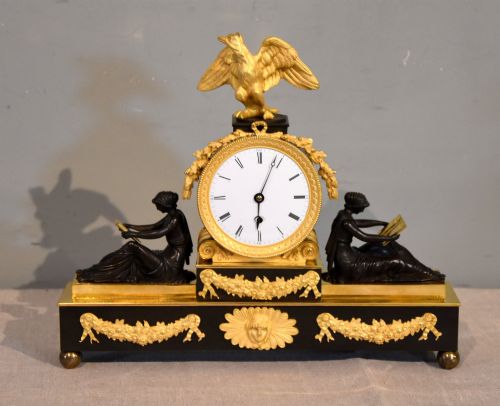
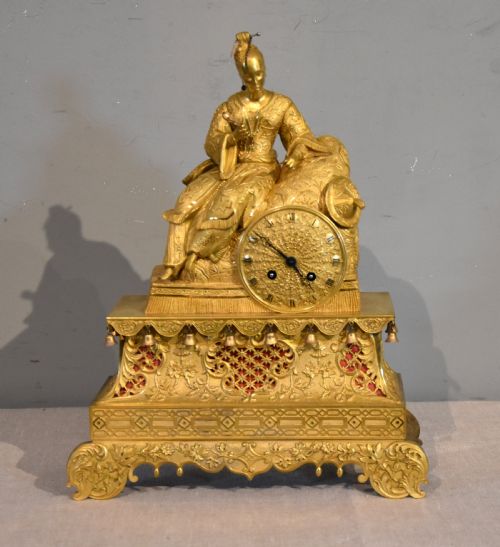
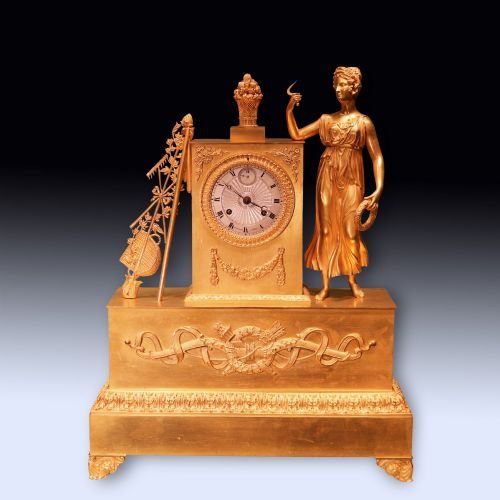
A gilt figural clock centres on a sculptural subject cast in bronze, brass, or gilt metal, often depicting allegorical figures, cherubs, lions, or literary characters alongside the dial. These pieces span the nineteenth century, drawing heavily on French Empire, Louis XVI Revival, and Regency styles.
The domestic forms range from simple mantel timepieces and table clocks to large clock garnitures flanked by matching side ornaments. Architectural marble and slate plinths frequently support the metalwork, housing mechanical movements driven by springs or fusees.
Makers produced these works for affluent drawing rooms, balancing precise horology with elaborate decorative casting. Surviving examples reflect both English workshop traditions and the dominant output of Parisian founders.
Materials and construction
Clockmakers housed brass gear trains within heavy cast cases, frequently mounting them on bases of white or green marble. Enamel dials, sometimes featuring hand-painted numerals or delicate floral garlands, face behind protective glass bezels.
Assessing craftsmanship
The sharpness of the cast figures separates standard production from superior pieces, where chiselling and chasing by hand define facial expressions, drapery folds, and hair texture after the metal leaves the mould. Finer dials display meticulous hand-painted details and signed movements from renowned Paris or London makers.
Weight and structural integrity indicate the grade of materials employed in the case. Thick, solid ormolu mounts and substantial marble plinths signify high workshop standards, whereas lighter, thinner metalwork represents more commercial output.
Vincenti·Siffel and Cartier·Canaillor·Japy Freres·Leroy·Deniere Et Fils·Victor Paillard·Deniere and Cailleaux·John Bennett·James Murray·Berger·Robert·Cleret·Mourey
The Gilt Figural Clock Glossary
- Ormolu
- Gilded bronze, derived from the French term for ground gold. It involves applying a gold amalgam to a bronze base and heating it.
- Fusee
- A conical pulley used in clock movements to maintain even tension on the gear train as the mainspring unwinds. This mechanism improves timekeeping accuracy.
- Garniture
- A set consisting of a central clock matched with side ornaments, such as vases or candelabra, designed to sit together on a mantelpiece.
- Patinated bronze
- Bronze treated with chemicals to darken the surface, creating contrast against brighter gilt or ormolu mounts.
- Timepiece
- A clock that tells the time without incorporating a striking mechanism to mark the hours or quarters.
Gilt Figural Clock: Frequently Asked Questions
How do I wind the clock?
Most of these movements require a matching winding key inserted into specific holes on the enamel dial. Turning the key clockwise tensions the internal springs.
Careful handling prevents over-winding, which can damage the delicate internal gears. Consulting a professional horologist ensures proper maintenance for older mechanisms.
Where should I place the clock?
Mantelpieces and sturdy console tables provide ideal support given the considerable weight of the marble and bronze bases. A level surface keeps the pendulum swinging evenly.
Direct sunlight and damp environments can discolour delicate dial enamels and tarnish the surrounding gilt surfaces over time.
How do I identify the period?
Stylistic cues such as classical Revival motifs or Regency brass inlay point toward specific decades within the nineteenth century. Examining the signature on the movement backplate often reveals the maker and production era.
Cast marks and structural fasteners offer further clues regarding manufacturing dates. Comparing the sculptural style to known design books confirms the origin.
Are these clocks still functional?
Many examples retain working mechanical movements that keep accurate time and strike the hours. Professional servicing restores functionality to pieces that have remained dormant.
Some buyers prefer to keep them as sculptural decorative objects without running the movement. Both approaches preserve the historical integrity of the metalwork.