



Gilt Bronze Wall Lamps
Gilt bronze wall lamps bring warmth and period character to a room, offering enduring decorative appeal.
Gilt Bronze Wall Lamps
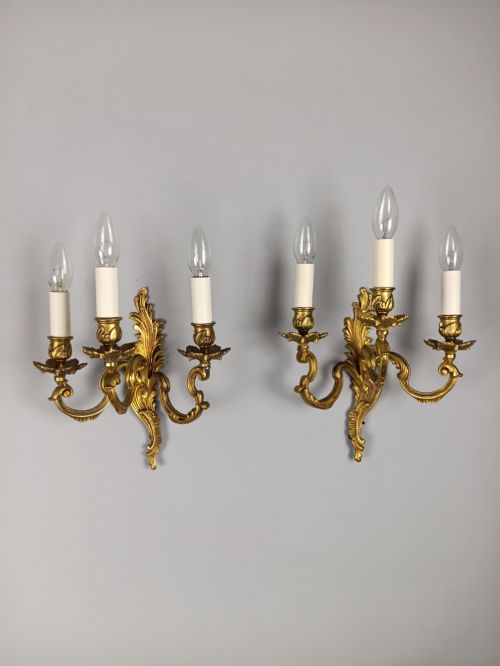
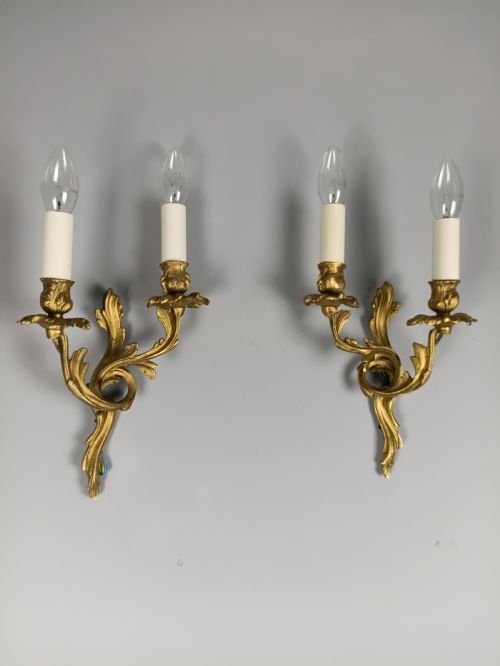
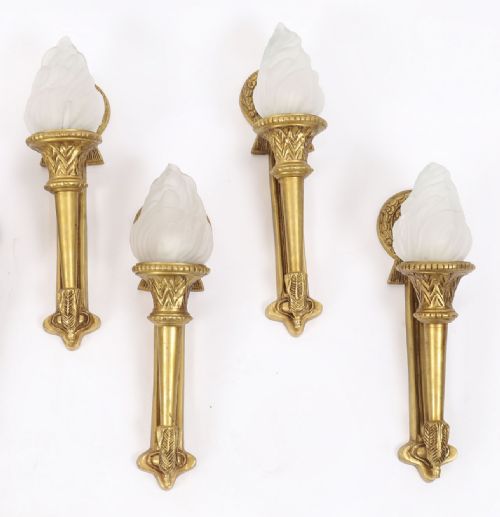
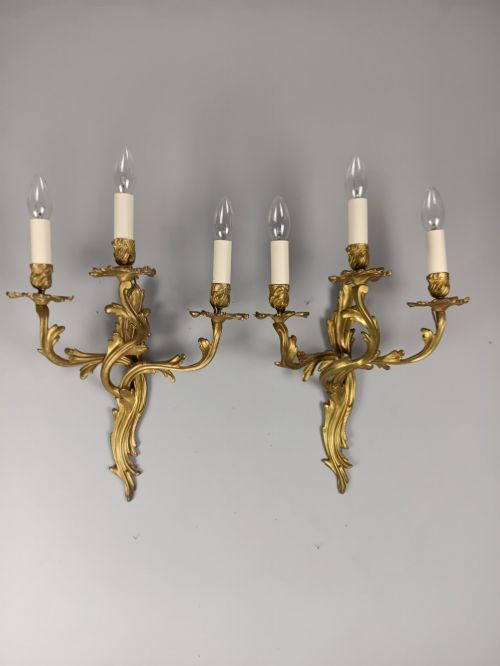
Gilt bronze wall lamps encompass wall lights, wall sconces, and wall light brackets dating from the nineteenth century up through the nineteen thirties. These fixtures appear frequently in pairs or sets of four, designed to mount directly onto interior walls for ambient illumination.
The pieces on this page lean heavily towards French designs, showcasing dominant aesthetic movements such as French Rococo and Neo-Classical styles. Buyers encounter multiple examples featuring twin or triple arm configurations alongside glass and crystal elements.
How they were made
Maker construction relies heavily upon metals such as gilt bronze, ormolu, gilded bronze, and brass, often paired with crystal and glass drops or panels. Artisans shaped these base metals into intricate wall sconces and brackets using traditional foundry and metalworking techniques.
Surface finishing involves applying a rich golden layer over the base metal, creating the characteristic gilt appearance seen across nineteenth-century and early twentieth-century examples.
Gilt Bronze Wall Lamps Retail Price Guide 2026
Typical asking prices for gilt bronze wall lamps among the pieces listed under this phrase on Sellingantiques today, from the lower quarter to the upper quarter. They describe what is for sale here now, not the wider market.
Several of these gleaming wall fixtures arrive pre-rewired, saving modern buyers from wrestling with vintage wiring.
What varies in quality
Quality differences emerge through the crispness of the cast ornamentation and the depth of the gilding across the bronze and brass surfaces. Superior examples display sharply defined Rococo scrollwork or precise Neo-Classical torch motifs rather than soft or blurry casting details.
The integration of secondary materials like crystal and glass creates another distinction, where hand-cut components and substantial armature weight elevate the presence of the wall light compared to simpler metal-only constructions.
The Gilt Bronze Wall Lamps Glossary
- Ormolu
- Finely chopped high-karat gold applied to a bronze object through a mercury amalgamation process, or simply a term for gilded bronze. This finish gives antique French wall lights their characteristic warm golden sheen.
- Rococo
- An ornate design style from the eighteenth century that was later revived, characterised by asymmetrical curves, scrollwork, and organic plant motifs. Rococo wall sconces feature flowing, asymmetrical arm configurations.
- Neo-Classical
- A decorative movement inspired by classical antiquity featuring symmetrical lines, urns, and flaming torch motifs. Neo-classical wall light brackets often incorporate strict geometric balance alongside classical ornamentation.
- Wall Sconce
- A decorative light fixture fixed to a wall where the light is directed upwards or outwards. These pieces frequently use multi-arm formats to hold candles or electric lamps.
- Gilt Bronze
- Bronze metal that has been coated with a thin layer of gold or gold-coloured leaf. It forms the primary structural and decorative material for these antique wall lamps.
Gilt Bronze Wall Lamps: Frequently Asked Questions
What periods do these lamps cover?
The available pieces span from the nineteenth century through the nineteen twenties and nineteen thirties. This range captures both earlier nineteenth-century French production and later twentieth-century interpretations.
Buyers will find that nineteen thirty is a common date among the current selection, reflecting a strong period of revival manufacturing.
Are these lamps sold in pairs?
Many of these fixtures appear as matched pairs or larger sets of four. This symmetry suits them well for flanking mirrors, fireplaces, or architectural doorways.
Sets of two or four arms dominate the configurations recorded in the listings.
What materials make up these fixtures?
Construction primarily utilises gilt bronze, ormolu, gilded bronze, and brass for the main body and arms. Glass and crystal frequently supplement the metalwork as drops, bobs, or decorative panels.
Combinations of metal and crystal appear regularly in nineteenth-century examples.
Which design styles are most common?
French Rococo and Neo-Classical styles form the primary aesthetic categories for these wall lights. Rococo pieces bring curved, organic scrollwork, while Neo-Classical designs offer formal motifs like flaming torches.
These historic French styles dictate the visual character of nearly every piece.