
Gilded Pendant Lighting
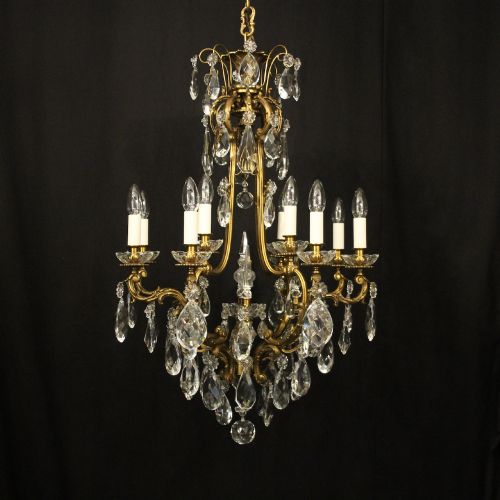
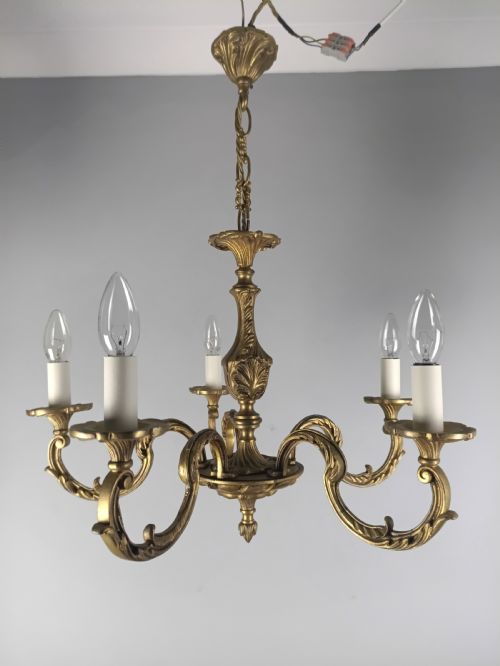
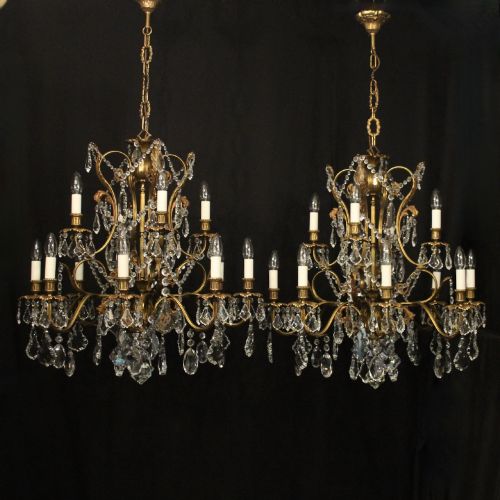
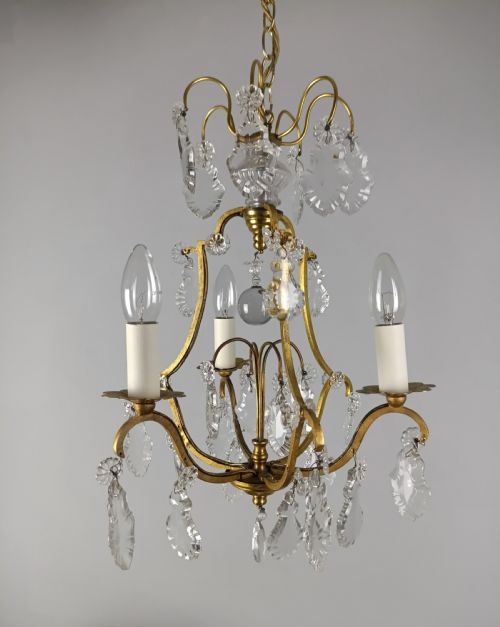
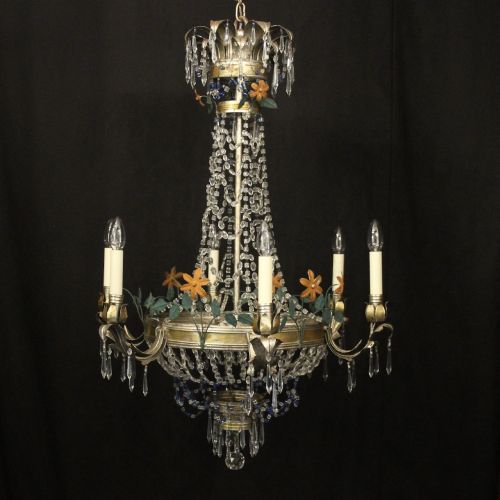
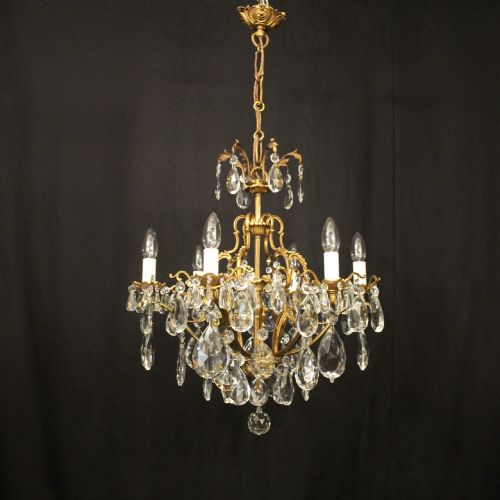
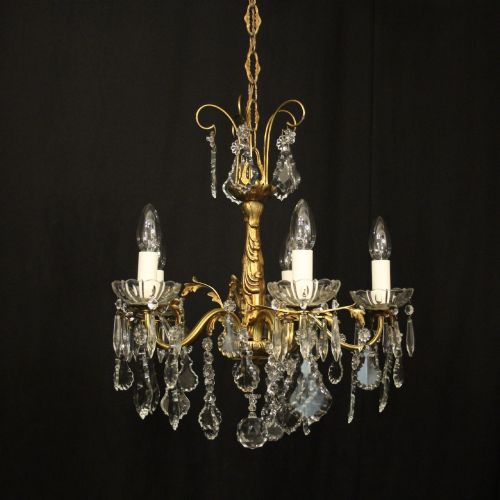
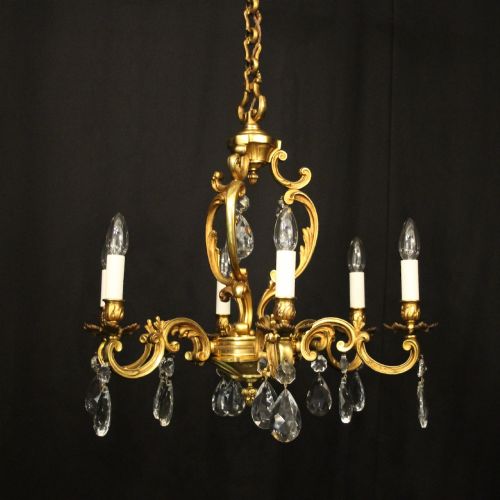
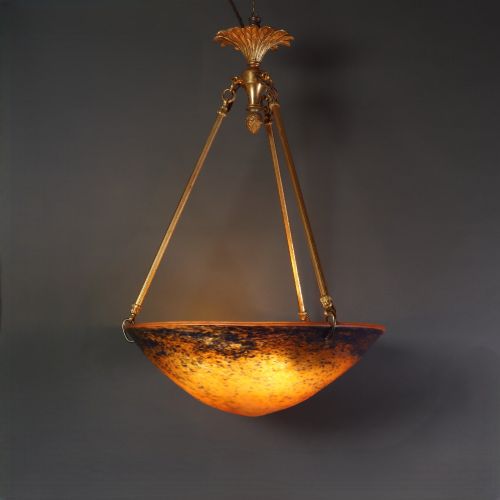
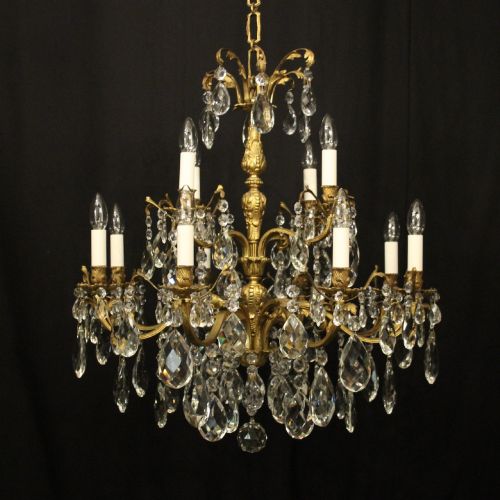
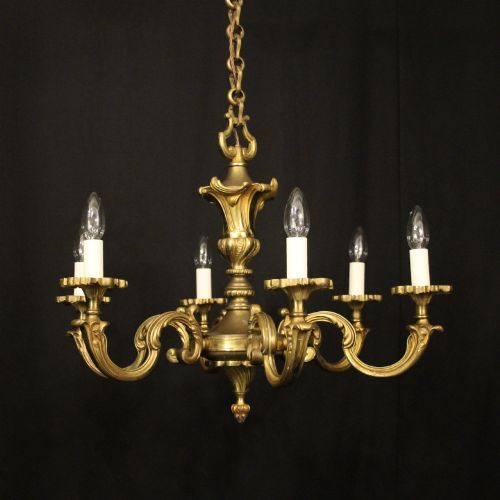
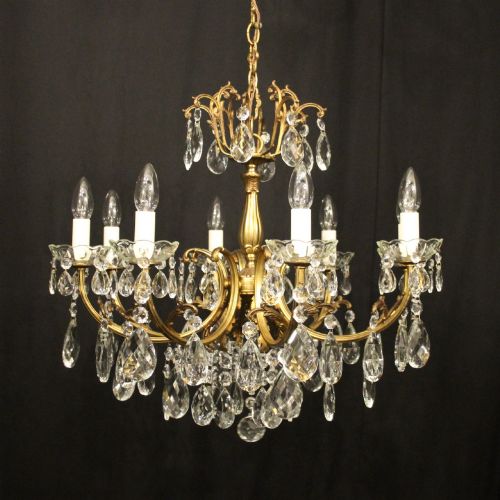
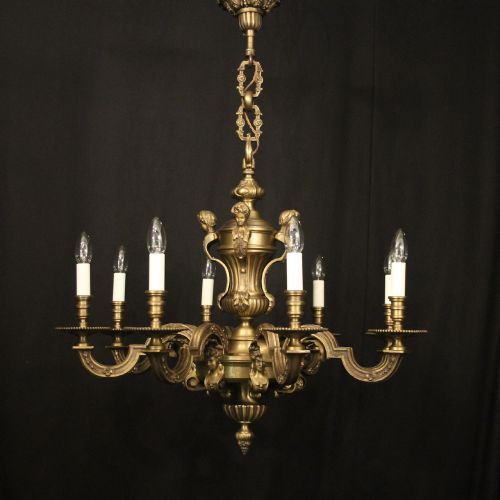
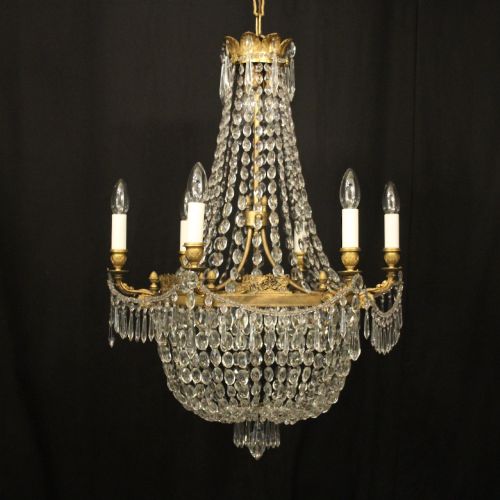
These examples of gilded pendant lighting bring heavy metal frames and glass drops together overhead, casting warm reflections around a room.
Gilded Pendant Lighting
Gilded pendant lighting encompasses overhead hanging fixtures finished in gold tones, including multi-arm chandeliers, hall lanterns, and ceiling lights. Buyers seek these pieces to anchor a room with suspended metallic brilliance and period character.
The selection on this page leans heavily towards French and Italian designs from the nineteenth century, the Edwardian era, and the decades leading up to 1930. French chateau and Florentine styles dominate the offerings, appearing alongside birdcage frameworks, convex hall lanterns, and tent and waterfall chandeliers.
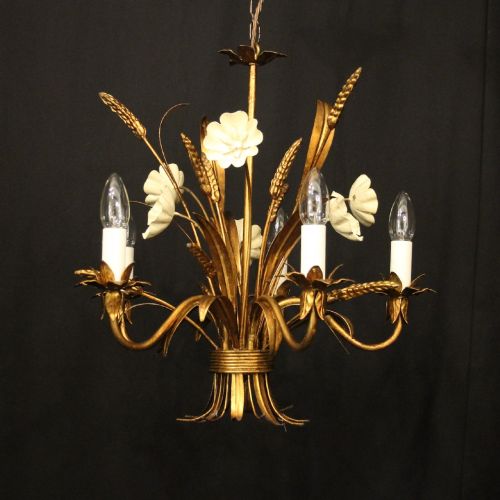
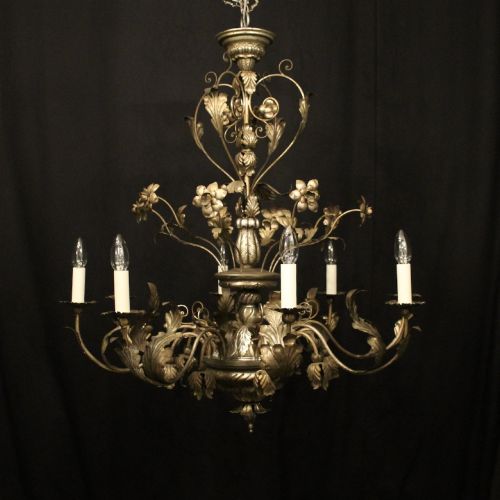
Most entries are multi-light configurations holding anywhere from three to twelve bulbs, often paired with drops of crystal or porcelain floral elements. Hanging lanterns with glazed panels also recur frequently, designed specifically for corridors and entrance halls.
How they were made
The structural frames rely on cast bronze, brass, iron, or carved gesso and giltwood, plated or painted with gold leaf and metallic finishes to create a luminous surface. Many pieces incorporate tolewear or ceramic components shaped into leaves and flowers, painted in polychrome hues or silver gilt.
Makers integrated cut glass and crystal pendants, teardrops, and beads, suspending them from the metal arms and crowns using wire loops and pins. Glazed panels on convex lanterns were fitted into metal tracks, while electrical conversions replaced original candle nozzles in later adaptations.
Listings span from the nineteenth century through the Edwardian era up to 1930, utilising brass, bronze, crystal, and glass.
What varies in quality
Quality rests upon the depth and retention of the original gilding, the crispness of the bronze or brass casting, and the hand-carving detail found on gesso and giltwood frames. Pieces with intact fire-gilding or well-preserved gold leaf display a warmer, more nuanced luminescence than later repainted surfaces.
The complexity of the glass components also marks the hierarchy of manufacture, distinguishing machine-pressed drops from hand-cut crystal prisms that refract light with greater clarity. Heavier gauge metal frames and fully articulated cast ornamentation separate standard commercial productions from ambitious studio pieces.
The Gilded Pendant Lighting Glossary
- Gilt bronze
- An alloy of copper and zinc or tin coated with a layer of gold, providing a durable metallic base for detailed casting. It is also known asormolu.
- Plafonniere
- A ceiling-mounted light fixture fitted flush or closely suspended against the plaster, differing from long-drop chandeliers. These direct illumination downward into tighter spaces.
- Tolewear
- Painted or lacquered sheet metal shaped into decorative botanical elements like leaves and flowers. It adds colour and texture to metal frames.
- Tent and waterfall
- A chandelier configuration where strings of crystal beads form an upper cone above a lower cascading spray of drops. This arrangement creates a dense curtain of reflection.
- Gesso
- A plaster-like mixture applied to wood frames and carved before gilding takes place. It allows for intricate relief decoration on giltwood structures.
Gilded Pendant Lighting: Frequently Asked Questions
Where should I hang a hall lantern?
Hall lanterns suit entranceways, stairwells, and narrow corridors where overhead clearance matters. Their enclosed glazed sides protect the interior from drafts and dust in high-traffic zones.
Choose a size that leaves adequate walking headroom underneath while scaling appropriately with the width of the hallway or porch.
How do I clean crystal drops safely?
Remove delicate crystal pendants and drops individually whenever possible, washing them in lukewarm water with a mild detergent. Dry each piece with a lint-free cloth before rehanging it on the frame.
Leave the gilded metal structure in place, dusting it gently with a soft dry brush to protect the gold leaf or bronze finish from moisture damage.
Can these fixtures be wired for modern switches?
Most antique fixtures have already received electrical rewiring during their lifetime to accommodate standard bulb sockets. An electrician can easily adapt them to dimmer switches for adjustable ambient lighting.
Check the internal wiring condition upon acquisition to ensure it meets current safety standards before installation.
How do I identify a French chateau style chandelier?
French chateau designs typically exhibit cast bronze frameworks, elaborate acanthus scrollwork, and an abundance of crystal cascades. They often incorporate numerous light arms designed to flood large reception rooms with reflected illumination.
Look for refined chasing on the metal components and balanced proportions that reflect neoclassical or rococo revival aesthetics.