

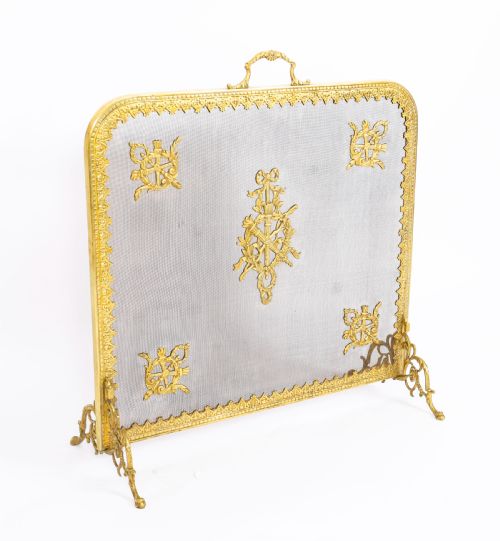


Gilded Metal Screen
These gilded metal screen examples bring warmth and sculptural elegance to a hearth, offering both protection and a refined decorative focal point.
Gilded Metal Screen
A gilded metal screen serves primarily as a fireplace guard, shielding a room from stray embers while adding architectural presence to the hearth. When you search for gilded metal screen, you encounter ornate domestic accessories designed to catch and reflect the ambient light of a fire.
The pieces listed on this page predominantly date from the nineteenth century, including Victorian examples and specific years such as eighteen-eighty and nineteen-hundred. Common forms encompass fire screens, fireplace screens, and related guards alongside tapestry banner hangers.
Origins heavily favour French design, featuring distinct movements like French Rococo, Louis XVI Revival, French Empire Revival, and Victorian Neoclassical Revival. Alongside these ornate continental styles, you also find British Victorian Arts and Crafts Gothic interpretations.
How they were made
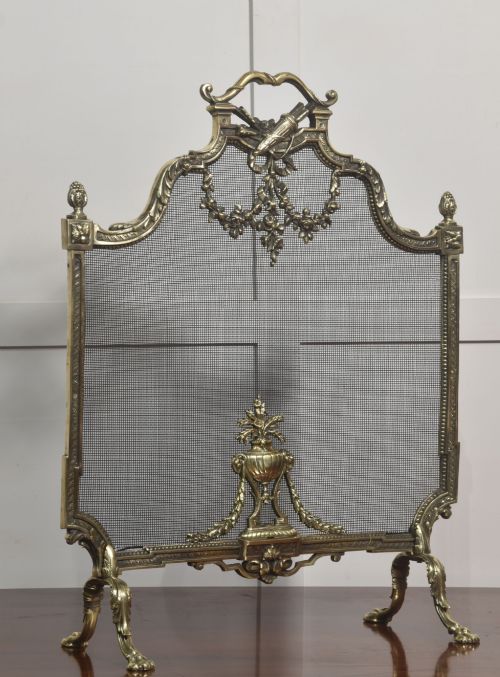
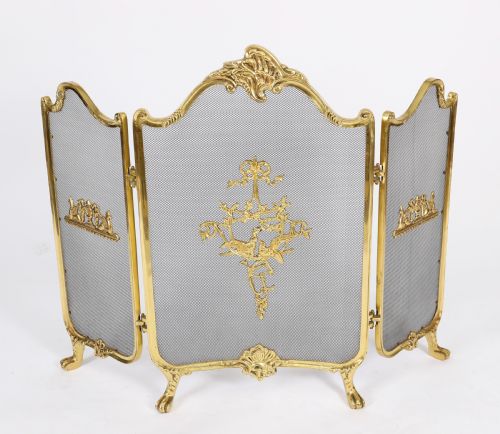
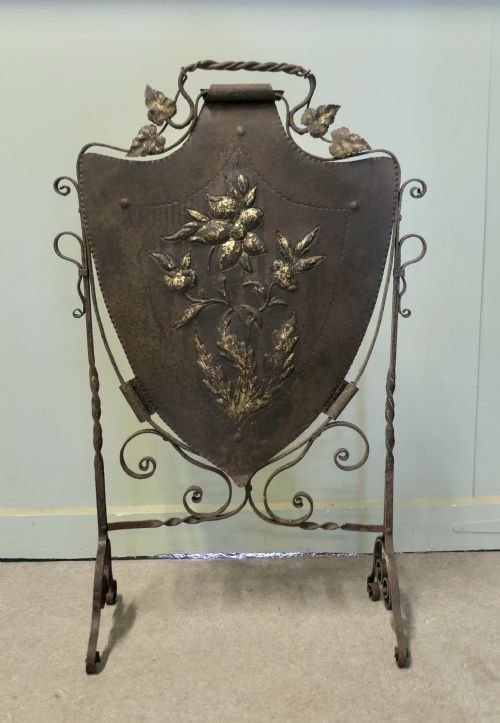
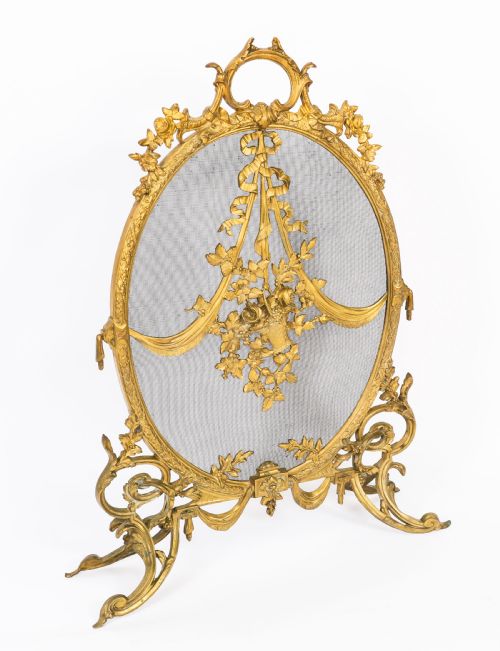
Makers utilised durable base metals including brass, bronze, wrought iron, and steel to construct the structural frames and protective barriers. Wire mesh and standard mesh panels were integrated into these metal frameworks to contain sparks while maintaining visibility of the hearth.
The metallic surfaces received rich surface treatments of gilt, gilt brass, and gilt bronze to create a luminous, reflective finish. Artisans employed elaborate casting, forging, and revivalist styling techniques to shape intricate motifs such as flaming torches, classical trophies, and Gothic shields.
Gilded Metal Screen Retail Price Guide 2026
Typical asking prices for gilded metal screen among the pieces listed under this phrase on Sellingantiques today, from the lower quarter to the upper quarter. They describe what is for sale here now, not the wider market.
What varies in quality
The refinement of the casting and chasing distinguishes exceptional metalwork from simpler production, particularly in French Rococo and Empire revival pieces. Crisp detail in decorative elements like flaming torches and classical trophies indicates superior craftsmanship.
The integrity of the construction and the quality of the original gilding dictate the overall standard of a piece. Heavier gauge metals and fully integrated mesh panels demonstrate a higher tier of domestic utility and artistic ambition.
The Gilded Metal Screen Glossary
- Gilt bronze
- Metal objects cast in bronze and treated with a thin layer of gold or gold-coloured alloy. This technique yields a durable, lustrous surface popular in French decorative arts.
- Mesh
- A woven network of metal wire forming a flexible yet sturdy barrier. It allows heat to radiate into the room while intercepting flying sparks.
- Fire screen
- A movable barrier placed before a fireplace when the hearth is unlit. It conceals the empty grate and protects the room from sudden bursts of heat.
- Rococo revival
- A nineteenth-century design movement mimicking the asymmetrical scrolls, C-curves, and naturalistic motifs of the eighteenth century. It appears frequently in ornamental fireplace furnishings.
- Gilt brass
- Brass treated with a golden surface coating to emulate solid gold or high-grade bronze. It provides a bright, reflective finish suited to Victorian interiors.
Gilded Metal Screen: Frequently Asked Questions
What is a gilded metal screen?
A gilded metal screen is a decorative barrier designed to sit in front of a domestic fireplace. It protects the room from embers while providing a reflective, ornamental focal point.
These pieces typically incorporate mesh panels held within ornate brass, bronze, or iron frames. They reflect the light of the fire and dress the hearth when no fire burns.
How were fire screens used historically?
Historically, fire screens shielded inhabitants from the intense, direct heat of open coal or wood fires. They also served to hide the unappealing blackened hearth during warmer months.
In grand nineteenth-century drawing rooms, elaborate French and Victorian screens demonstrated the homeowner's taste and wealth. They doubled as ornamental furniture that filled empty hearth space.
How do I style a metal screen at home?
Place the screen directly in front of the fireplace opening as a permanent decorative feature of the room. It pairs well with period mantelpieces and traditional hearth accessories.
Ensure the scale of the screen complements the dimensions of your fireplace surround. Let the gilded surfaces catch natural daylight or evening lamplight to enhance the interior atmosphere.
How do I identify nineteenth-century styles?
Nineteenth-century pieces often borrow heavily from earlier historical movements such as French Rococo, Empire, and Gothic Revival. Look for characteristic motifs like classical trophies, scrolling foliage, and architectural shields.
Materials such as heavy cast gilt bronze and woven wire mesh point directly to Victorian and nineteenth-century manufacturing methods. Construction techniques and patination on the metal surface further confirm the period.