





Gilded Five Light Chandelier
A gilded five light chandelier brings warm metallic reflection and balanced illumination to a room, drawing the eye upward with period grace.
Gilded Five Light Chandelier
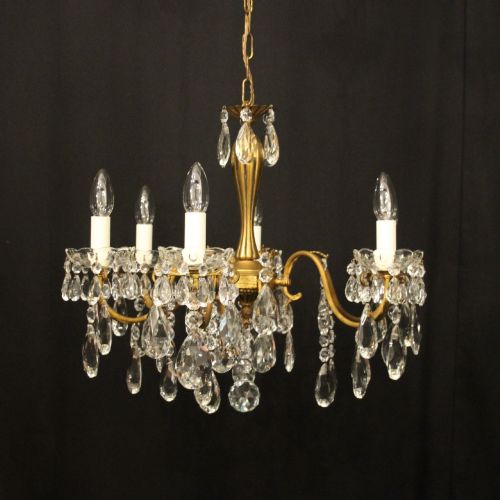
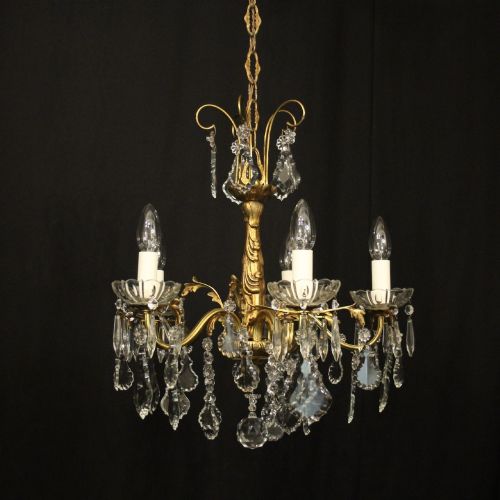
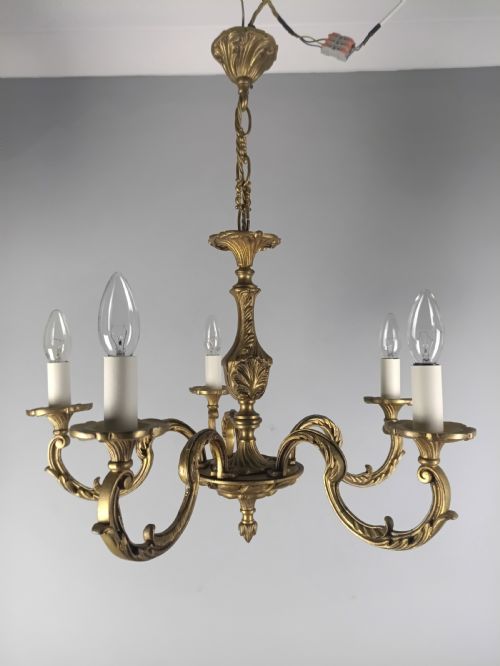
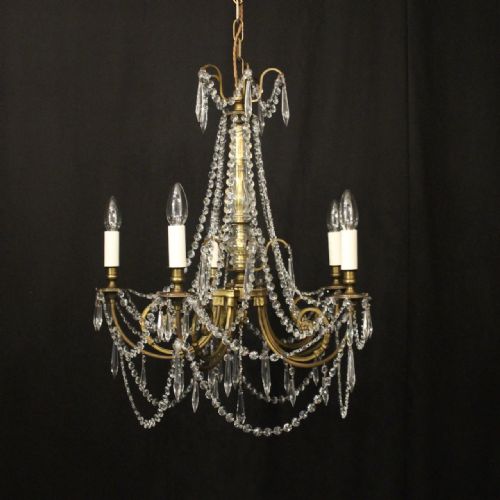
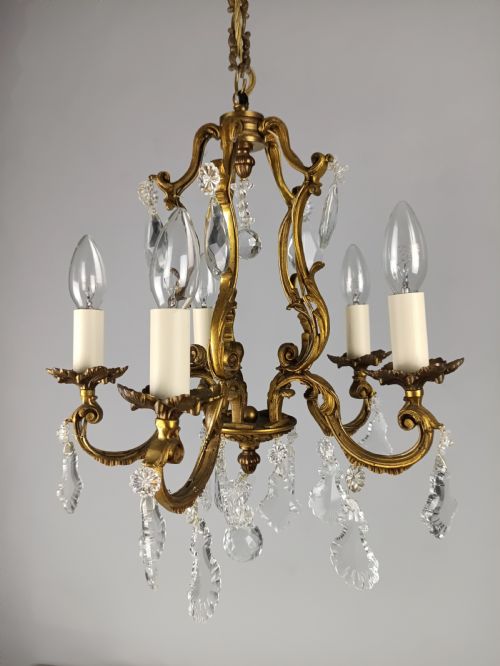
A gilded five light chandelier is an overhead lighting fixture designed to distribute illumination across five distinct branches or arms. When searching for a gilded five light chandelier, buyers encounter pieces primarily originating from French workshops spanning the nineteenth century through the early decades of the twentieth century. These fixtures often embody styles ranging from French Rococo and Neoclassical to mid-century and country aesthetics.
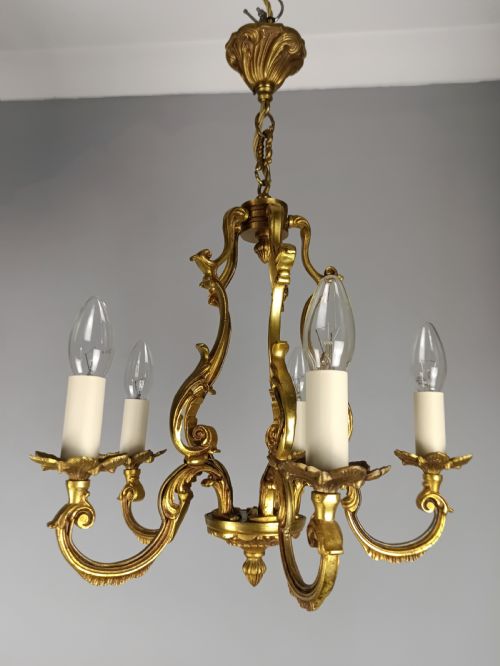
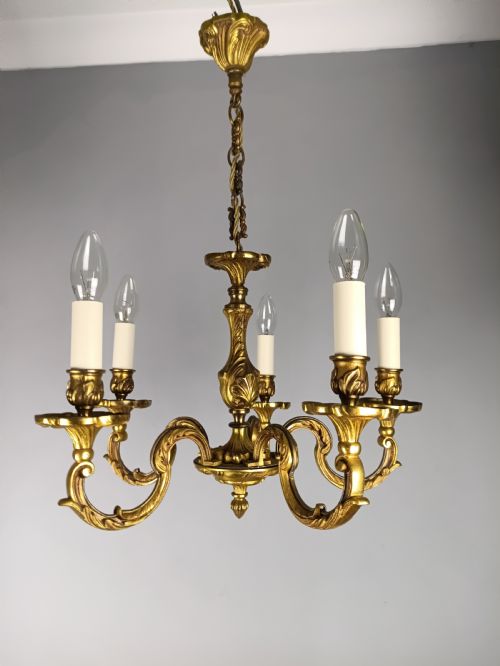
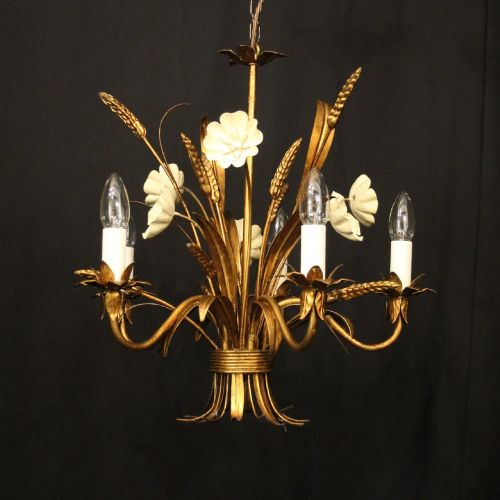
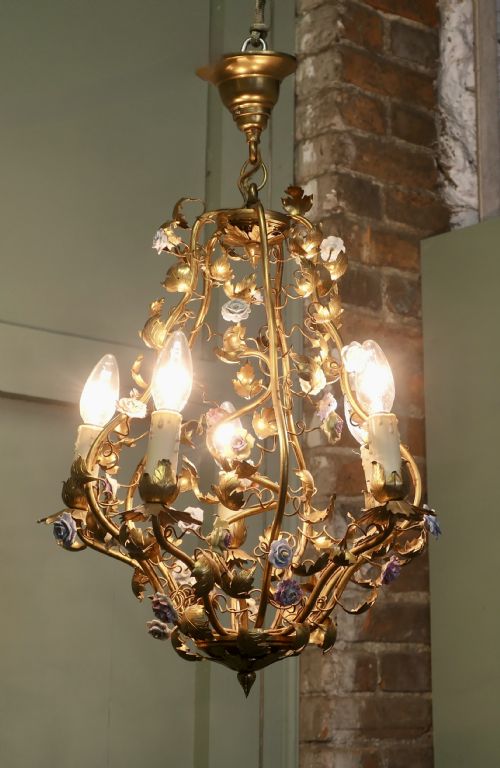
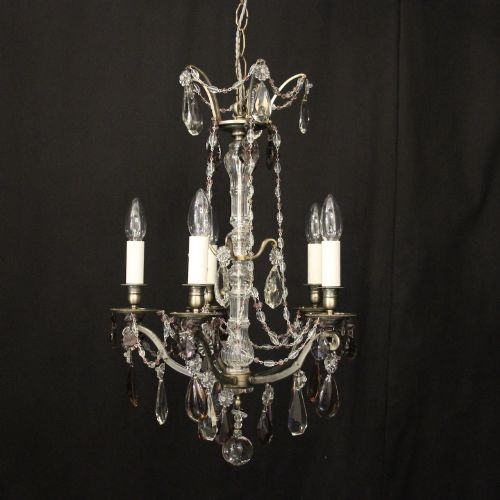
The most common variations on this page include gilt bronze, gilt brass, and gilded metal constructions, frequently adorned with crystal drops or glass elements. Examples such as the French wheatsheaf design or birdcage frames demonstrate the decorative diversity found within this category. While many pieces date from the 1920s and 1930s, nineteenth-century and eighteenth-century items also appear among the selections.
Materials and construction methods
Makers utilised cast and forged metals such as brass, bronze, and copper as the structural backbone for these fixtures. Gilt surfaces were achieved through the application of gold leaf or gilt finishes upon the metal armature, creating a reflective sheen that endures across the decades.
Crystal and cut glass components were suspended from the arms and central stems to refract the candlelight or electric illumination. Additional decorative elements include tolewear, ceramic flowers, and carved giltwood, reflecting the specific regional styles of French and Italian ateliers.
Gilded Five Light Chandelier Retail Price Guide 2026
Typical asking prices for gilded five light chandelier among the pieces listed under this phrase on Sellingantiques today, from the lower quarter to the upper quarter. They describe what is for sale here now, not the wider market.
One unexpected chandelier even incorporates ceramic flowers alongside gilt metal.
Distinctions in quality
The refinement of the metal casting and the depth of the gilding set superior pieces apart from simpler domestic examples. Finer fixtures exhibit crisp chasing on bronze and brass surfaces, where hand-finished detailing brings leaf and scroll motifs into sharp relief.
The integration of high-grade cut glass or crystal drops adds substantial visual weight and light refraction, whereas lesser pieces rely on simpler pressed glass. Structural integrity in the arm joints and the secure attachment of the central stem also indicate the original standard of manufacture.
The Gilded Five Light Chandelier Glossary
- Gilt bronze
- Metal cast in bronze and treated with a gold-coloured surface finish. This material allows for intricate casting and sharp decorative details.
- Tolewear
- Painted or lacquered sheet metal used for decorative items and light fixtures. It often incorporates hand-painted floral motifs.
- Birdcage chandelier
- A lighting form featuring an open metal framework resembling a birdcage, often draped with crystal strands.
- Wheatsheaf
- A decorative motif styled after bundled wheat stalks, commonly utilised in French decorative arts to symbolise abundance.
- Cut glass
- Glass that has been faceted or patterned using a cutting wheel to enhance light reflection.
Gilded Five Light Chandelier: Frequently Asked Questions
What periods do these chandeliers come from?
The pieces span from the eighteenth century through the nineteenth century and into the early twentieth century, with notable concentrations from the 1920s and 1930s.
French workshops produced the majority of these examples, encompassing styles such as Rococo, Neoclassical, and country designs.
How were these chandeliers originally used?
These fixtures hung in reception rooms, salons, and dining spaces to provide both ambient illumination and a focal point for the interior.
Originally designed for candles, many have since been wired for electricity while retaining their decorative structural arrangement.
How do I live with a antique chandelier?
Integrating an older lighting fixture involves ensuring the ceiling mounting can support the weight of metal and crystal components.
Regular dusting with a soft cloth preserves the gilt surface and maintains the clarity of the suspended glass elements.
How can I tell different styles apart?
Style differentiation relies on observing the decorative motifs, such as asymmetric scrolls in Rococo pieces or formal symmetry in Neoclassical examples.
Materials also offer clues, as gilt bronze typically appears on earlier or more formal pieces, while tolewear and ceramic elements align with country aesthetics.