

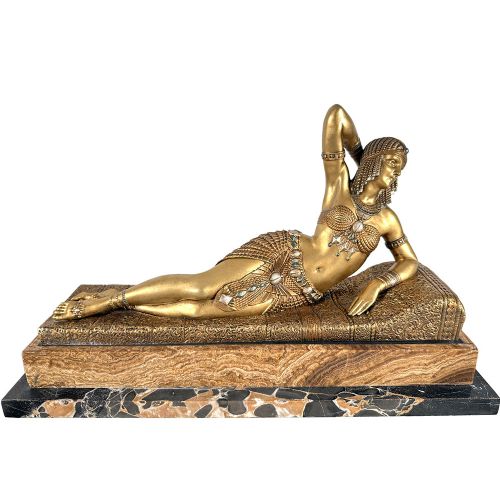


Gilded Bronze Female Figure
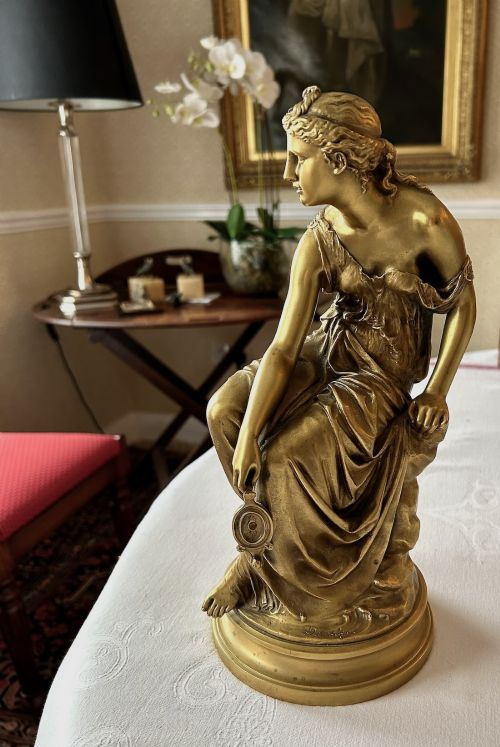
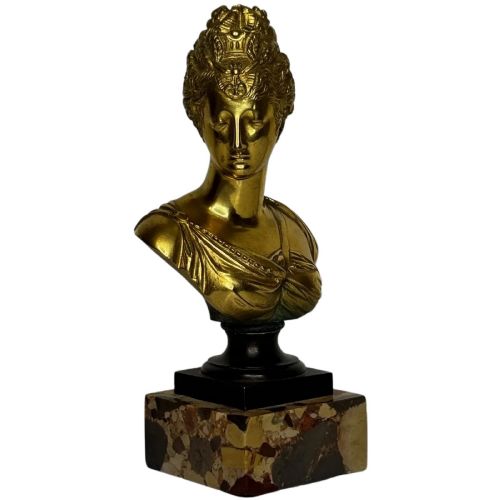
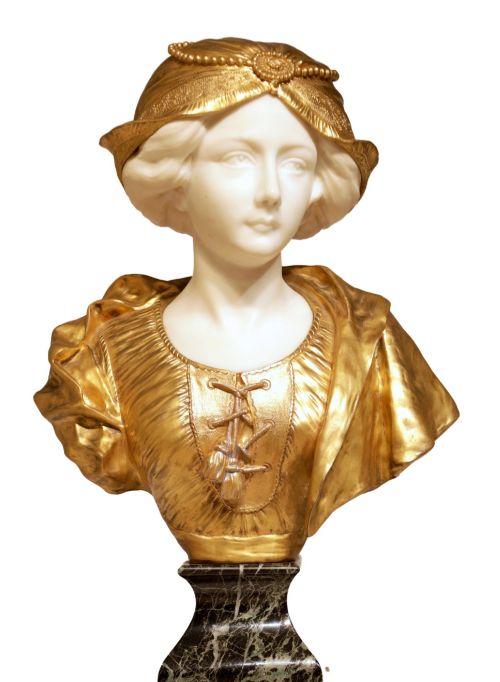
A gilded bronze female figure brings classical poise or modern drama to a room, cast in metal and mounted on stone.
Gilded Bronze Female Figure
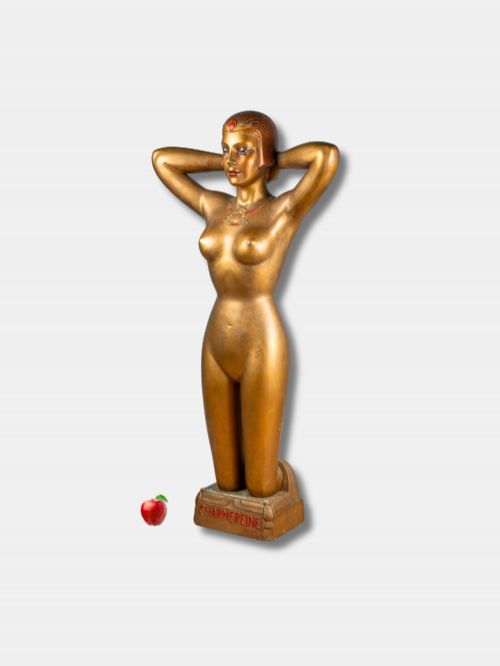
A gilded bronze female figure stands as a sculpture, lamp, candlestick, or clock component, originating from nineteenth-century France through the Art Deco era. The pieces capture classical maidens, mythological figures, dancers, and advertising mannequins cast in metal.
Nineteenth-century examples lean towards Neoclassical, French Renaissance Revival, and Art Nouveau styles, often combining bronze with marble or onyx bases. Later works from the 1920s and 1930s embrace Art Deco lines, featuring patinated and gilded finishes on stone plinths.
The selection ranges from cabinet statuettes and wall light brackets to large torchieres and table lamps. Subjects include historical portraits, literary characters, and allegorical representations rendered with detailed tooling.
How They Were Made
Foundries cast these figures in bronze or spelter using traditional techniques before applying mercurial gilding, ormolu, or painted patination to the surface. Many workshops combined cast metal with carved elements in marble, onyx, alabaster, glass, or plaster.
Sculptures and figural lamps rest upon heavy stone bases, secured with threaded bolts and retaining signed foundry cachets or artist incisions. The union of metal casting and stone carving required specialist assembly by Parisian artisans.
Gilded Bronze Female Figure Retail Price Guide 2026
Typical asking prices for gilded bronze female figure among the pieces listed under this phrase on Sellingantiques today, from the lower quarter to the upper quarter. They describe what is for sale here now, not the wider market.
Listings feature works in gilt bronze, patinated bronze, and spelter, paired with marble, onyx, alabaster, and glass bases.
What Varies in Quality
The crispness of the chasing and the depth of the metal chisel work separate standard commercial castings from signed foundry pieces. Finer works retain intricate facial expressions, delicate drapery folds, and clean finishing on hidden surfaces.
The choice of base material influences the character of the piece, with solid portoro marble, onyx, and carved alabaster commanding superior presence compared to simpler plaster or composite mounts. Original gilding and integrated mechanisms, such as clock movements or lamp fittings, preserve the integrity of the object.
Etienne-Henri Dumaige·Affortunato Gory·Demetre Chiparus·Barbedienne·Ernst Barrias·Bruno Zach·Claire Colinet·Jean Jacques Pradier·Coutan·Charlotte Monginot·G.V. Vaerenbergh
The Gilded Bronze Female Figure Glossary
- Ormolu
- Gilded bronze, usually produced by applying a mercury and gold amalgam to a bronze base and heating it until the mercury evaporates. This technique creates a durable, warm metallic lustre seen on nineteenth-century French mounts and figures.
- Patina
- The surface sheen or coloration acquired by bronze through age or chemical treatment. Artists often used patination alongside gilding to create tonal contrast on clothing and skin.
- Spelter
- A zinc alloy used as a less expensive alternative to bronze, particularly common in decorative figures and lamps from the early twentieth century. It accepts metallic finishes well but possesses a lighter weight and softer structure.
- Portoro
- A distinctive black marble with golden-yellow veins originating from Italy. It frequently serves as a contrasting base for bronze and marble sculptures.
- Caryatid
- A sculpted female figure serving as an architectural support or pillar. These appear on candlesticks, wall lights, and clock cases within the selection.
Gilded Bronze Female Figure: Frequently Asked Questions
Were these figures always mounted on stone?
Many figures share a design that incorporates a fitted marble, onyx, or portoro base to add visual weight and stability. Bases served both a functional purpose, keeping tall sculptures upright, and an aesthetic one, elevating the metallic finish.
Some pieces, such as wall light brackets and torcheres, mounted directly to walls or architectural elements instead of resting on freestanding stone plinths.
How can I tell Art Nouveau from Art Deco pieces?
Art Nouveau pieces, produced around the turn of the twentieth century, feature flowing organic lines, natural motifs, and draped female forms with long, sweeping hair. The posture often mimics the asymmetry found in nature.
Art Deco figures from the 1920s and 1930s adopt geometric precision, streamlined silhouettes, and dynamic poses associated with modern dance and speed. Their bases tend to be stepped or rectangular blocks of contrasting stone.
Can these antique lamps be safely rewired?
Many figural lamps and torcheres accommodate modern electrical wiring while retaining their original brass or bronze sockets and fittings. A qualified electrician can replace aged internal cords without altering the external metalwork or damaging the sculpture.
Check that the weight of the figure adequately balances any added lampshade to ensure the piece remains stable on a desk or table.