


Gilded Brass Framed Mirror
A gilded brass framed mirror brings unmistakable warmth and reflective depth to a room, drawing the eye instantly.
Gilded Brass Framed Mirror
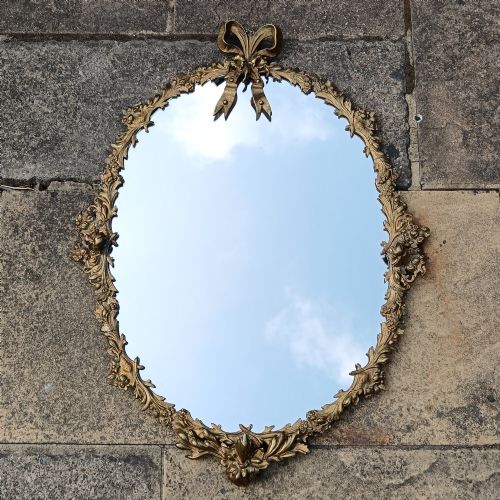
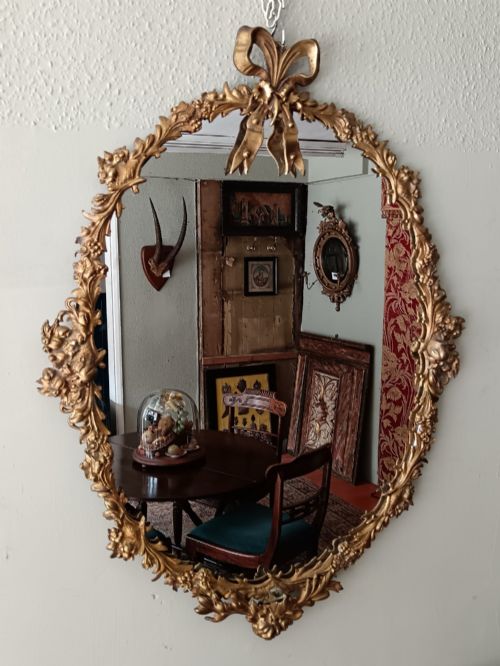
A gilded brass framed mirror provides a reflective surface held within a cast or chased metallic mount, often finished in gilt bronze, ormolu, or gilt metal. These pieces frequently draw upon historical French and British design vocabularies, notably Louis XVI Revival, Regency, and Victorian Rococo Revival styles.
Buyers browsing this selection will most commonly encounter wall mirrors, alongside occasional cheval mirrors, panel mirrors, and table mirrors. Dating spans from the Regency era through the Victorian period, late nineteenth-century French ateliers, and into the early twentieth century.
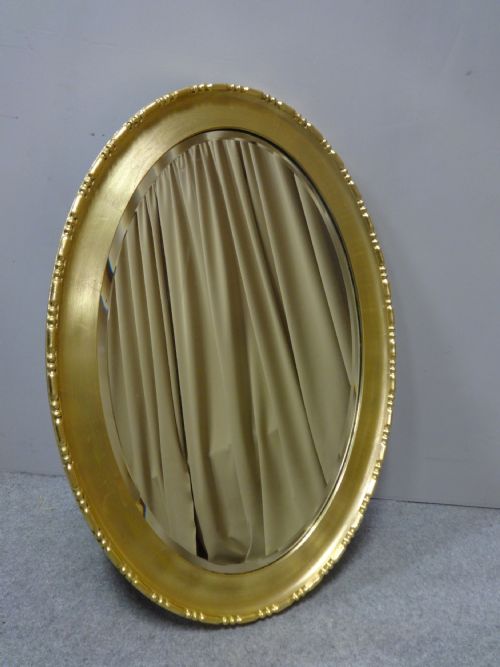
The forms range from oval wall-hanging frames to architectural wall mirrors and heavy bronze two-sided cheval mirrors. Many incorporate decorative motifs derived from Neoclassical and French Chateau traditions, occasionally integrating secondary materials like ebonised wood or enamel plaques.
How they were made
Frames were typically produced through metal casting techniques, utilising cast brass or gilt bronze to achieve intricate relief ornamentation. Artisans then applied gilding or ormolu finishes to create a luminous, durable metallic sheen.
Wood elements such as ebonised wood or structural backing components were frequently joined to support the heavy metal frames and mirror glass. Where present, decorative inserts like Limoges enamel panels were set directly into the metallic housing.
Mirror glass was fitted securely into the rebated frames, often featuring bevelled edges or traditional silvering techniques appropriate to the nineteenth and early twentieth centuries.
The documented materials span mirror glass, gilt metal, and wood, reflecting nineteenth-century and early twentieth-century manufacturing techniques from French and British makers.
What varies in quality
The crispness of the casting work dictates the visual success of the frame, with superior pieces showing sharp, deep relief in the foliage, scrolls, or Neoclassical ribbons. Softer, shallower definition points to more hurried production or later secondary casting.
The quality of the gilding or ormolu determines the longevity and warmth of the surface finish, distinguishing rich, hand-chased metalwork from flatter, uniform platings. Heavier gauge brass and bronze provide structural integrity that prevents warping around the glass.
The integration of artistic details, such as signed enamels or well-balanced proportions in oval and cheval formats, separates standard utility mirrors from exceptional decorative works.
The Gilded Brass Framed Mirror Glossary
- Ormolu
- Gilded bronze, where finely ground gold is applied to a bronze base using a mercury amalgamation technique or modern electroplating. This finish imparts a deep, warm metallic lustre characteristic of fine French decorative arts.
- Louis XVI Revival
- A nineteenth-century design style emulating the neoclassical restraint, symmetry, and straight lines of the French eighteenth-century court. It frequently utilises ribbons, urns, and acanthus leaves in its metal mounts.
- Cheval mirror
- A freestanding full-length mirror suspended on a vertical swivelling frame between two pillars. These pieces allow the glass to tilt to various angles.
- Cast brass
- An alloy of copper and zinc poured into a mould to form solid decorative components. It provides a sturdy armature for wall and table mirrors.
- Ebonised wood
- Timber treated with a chemical stain or dark finish to imitate expensive ebony. It offers a high-contrast dark border that accentuates bright gilded metal frames.
Gilded Brass Framed Mirror: Frequently Asked Questions
What periods do these mirrors span?
The selection includes pieces from the Regency era, the Victorian period, and late nineteenth-century French workshops. Edwardian and early twentieth-century examples also appear.
Stylistic influences stretch from Neoclassical and Louis XVI Revival designs to Victorian Rococo.
Where were these mirrors placed?
Wall mirrors were traditionally hung above mantelpieces, in hallways, or as principal focal points in reception rooms. Cheval and table mirrors stood on dressing tables or floors in bedrooms and boudoirs.
Their reflective surfaces were designed to amplify natural daylight and candlelight in period interiors.
How do I identify a cast brass frame?
Cast brass frames exhibit weight, rigidity, and detailed surface relief formed during the initial metal-pouring process. They often display hand-chased finishing marks under close inspection.
Unlike stamped sheet metal, cast frames maintain deep three-dimensional profiles without bending under pressure.
What is the difference between ormolu and gilt metal?
Ormolu specifically denotes gilded bronze, prized for its warmth and traditional use in high-end French furnishings. Gilt metal encompasses broader metallic alloys treated with a gold-coloured finish.
Both materials achieve a bright decorative surface, but bronze provides a heavier and more resonant structural base.
How do I style a gilded mirror?
A gilded brass framed mirror pairs effectively against dark ebonised woodwork, neutral lime-washed walls, or rich period paint colours. Its metallic sheen bounces light across contemporary and traditional spaces alike.
Positioning the piece opposite a window maximises its ability to brighten smaller rooms.