



Gilded Brass Accent Lamp
These gilded brass accent lamps bring warm, concentrated task lighting and tactile period weight to a scheme.
Gilded Brass Accent Lamp
A gilded brass accent lamp combines cast metalwork with functional illumination, serving as a decorative focal point on side tables and desks. You encounter these pieces across Victorian, Edwardian, and early twentieth-century periods, often incorporating classical motifs.
Most examples originate from nineteenth and early twentieth-century European workshops, bringing substantial weight and rich patination to interior spaces. They function primarily as low-level accent lighting rather than room illumination.
Materials and construction
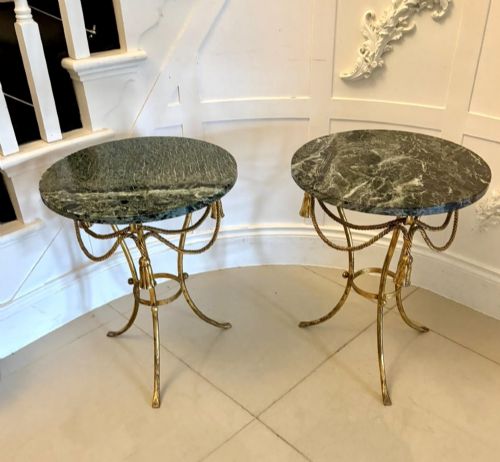
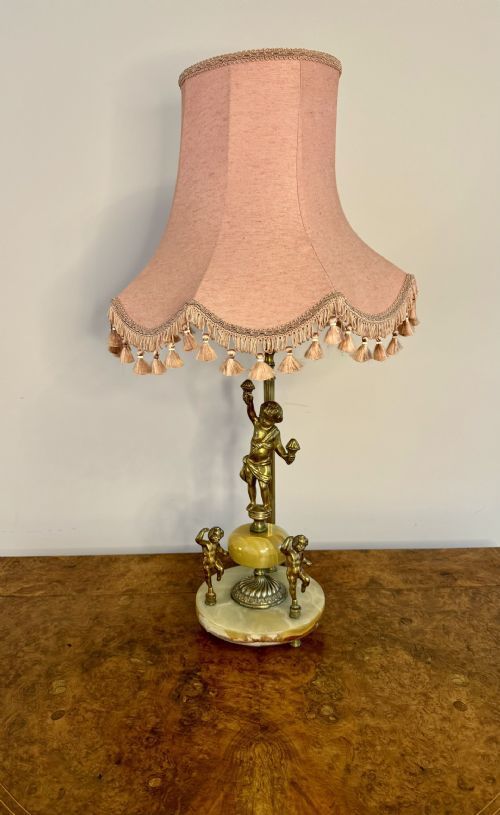
Foundry work relied on casting brass, bronze, and ormolu into intricate decorative components, sometimes refined with mercury gilding or modern electroplating. These metal structures frequently integrate natural stone bases like verde marble or onyx for added stability.
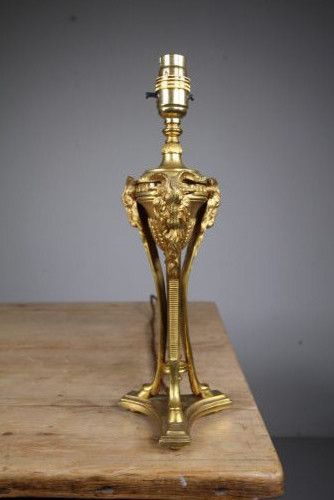
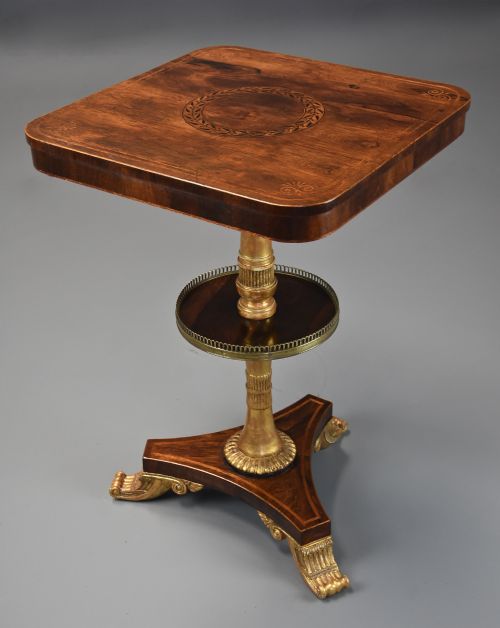
Cabinetmakers and metalworkers combined turned wood such as mahogany or rosewood with gilt metal mounts on table forms adapted for lighting. Surface finishing involved hand-polishing and chasing to accentuate relief details on rams' heads and foliate scrolls.
Several pieces double as occasional tables, proving that Victorians believed every surface needed a place for a lamp and a tassel.
Evaluating quality
The crispness of the chased detail in the metalwork dictates the visual success of the piece, separating sharp, hand-finished castings from softer, mass-produced alternatives. Heavier gauge brass and genuine ormolu exhibit deeper warmth and better durability than thin gilt metal plating.
Integration between the lighting components and the primary structure reveals the care taken in conversion or original manufacture, particularly where wiring passes through stone or timber. The choice of complementary materials, such as genuine verde marble or dense onyx, elevates the baseline standard of the object.
The Gilded Brass Accent Lamp Glossary
- Ormolu
- Gilt bronze produced by applying a mixture of gold and mercury to a bronze base and heating it. This technique creates a rich, matte gold surface finish typical of nineteenth-century French and English luxury goods.
- Verde marble
- A dark green ornamental stone with pale veining, quarried for classical architectural details and furniture tops. It provides a heavy, contrasting plinth for polished brass fittings.
- Onyx
- A banded variety of chalcedony quartz used for decorative table tops and lamp bodies. Its translucent layers catch and reflect ambient light.
- Neoclassical
- A decorative style inspired by classical Greece and Rome, characterised by symmetry, proportion, and motifs such as urns, rams' heads, and acanthus leaves. It dominated late eighteenth and nineteenth-century design revivals.
- Chasing
- The manual technique of refining cast metal surfaces using small punches and hammers. This process sharpens details and textures after the initial casting.
Gilded Brass Accent Lamp: Frequently Asked Questions
What is a gilded brass accent lamp?
It is a decorative lighting fixture made primarily from cast brass with a gold-coloured surface finish, designed to sit on smaller pieces of furniture.
These lamps use traditional foundry techniques and often incorporate secondary materials like marble or onyx in their bases.
How were these lamps used historically?
They provided localized illumination for reading, writing, or task work on desks, side tables, and occasional furniture.
Positioned in drawing rooms or parlours, they added ambient warmth and reflected candlelight or early electric light from their polished metal surfaces.
How do I live with one today?
Place them on low tables, sideboards, or mantelpieces where their metallic finish can catch natural light during the day.
Ensure the electrical wiring meets modern safety standards while preserving the original switches and brass lamp holders where possible.
How do I tell different periods apart?
Examine the decorative motifs and casting quality, as Regency and Victorian pieces favour heavier classical detailing like rams' heads and neoclassical urns.
Later Edwardian and Art Nouveau examples introduce more fluid, organic lines, lighter forms, and integrated stone elements characteristic of the early twentieth century.