
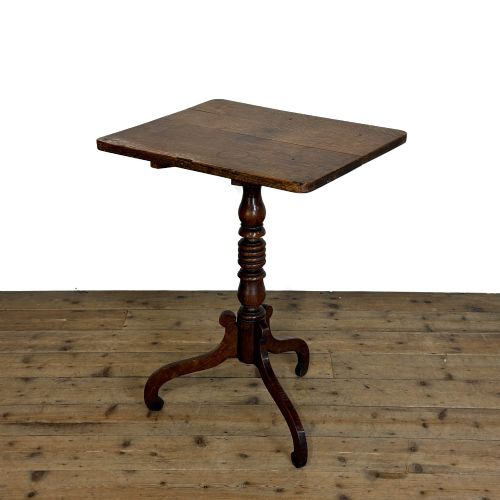
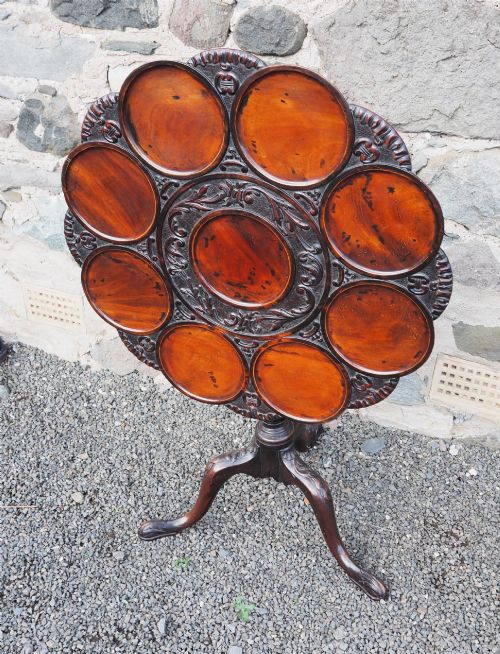
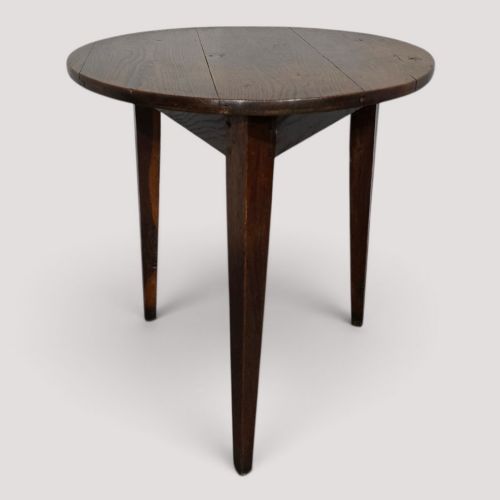
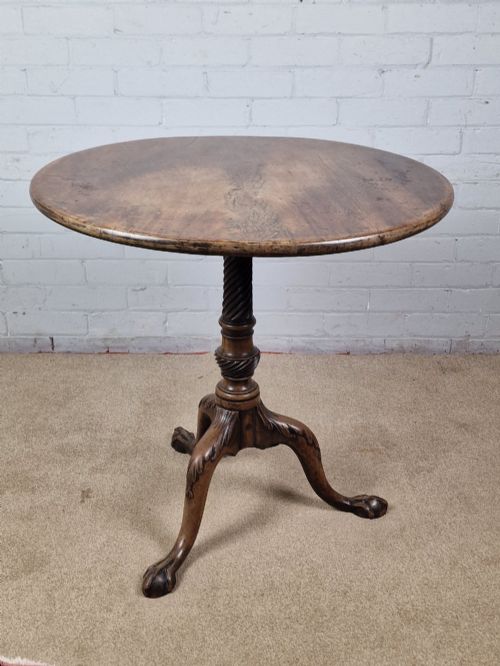
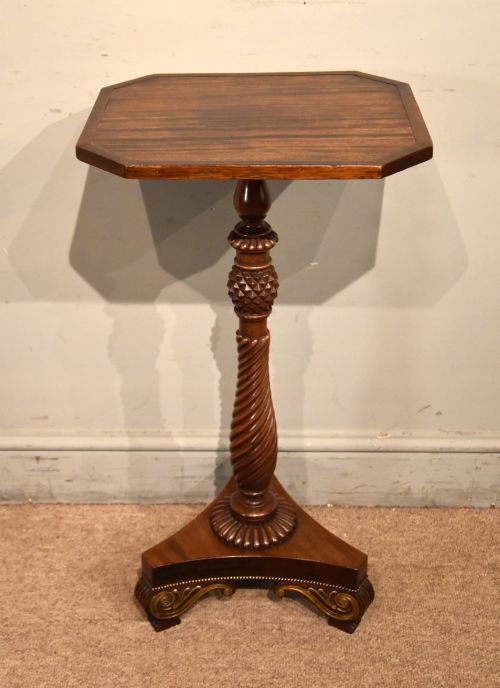
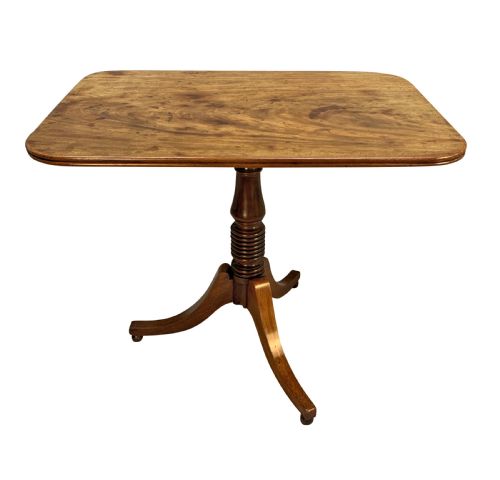
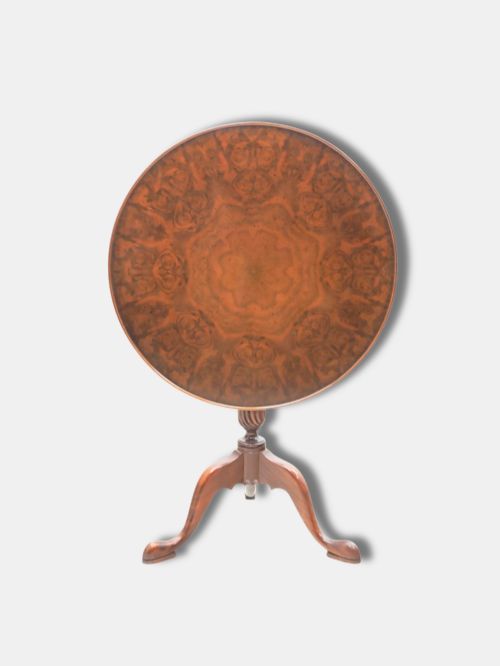
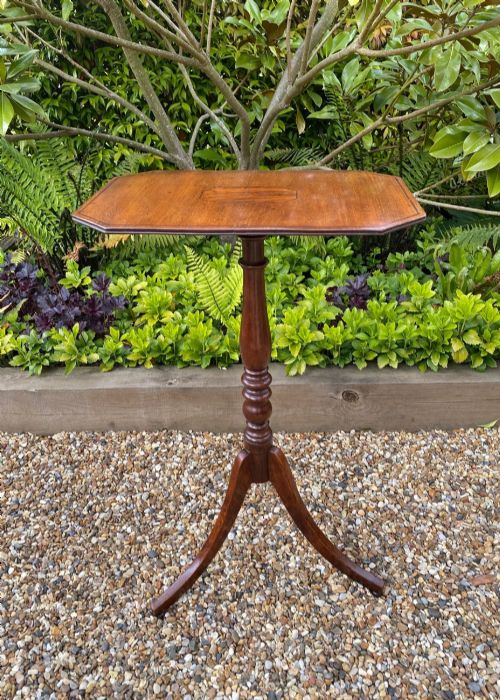
Georgian Tripod Occasional Table
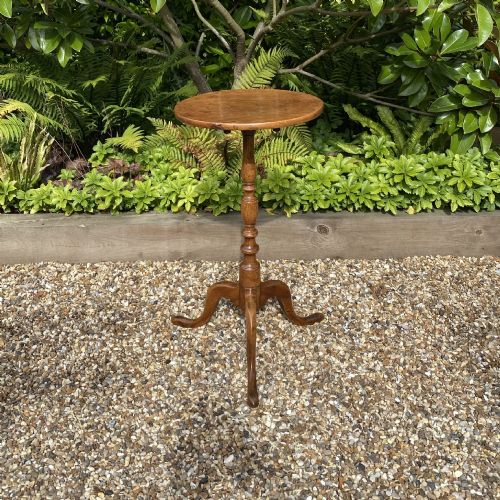
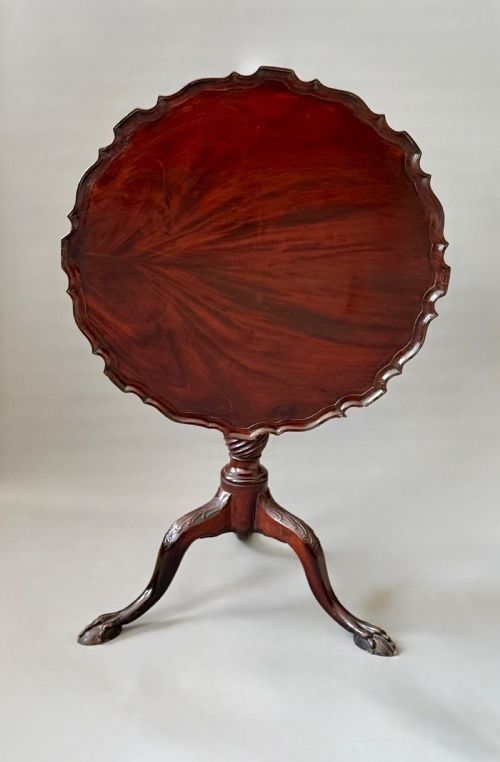
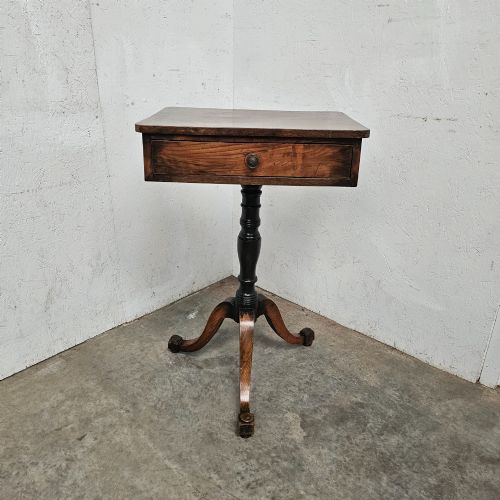
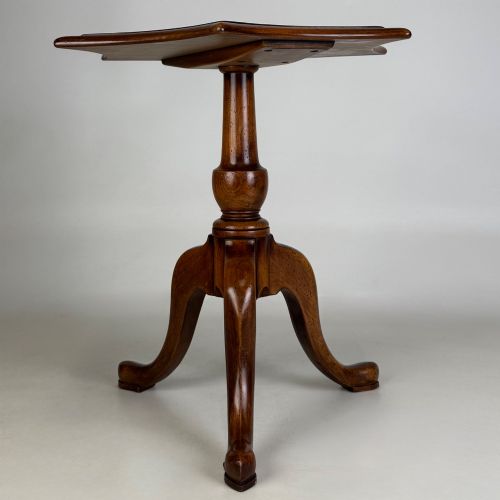
A georgian tripod occasional table brings portable elegance to a room, offering a circular top raised on a slender three-legged pedestal base.
Georgian Tripod Occasional Table
The georgian tripod occasional table generally appears as a compact domestic stand designed for tea, wine, or candle lighting.
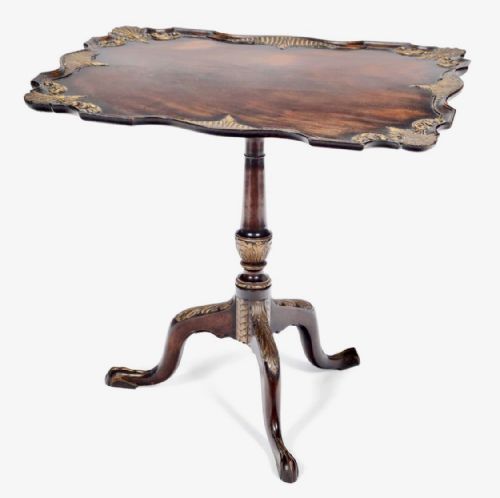
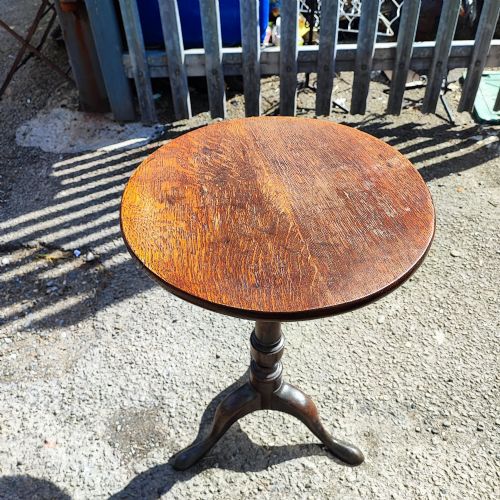
Makers produced these versatile pieces in mahogany, oak, and walnut, often featuring circular, dish, or pie-crust edges.
Most examples date from the eighteenth and nineteenth centuries, ranging from plain country workshop versions to refined urban models.
Materials and Construction
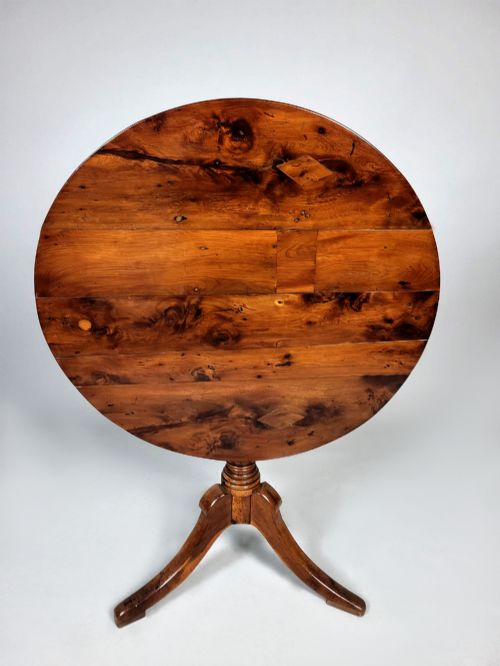
Cabinetmakers fashioned tops from dense timbers like Cuban mahogany or native oak and elm, supported by turned central pedestals.
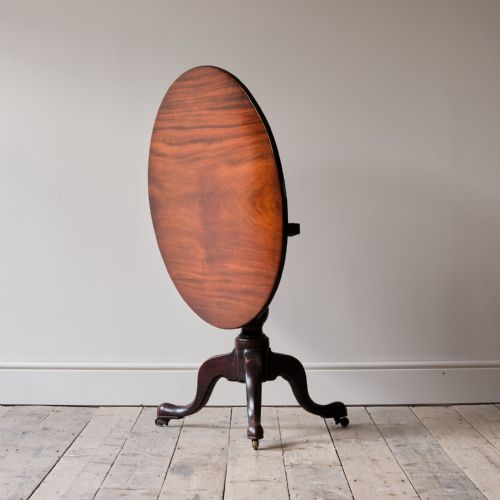
Many examples utilise a tilt-top mechanism or a revolving birdcage pivot, allowing the surface to fold flat when not in use.
Listings feature woods including mahogany, oak, walnut, elm, and boxwood across periods spanning from the eighteenth century into the twentieth century.
Grading Quality
Superior examples display crisp carving on the cabriole legs and pad or claw-and-ball feet, alongside well-figured timber grains.
The tightness of the birdcage mechanism and the stability of the central column dictate the mechanical integrity of the piece.
Gillow
The Georgian Tripod Occasional Table Glossary
- Tilt-top
- A hinged table top that pivots to a vertical position for storage. This clever mechanism saved valuable floor space in period rooms.
- Birdcage
- A wooden revolving box structure beneath the table top. It allows the surface to both rotate and tilt.
- Pie-crust edge
- A raised, scalloped rim carved directly from the solid timber edge of the table. It prevents small vessels from sliding off.
- Tripod base
- A pedestal support resting on three splayed legs. This design ensures stability on uneven historical floorboards.
Georgian Tripod Occasional Table: Frequently Asked Questions
What were georgian tripod occasional tables used for?
These versatile stands served primarily for holding tea services, wine bottles, or illuminating candles beside seating areas. Their portability allowed servants to move them easily around the reception rooms.
Over time, owners adapted them as general display surfaces for decorative objects and lamps within the home.
What is a birdcage mechanism?
The birdcage is an assembly of small wooden spindles connecting the table top to the central pedestal. It permits the surface to rotate horizontally as well as tilt vertically.
Master cabinetmakers utilised this complex joint on finer examples to improve daily utility.
How can you tell oak from mahogany examples?
Oak pieces generally exhibit a pronounced grain pattern with visible medullary rays, pointing towards earlier country workshops. Mahogany offers a smoother, reddish-brown surface favoured by urban cabinetmakers.
Both timbers provide distinct visual weights suited to different interior settings.