



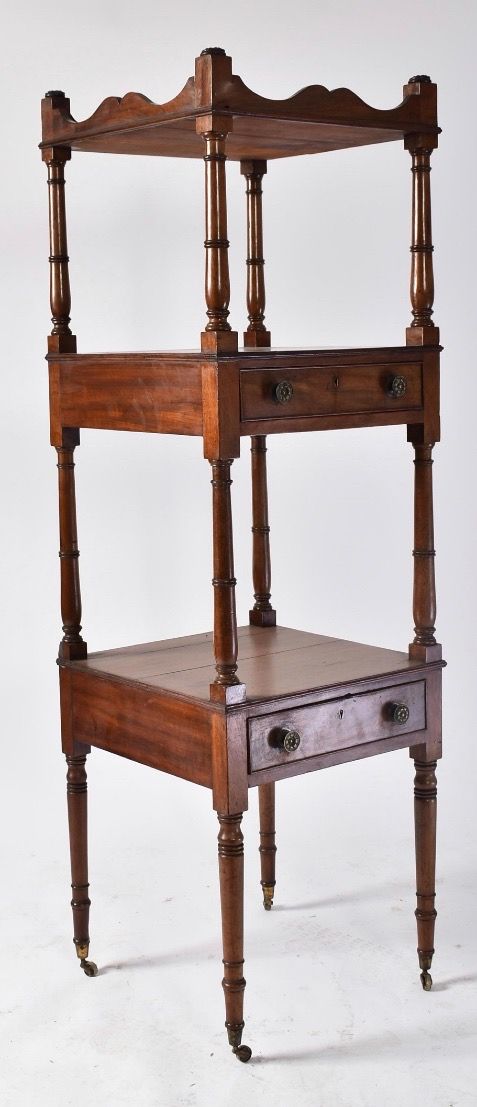
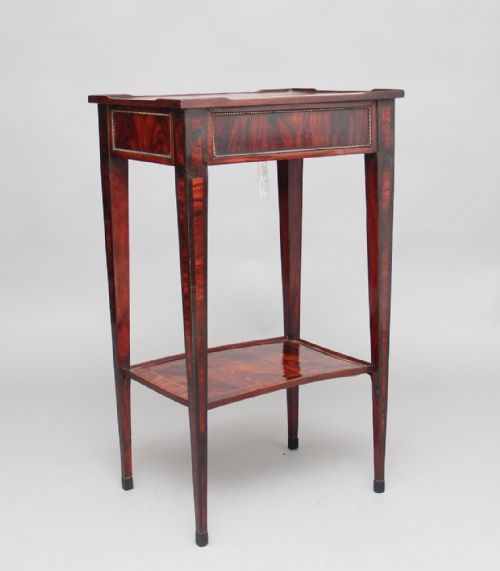


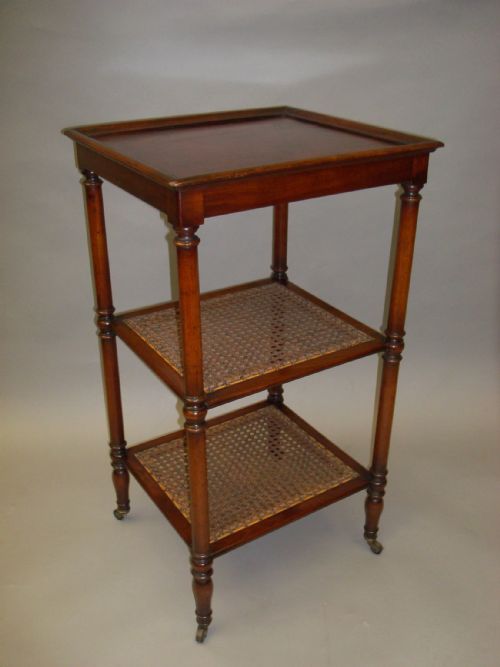

Georgian Style Etagere
A georgian style etagere brings tiered elegance and practical display space to any room, offering multi-level shelving fashioned from rich timbers.

Georgian Style Etagere
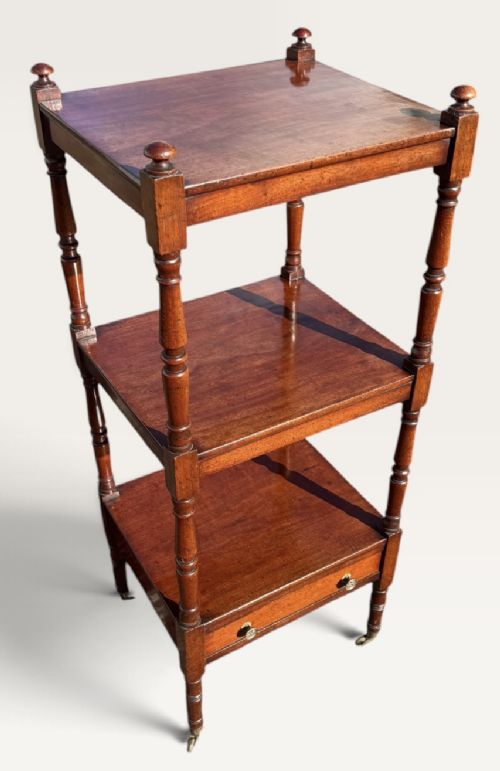
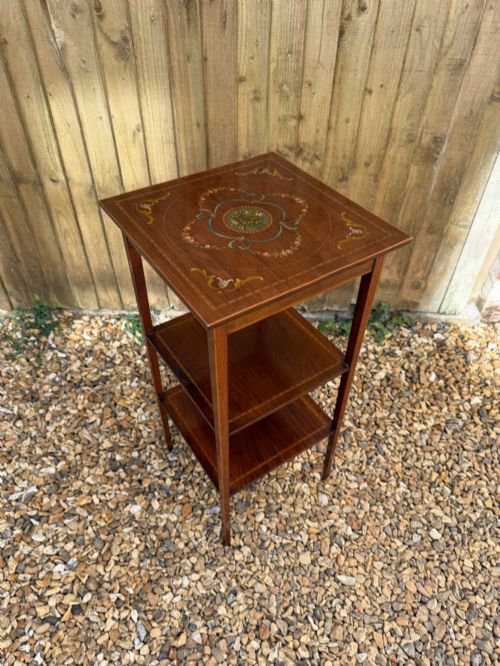
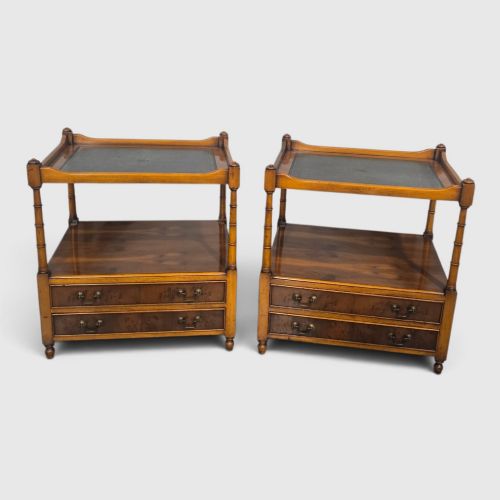
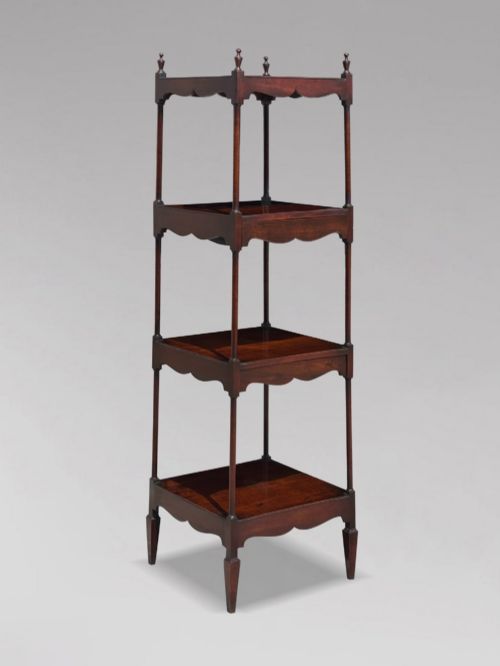
When you search for a georgian style etagere, you encounter multi-tiered shelving units designed for display and utility, spanning periods from the eighteenth century to the twentieth century. The selection includes pieces defined as whatnots, waterfall display shelves, tray-top cabinets, and tiered tables.
The versions most likely to be met on this page range from genuine Georgian examples to later revivals such as Edwardian Chippendale and Sheraton revivals, alongside pieces from the nineteen-thirties and nineteen-tens. Forms vary from three-tier open structures to enclosed cabinets of small proportions and paired lamp tables.
Origins stretch across authentic eighteenth-century craftsmanship and later interpretations, uniting practical tier stands with refined cabinet-making. These items function equally as occasional tables, side tables, and freestanding display pieces within traditional and eclectic interiors.
Materials and construction methods
Construction relies heavily on mahogany, often enhanced by yew, wood veneer, and painted surfaces that lend visual depth to the tiered framework. Boxwood inlay adds delicate linear detail to surfaces, reflecting the decorative priorities of the makers.
Hardware and structural accents frequently incorporate brass, while specialised variations utilise leather and applied inlay wood. Joinery techniques prioritize stability across multiple tiers, supporting open display shelves and enclosed cabinets alike.
Georgian Style Etagere Retail Price Guide 2026
Typical asking prices for georgian style etagere among the pieces listed under this phrase on Sellingantiques today, from the lower quarter to the upper quarter. They describe what is for sale here now, not the wider market.
Assessing quality in tiered furniture
Quality separates through the selection and figure of the timber, where finely grained mahogany or figured yew displays superior depth compared to plain secondary woods. The precision of boxwood inlay and the crispness of carved details distinguish workshop output.
Structural integrity across multiple tiers dictates overall merit, requiring rigid uprights and well-fitted joints that maintain balance without undue wobble. The refinement of secondary details, such as brass fittings and leather inserts, signals the tier of craftsmanship involved.
Gillows
The Georgian Style Etagere Glossary
- Etagere
- A set of open shelves for displaying small objects, ornaments, or books. This multi-tiered form originated in France and became popular in British furniture design.
- Whatnot
- A piece of furniture consisting of a set of open shelves for displaying articles, placed one above the other. It emerged in the Georgian period and remained popular through the Victorian era.
- Inlay
- A technique where pieces of contrasting material are inserted into a recessed base to form a decorative design. Boxwood is frequently used for this purpose on mahogany furniture.
- Veneer
- A thin layer of superior wood glued to a base of commoner timber to provide a decorative surface. This method allows craftsmen to utilise striking wood grains efficiently.
- Regency
- A British design period spanning the early nineteenth century, characterised by classical motifs and refined elegance. Pieces from this era often feature clean architectural lines.
Georgian Style Etagere: Frequently Asked Questions
What is a georgian style etagere used for?
These tiered pieces serve primarily for the display of small decorative objects, porcelain, books, or silver. Their multi-level structure provides vertical storage without taking up excessive floor space.
Historically and today, they function as versatile display units, bedside tables, or lamp tables within principal rooms.
How do I date an etagere?
Dating relies upon examining construction methods, timber selection, and decorative motifs such as inlay or carving styles. Eighteenth-century pieces exhibit different joinery characteristics compared to twentieth-century revivals.
Comparing the specific wood grain, hardware, and stylistic revival cues helps place a piece within its correct era.
Are etageres and whatnots the same thing?
The terms are often used interchangeably to describe multi-tiered shelving furniture designed for display. While etagere leans toward the French term for open display shelves, whatnot is the traditional British descriptor.
Both forms feature stacked platforms supported by columns or slender uprights.
How do I place an etagere in a room?
Freestanding etageres suit corners, empty wall spaces, or positions beside seating furniture where vertical display adds interest. Their open construction keeps rooms feeling light and uncluttered.
Ensuring stable placement on level flooring protects the multi-tiered structure from tipping.