
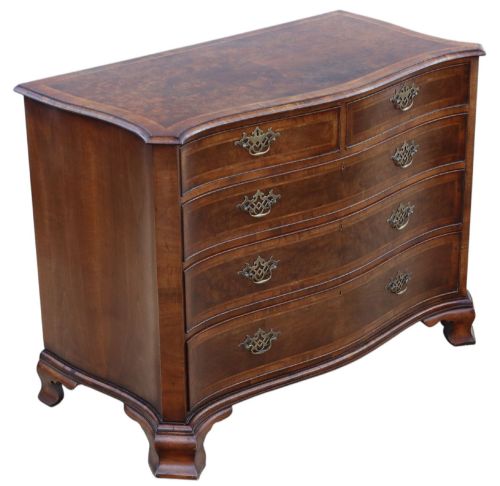
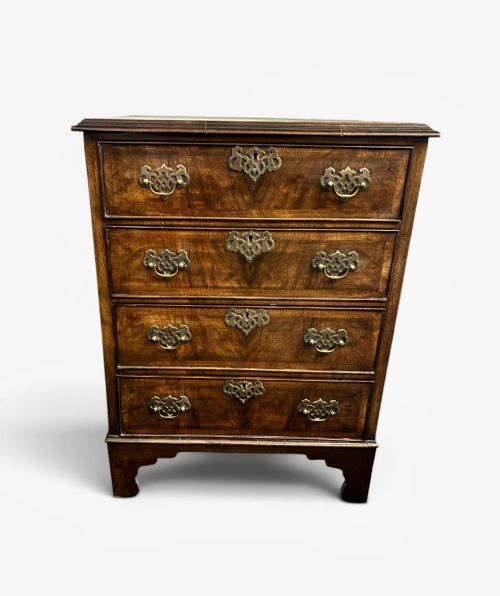
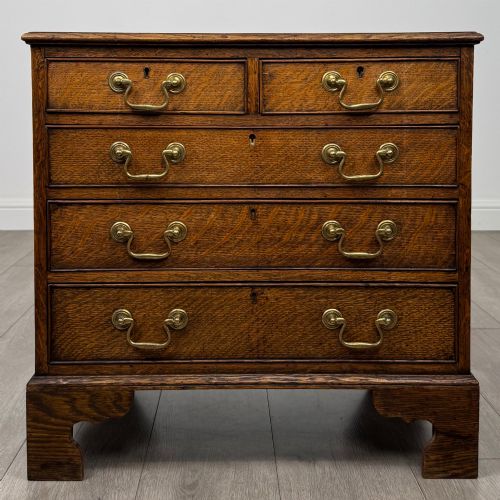
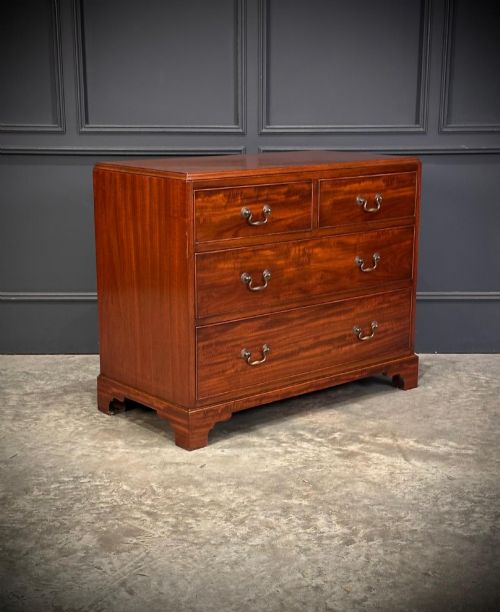


Georgian Style Bachelor Chest
A georgian style bachelor chest is a compact, multi-purpose drawer unit designed for personal use, bringing refined historical proportion and practical surface space to any room.
Georgian Style Bachelor Chest
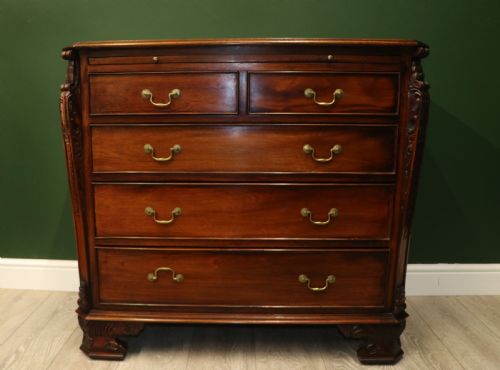
A georgian style bachelor chest serves as a traditional small-scale storage piece, often integrating a pull-out brushing slide or writing drawer beneath the top surface. These versatile units appear across several eras, ranging from genuine 18th-century originals to later Georgian Revival interpretations from the 19th and 20th centuries.
Buyers frequently encounter compact proportions in these listings, with mahogany and walnut being the predominant timbers. The form often combines standard drawer tiers with specialised writing surfaces, making the piece distinct from a conventional chest of drawers.
Materials and Construction
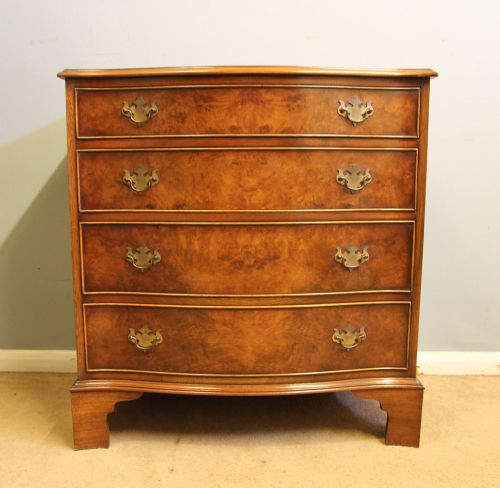
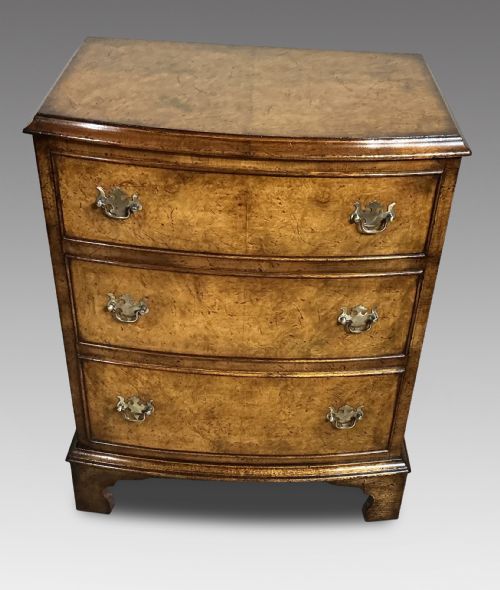
Makers utilised dense hardwoods such as mahogany and walnut, frequently applying burr walnut or burr elm veneers to create rich, figured grain patterns on the primary surfaces. Solid secondary timbers like oak often form the internal drawer linings and carcass frames.
Traditional joinery underpins the construction, featuring hand-cut dovetails on the drawer boxes and stable bracket feet to support the compact frames. Polished brass hardware, including bail handles and escutcheons, secures the drawer fronts and complements the dark wood tones.
Listings feature woods spanning mahogany, walnut, burr walnut, burr elm, and rosewood, alongside green baize lining on internal slide surfaces.
Distinctions in Quality
Quality rests in the crispness of the timber selection and the precision of the cabinetwork, particularly where veneers meet solid mouldings. Superior examples display continuous, book-matched grain across the drawer fronts and flawless integration of the sliding writing surface.
The refinement of secondary details elevates a piece, such as finely proportioned bracket feet, hand-cut dovetails, and original brass fittings. Lesser examples may show heavier secondary woods or less nuanced carving on revival styles.
The Georgian Style Bachelor Chest Glossary
- Brushing slide
- A pull-out shelf located beneath the top surface, historically used for dusting clothes or as a temporary writing ledge. It operates on wooden runners integrated into the chest frame.
- Serpentine
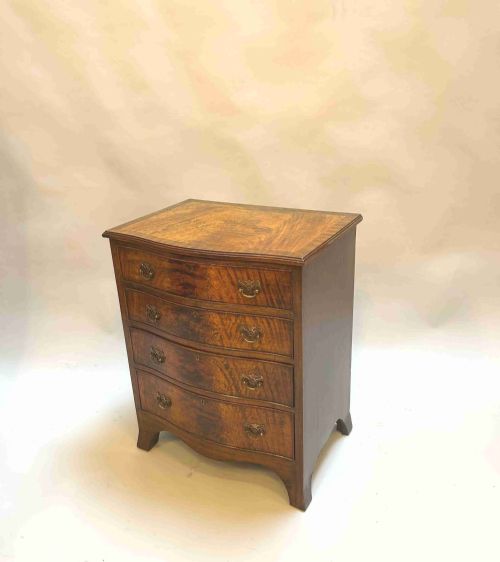
- A front profile characterised by a gentle convex curve flanked by two concave sweeps, creating a flowing, undulating line. This shape demands high skill from the cabinetmaker.
- Crossbanded
- A decorative border technique where strips of veneer are laid perpendicular to the primary grain, framing the drawer fronts or top surface. It provides a neat, contrasting edge.
- Bracket feet
- Simple, foot supports shaped like a bracket, extending outward from the bottom corners of the chest. They lift the carcass slightly off the floor while maintaining a stable stance.
- Burr walnut
- A specialised timber cut from the wart-like growths on walnut trees, yielding complex, swirling grain patterns. Cabinetmakers prize this wood for high-status furniture faces.
Georgian Style Bachelor Chest: Frequently Asked Questions
What is a bachelor chest?
A bachelor chest is a small chest of drawers that typically includes a pull-out shelf for writing or grooming. The compact footprint made it ideal for smaller dressing rooms or private chambers.
Over time, makers adapted the form across different periods, maintaining the signature sliding board while altering the decorative styles to suit prevailing tastes.
How do I use one today?
These chests function well as bedside tables, hallway storage, or compact writing desks in smaller living spaces. The surface handles lamps or display items, while the drawers accommodate daily essentials.
The pull-out slide offers a convenient resting spot for a notebook or cup without cluttering the main top surface.
How can I tell old from revival?
Dating relies on examining the internal timber characteristics, construction methods, and the type of secondary woods used in the drawer linings. 18th-century originals exhibit hand-sawn board marks and distinct joinery wear.
Revival pieces from the Edwardian era or the 1920s often use machine-prepared timber and standardised hardware, though they still employ traditional dovetail techniques.
Are these pieces made of solid wood?
Many chests combine solid structural frames with decorative veneers on the drawer fronts and top panels to showcase figured grains like burr walnut. Secondary woods such as oak appear in internal framing and drawer sides.
Solid mahogany versions also exist, particularly in earlier Georgian iterations and specific revival forms.