



Georgian Sideboard Unit
A georgian sideboard unit brings solid timber craft and centuries of domestic utility straight into a modern room.
Georgian Sideboard Unit
When you search for a georgian sideboard unit, you encounter substantial storage furniture developed primarily during the eighteenth and nineteenth centuries. These items range from oak dressers and housekeepers cupboards to mahogany chests of drawers and washstands.
The versions most commonly met on this page span the Georgian period, the Regency era, and later revivals in oak, mahogany, and pine. They combine utilitarian storage with regional English country designs built to handle daily household demands.
How they were made
Cabinet makers relied principally on sturdy timbers like oak, mahogany, and pine, shaping boards with hand tools and securing joints without modern fasteners. Surfaces often received a wax finish or a coat of paint, while fixtures incorporated functional brass hardware.
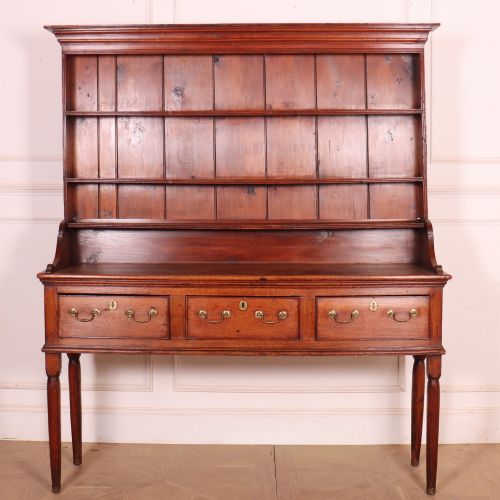
Construction methods varied from formal cabinet work in mahogany to robust country joinery in solid oak and pine. Dressers frequently paired a lower base cabinet or chest with an upper plate rack, while smaller apprentice pieces demonstrated scaled-down mastery.
Georgian Sideboard Unit Retail Price Guide 2026
Typical asking prices for georgian sideboard unit among the pieces listed under this phrase on Sellingantiques today, from the lower quarter to the upper quarter. They describe what is for sale here now, not the wider market.
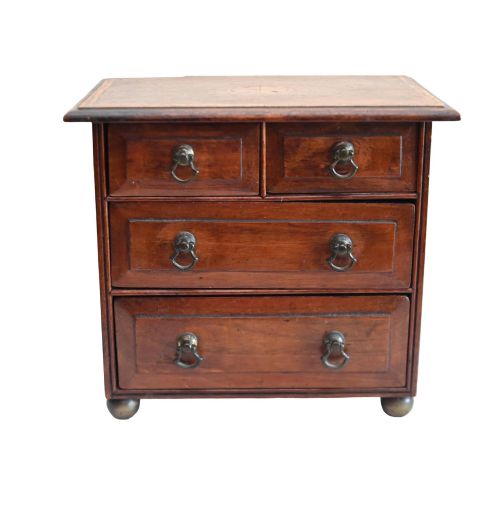
An apprentice spent months building a miniature chest just to prove they could handle dovetails as small as a postage stamp.
What varies in quality
The distinction between ordinary and exceptional pieces lies in the selection of timber grain and the integrity of the original construction. Finer examples display thoughtful proportions, well-figured mahogany or richly patinated oak, and minimal intervention over the decades.
Later revival pieces show differing degrees of historical adherence, where older construction details are either faithfully replicated or simplified for domestic production. The depth of surface patina and the survival of original brass fittings fundamentally alter the character of each item.
The Georgian Sideboard Unit Glossary
- Apprentice chest
- A miniature piece of furniture constructed by a trainee cabinet maker to demonstrate skill. These scaled-down chests mirror the joinery and proportions of full-sized furniture.
- Housekeepers cupboard
- A large storage unit traditionally used for linens, dry goods, and household provisions. These tall pieces feature multiple doors enclosing deep shelving spaces.
- Washstand
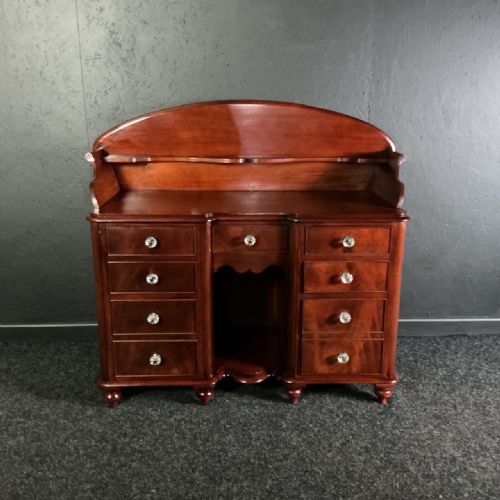
- A dedicated furniture form designed to hold a basin and washing equipment before plumbed bathrooms. They frequently incorporate timber surfaces and low splashbacks.
- Plate rack
- An open shelving attachment mounted above a dresser base to display ceramic plates and platters. It forms the upper half of traditional Welsh dressers and kitchen dressers.
Georgian Sideboard Unit: Frequently Asked Questions
What is a georgian sideboard unit?
A georgian sideboard unit encompasses large storage furniture, dressers, and cupboards produced during the eighteenth and nineteenth centuries.
These pieces reflect both formal urban cabinet making and robust English country joinery.
How do I care for antique oak?
Antique oak benefits from regular applications of traditional soft wax to nourish the timber and protect the surface.
Keep these pieces away from direct heat sources and sudden humidity changes to prevent timber movement.
Are these pieces made of solid wood?
Most items from this period are built using solid timbers such as oak, mahogany, and pine throughout their primary construction.
Regional country pieces particularly rely on thick local hardwoods rather than thin veneers.
What is the difference between revival and period pieces?
Period items were manufactured during the actual historical eras like the Georgian or Regency periods.
Revival pieces reproduce those earlier styles later, such as during the Edwardian era.