





Georgian Red Commode
A georgian red commode brings striking colour and practical storage to a room through rich red walnut and japanned finishes.
Georgian Red Commode
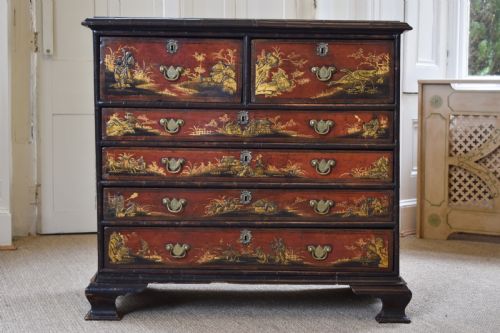
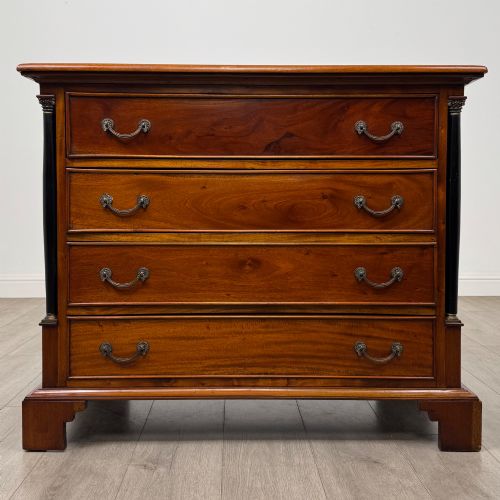
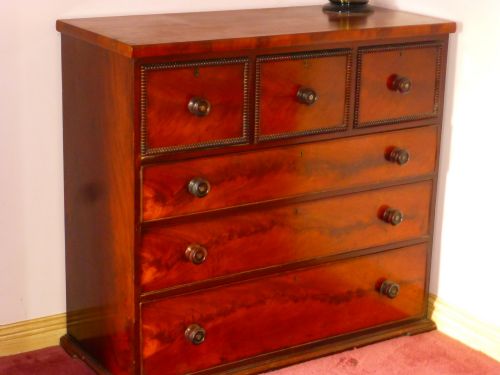
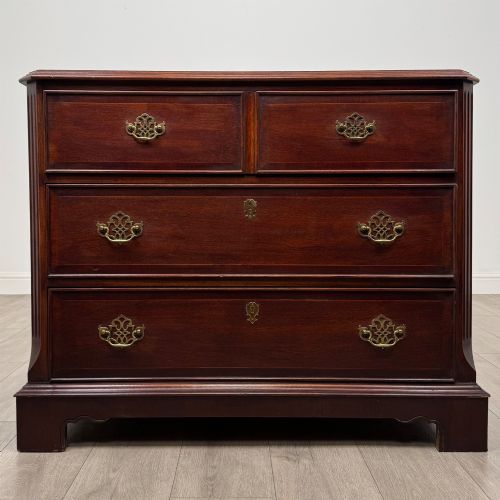
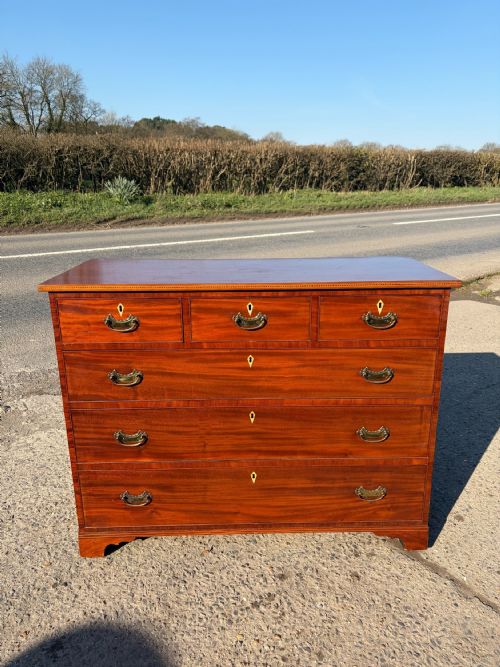
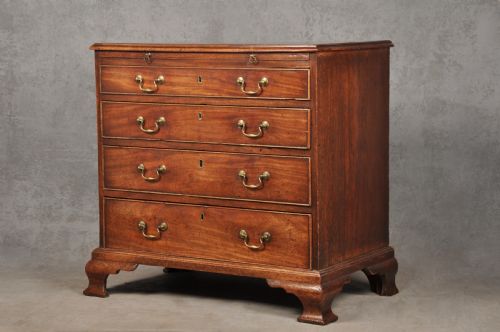
A georgian red commode encompasses timber drawer units and step pieces originating from the eighteenth century onwards, with particular examples rendered in red walnut or red japanned lacquer. Buyers searching for this phrase encounter substantial storage furniture shaped by George II, George III, and Regency periods.
The selection ranges from compact bachelors chests equipped with brushing slides to serpentine fronts and tiered step commodes. Mahogany appears frequently alongside these red toned timber and lacquer finishes, often displaying traditional bracket feet or crossbanded details.
How they were made
Cabinet makers constructed these carcases using solid timbers like mahogany, oak, and pine, frequently applying flame mahogany veneer or rich red walnut to primary surfaces. Secondary woods provided sturdy interior linings for drawers, while brass hardware secured handles and escutcheons.
Decorative surface treatments included japanned lacquer work in red hues, adding pictorial depth through traditional layering techniques. Drawer construction relied on dovetail joints, ensuring durability across centuries of daily use.
Georgian Red Commode Retail Price Guide 2026
Typical asking prices for georgian red commode among the pieces listed under this phrase on Sellingantiques today, from the lower quarter to the upper quarter. They describe what is for sale here now, not the wider market.
Listings span the eighteenth and nineteenth centuries, featuring walnut, mahogany, and red japanned lacquer alongside oak and pine carcase structures.
What varies in quality
The distinction between standard examples and finer pieces rests upon timber selection and the crispness of cabinet work. Superior items display matched flame mahogany veneer or carefully preserved japanned surfaces with intact pigment and detail.
Structural refinement also dictates value, seen in the precision of dovetailing, original brasses, and the elegance of proportions such as serpentine fronts or bracket feet. Secondary wood choices and interior linings indicate the care taken during initial construction.
The Georgian Red Commode Glossary
- Brushing slide
- A pull-out shelf integrated above the top drawers, historically used for folding clothes or grooming. It slides smoothly back into the carcase when not in use.
- Flame mahogany
- A veneer cut from timber where the grain diverges, creating a flickering flame pattern. It was prized for primary display surfaces on high-end furniture.
- Serpentine front
- A chest front curved with a convex centre flanked by concave ends. This shaping requires expert joinery and timber selection.
- Bracket feet
- Small, foot supports projecting from the corners of a case piece, shaped in an arch or ogee profile. They elevate the carcase slightly off the floor.
Georgian Red Commode: Frequently Asked Questions
How were step commodes used?
Step commodes functioned as dual-purpose library furniture, providing steps to reach high shelves while concealing a chamber pot or storage compartment within the lower steps. They date primarily from the Regency era.
Placing one beside a bookcase or desk allows you to utilise a historic piece of furniture for its original purpose while adding architectural interest to a study.
What is a bachelors chest?
A bachelors chest is a compact form of drawer unit featuring a pull-out brushing slide directly beneath the top surface. They gained popularity during the Georgian period for individual domestic use.
Living with one offers a convenient surface for temporary placement of items without opening the main drawers, making them practical for smaller bedrooms or hallways.
How do I identify a Georgian piece?
Identifying a Georgian piece involves examining timber construction, joint methods, and proportions typical of the eighteenth and early nineteenth centuries. Hand-cut dovetails and native secondary woods like oak or pine are standard indicators.
Looking closely at the hardware impressions, drawer linings, and overall patination helps differentiate genuine eighteenth-century pieces from later Edwardian reproductions.