

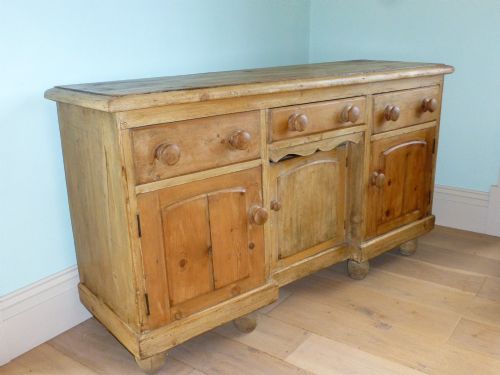
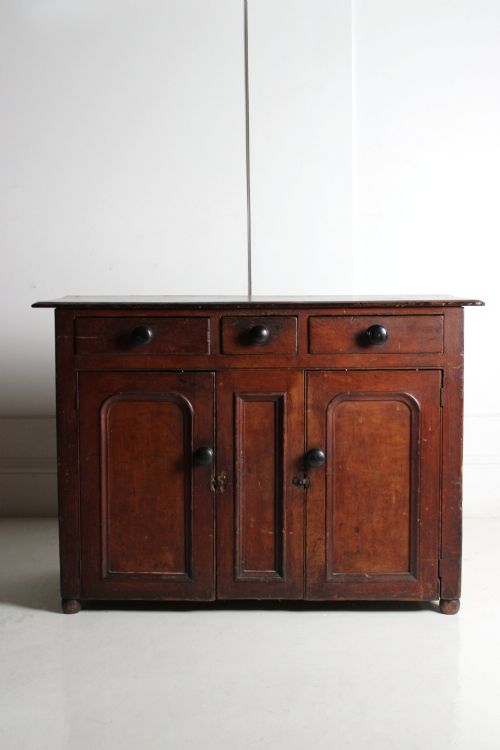
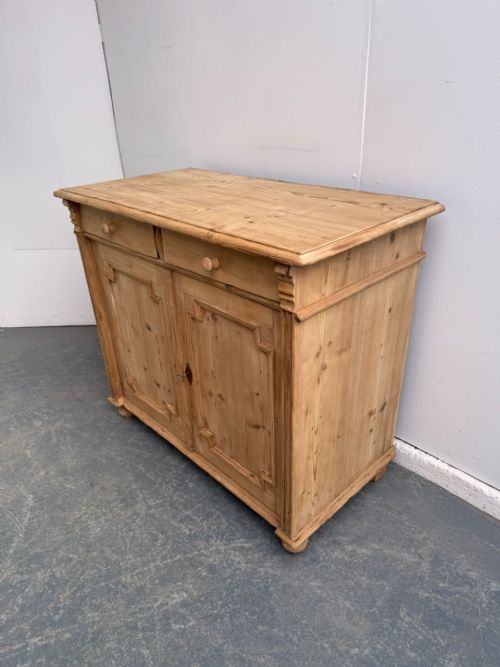


Georgian Pine Credenza
A georgian pine credenza brings honest utility and warm timber grain into a modern room, offering robust storage built to last.
Georgian Pine Credenza
Buyers seeking a georgian pine credenza frequently encounter sturdy kitchen dresser bases, sideboards, and potboard designs from the eighteenth and nineteenth centuries. These pieces reflect English country, rustic, and formal Georgian aesthetics rather than a singular standardised cabinet type.
The inventory on this page spans foundational forms such as bowfront sideboards, chiffoniers, linen cupboards, and large painted buffets. Pine, painted wood, and oak dominate the construction, often accented with brass or metal hardware.
Origins trace directly to English country houses and domestic kitchens, where practical storage mattered above all else. Pieces range from unpainted waxed timber ready for further finishing to surfaces retaining their original historic paint.
Materials and construction methods
Carpenters relied on solid pine and painted timber for the primary structure, sometimes pairing them with oak components for added internal strength. Metal and brass fixings secure doors and drawers.
Surfaces show various finishes, from natural waxed pine to layered historical paint schemes. Construction prioritises everyday utility through deep drawers, cupboards, and open potboards.
Georgian Pine Credenza Retail Price Guide 2026
Typical asking prices for georgian pine credenza among the pieces listed under this phrase on Sellingantiques today, from the lower quarter to the upper quarter. They describe what is for sale here now, not the wider market.
Current listings span the eighteenth century through to eighteen ninety, featuring pine, painted wood, oak, and brass.
Markers of quality and finish
Quality rests on the integrity of the original timber and the survival of early or original paint surfaces rather than pristine factory uniformity. Pieces that retain their historic hardware and untouched structural joinery stand apart.
Proportions and surface patination dictate visual appeal, with country house examples displaying honest wear earned through generations of domestic use.
The Georgian Pine Credenza Glossary
- Dresser base
- A lower kitchen or dining room cabinet featuring drawers and cupboards, historically used for food preparation and storage. They form the backbone of country house utility furniture.
- Potboard
- An open slatted lower shelf built into the base of a dresser to store heavy cookware and ceramic vessels. This feature defines many traditional English country pieces.
- Bowfront
- A convex, curved cabinet front that softens the linear geometry of a room. This shape appears on select nineteenth-century sideboard variations.
- Chiffonier
- A compact sideboard or low cabinet typically fitted with doors enclosing shelving. The form gained popularity during the Regency period.
- Patina
- The surface sheen and softening of edges developed by wood and paint over centuries of handling and cleaning. It serves as a key indicator of genuine age.
Georgian Pine Credenza: Frequently Asked Questions
How do I care for antique pine furniture?
Maintain waxed pine surfaces using traditional beeswax and a soft cloth to nourish the timber without building up synthetic residues.
Keep painted pieces away from direct sunlight and excessive humidity to preserve the historical finish and prevent wood movement.
Are these pieces painted or natural wood?
The selection includes both bare pine surfaces intended for waxing and pieces retaining original historical paint layers.
Some examples arrive ready for finishing, while others showcase layers of old paint that document their long domestic history.
Where were these pieces originally used?
Original locations include English country houses, farmhouse kitchens, and domestic dining spaces where robust storage was essential.
Their utilitarian origins mean they were built to hold heavy ceramics, linens, and provisions.
How do I date a pine dresser base?
Dating relies on examining construction techniques, timber preparation marks, hardware styles, and overall proportions.
Comparing the piece against established Georgian, Regency, and nineteenth-century design traits helps clarify its period of origin.