

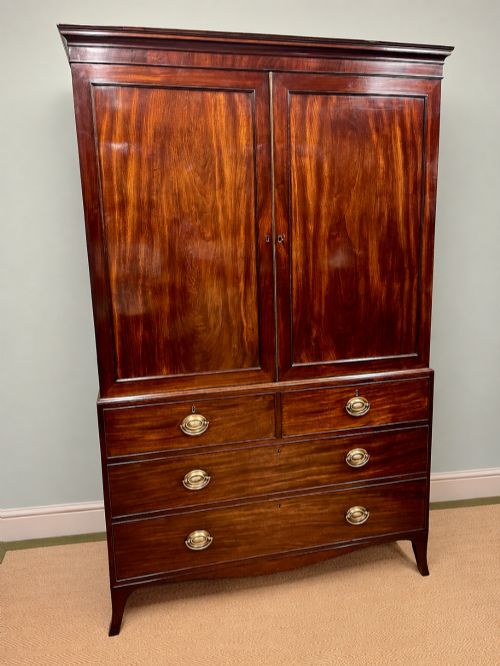
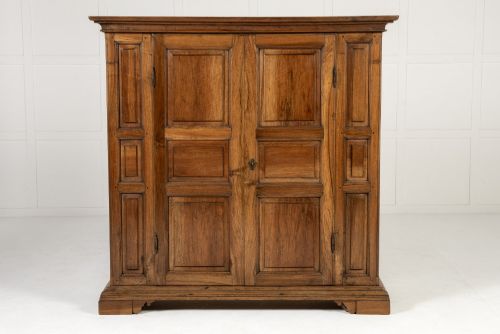


Georgian Period Linen Press
A Georgian period linen press is a substantial piece of timber furniture designed to store textiles, combining architectural presence with deep storage.
Georgian Period Linen Press
A Georgian period linen press stands as a commanding presence in a room, traditionally constructed to house household linens and folded garments within tall upper doors above a chest base. These large storage pieces emerged prominently during the eighteenth century and continued through the Regency era, serving grand country houses and urban residences alike.
The versions most commonly met on this page date from the Georgian and Regency periods, rendered in native and imported timbers like mahogany and oak. Many examples feature upper sliding trays, known as slides, alongside variations such as low linen presses and housekeeper's cupboards.
Collectors encounter related forms including gentleman's cabinets on chest and tall wardrobes, reflecting the shifting domestic storage needs of the eighteenth and nineteenth centuries. Each surviving specimen demonstrates the cabinetry standards of its specific decade, spanning George III through to William IV iterations.
How They Were Made
Makers built these presses using solid timbers and carefully selected veneers, applying mahogany, oak, walnut, and satinwood over sturdy pine or oak carcases. Craftspeople utilised flame mahogany veneer and plum pudding mahogany to create figured surfaces on the primary doors and drawer fronts.
Structural integrity relied on traditional joinery, incorporating hand-cut dovetails within the interior drawers and solid brass hardware for handles and escutcheons. Surface finishes were hand-polished with wax or polish to highlight the natural grain patterns of the wood.
Georgian Period Linen Press Retail Price Guide 2026
Typical asking prices for georgian period linen press among the pieces listed under this phrase on Sellingantiques today, from the lower quarter to the upper quarter. They describe what is for sale here now, not the wider market.
Listings span multiple eras from the eighteenth century to the early twentieth century, incorporating mahogany, oak, walnut, brass, and iron.
What Varies in Quality
The quality of a linen press depends heavily on the selection of timber, where figured veneers and rich Cuban mahogany distinguish finer workshop output from simpler utilitarian pieces. Superior examples exhibit harmonious proportions, sophisticated architectural pediments such as swan-neck designs, and well-executed cockbeading around the drawers.
Internal construction also defines the tier of a piece, separating basic oak storage carcases from sophisticated gentleman's cabinets featuring finely fitted interior slides and original brass fittings. The integration of secondary woods and the precision of the dovetail joints reveal the skill level of the original maker.
The Georgian Period Linen Press Glossary
- Linen press
- A large dual-section piece of furniture with upper doors enclosing sliding shelves for folded textiles and a lower chest of drawers for garments. These items formed an essential part of upper-class domestic storage before fitted wardrobes became standard.
- Slide
- A shallow internal pull-out tray fitted inside the upper section of a press for stacking linen flat. Slides allowed owners to access garments without disturbing deep piles.
- Pediment
- The decorative architectural crown topping the upper cornice of a press. Examples in the evidence include swan-neck variations that add height and classical proportion.
- Cockbeading
- A small protruding wooden moulding applied around the edges of drawer openings to protect the drawer edges and frame. This detail indicates careful cabinet-making.
- Gentleman's cabinet
- A specialised variant of storage furniture incorporating writing surfaces or specialised interior compartments alongside standard linen storage. These pieces served the private dressing rooms of gentlemen.
Georgian Period Linen Press: Frequently Asked Questions
What is a linen press used for?
A linen press was originally built to store household linens, sheets, and folded garments flat on interior sliding trays. The lower chest section provided additional space for hanging or drawer storage.
Today, these substantial pieces function effectively in bedrooms or hallways as versatile wardrobes and linen storage cabinets, adding traditional character to modern interiors.
How do I date a Georgian press?
Dating relies on examining the timber species, architectural details, and construction methods visible in the carcase and drawers. Pieces from the George III era often feature mahogany with classical proportions, while Regency and William IV examples introduce bolder brass mounts and distinct veneers.
Secondary woods inside the drawers and the style of the feet or pediment also provide clear chronological markers for attribution.
Where should I place a linen press?
These large presses require a wall with adequate depth and height to accommodate their substantial proportions without dominating the room entirely. Bedrooms and large dressing rooms provide the most logical placement for daily access to storage.
Keep them away from direct heat sources and strong sunlight to protect the aged mahogany or oak timber surfaces from drying out.
How do I care for antique mahogany?
Maintain the timber by applying a microcrystalline wax polish occasionally to nourish the grain and protect the aged surface finish. Avoid silicone-based sprays and keep the room at a stable humidity level.
Gentle dusting with a soft, dry cloth prevents particulate build-up on the carved mouldings and brass hardware.