



Georgian Period Jewellery
Georgian period jewellery brings together the refined hand of eighteenth and nineteenth-century goldsmiths with rich stones and detailed metalwork.
Georgian Period Jewellery
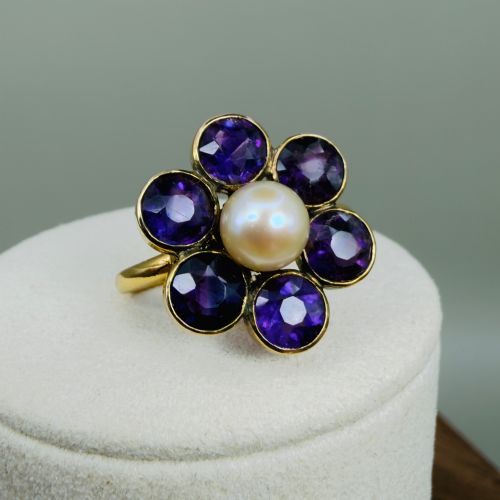
Georgian period jewellery encompasses rings, earrings, and necklaces fashioned during the reigns of the Hanoverian kings and the Regency era. These pieces draw attention through the use of closed-back settings, foil backs, and delicate cluster designs set in gold and silver.
The selections available here range from sapphire and diamond rings to gold earrings featuring seed pearl clusters and blue enamel guilloche. Buyers encounter items ranging from the Georgian and Regency periods through to the early nineteenth century.
Earrings and rings dominate the jewellery selection, alongside broader items like leather-bound jewellery caskets and work boxes. Each piece reflects the decorative priorities of the late eighteenth and early nineteenth centuries.
Materials and construction methods
Craftsmen shaped these items using yellow gold and silver, often combining the two metals in ring settings to support gemstones. Stones such as amethysts, diamonds, emeralds, and paste are mounted in hand-wrought designs.
Enamelling techniques, particularly blue enamel guilloche, add decorative colour to gold earrings alongside seed pearl clusters. Leather and various woods appear in the construction of accompanying boxes and caskets from the same periods.
Georgian Period Jewellery Retail Price Guide 2026
Typical asking prices for georgian period jewellery among the pieces listed under this phrase on Sellingantiques today, from the lower quarter to the upper quarter. They describe what is for sale here now, not the wider market.
Shoe buckles made of steel filigree let eighteenth-century feet sparkle on the dance floor.
Distinctions in quality
Quality in these pieces rests upon the precision of the metalwork, such as fine filigree steel work or intricate gold wire arrangements. The crispness of hand-cut facets in gemstones and paste elements distinguishes finer examples from simpler work.
The preservation of original enamelling, fragile seed pearls, and delicate cluster settings dictates the standing of an item. Superior pieces maintain their structural integrity and original components across centuries of handling.
The Georgian Period Jewellery Glossary
- Guilloche
- A decorative mechanical technique that produces precise, intricate recurring patterns or bands engraved on metal.
- Paste
- Hand-cut glass used in historic jewellery to imitate the brilliance and fire of genuine gemstones.
- Closed-back
- A setting style where the back of the gemstone is completely enclosed in metal, common in older jewellery to concentrate light.
- Filigree
- Delicate ornamental work of fine silver or gold wire brought together in open lace-like patterns.
- Cluster design
- An arrangement of smaller stones gathered tightly around a larger central gemstone to form a unified pattern.
Georgian Period Jewellery: Frequently Asked Questions
What metals were used?
Makers of this era relied primarily on gold and silver, often combining both metals within a single ring setting to hold gemstones securely.
Brass and steel also appear in supporting hardware and decorative elements on related items.
How do I identify a piece?
Look for distinct construction methods such as closed-back stone settings, hand-cut paste, and specific cluster formations that reflect eighteenth and nineteenth-century styles.
Material choices like seed pearls and blue enamel guilloche further point toward the Georgian and Regency periods.
How should I care for jewellery?
Keep these delicate items away from moisture and harsh cleaning agents to protect fragile seed pearls, enamel, and closed-back metal settings.
Store them securely in appropriate velvet-lined boxes or period caskets to prevent surface wear.