



Georgian Panelled Chair
A georgian panelled chair is a sturdy timber seat built for country houses and town interiors, offering robust construction and enduring functional design.
Georgian Panelled Chair
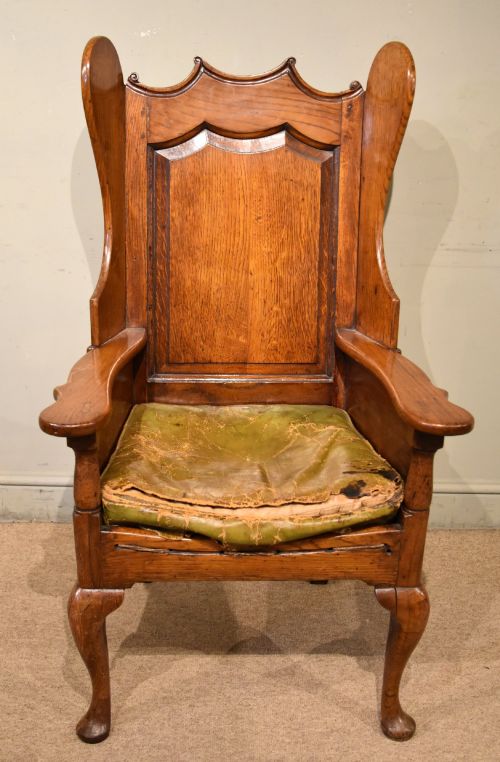
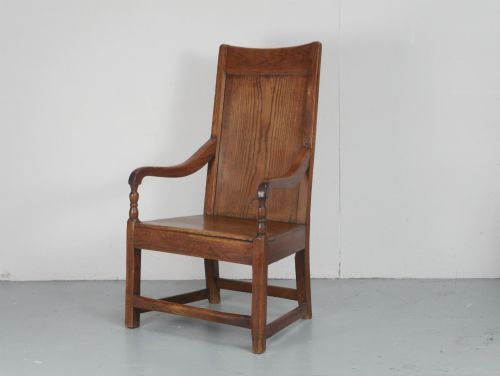
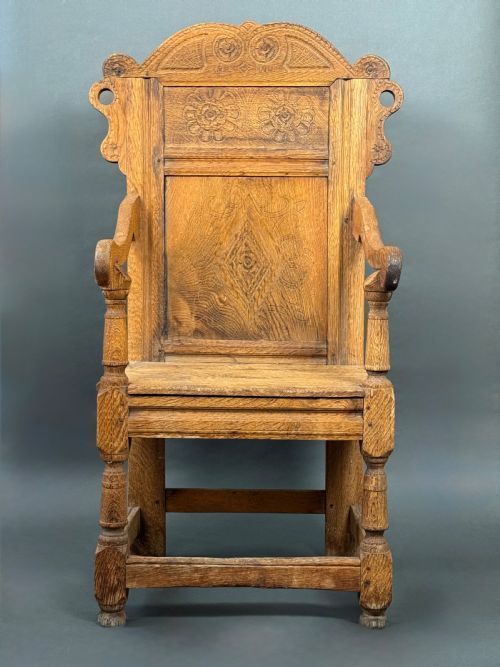
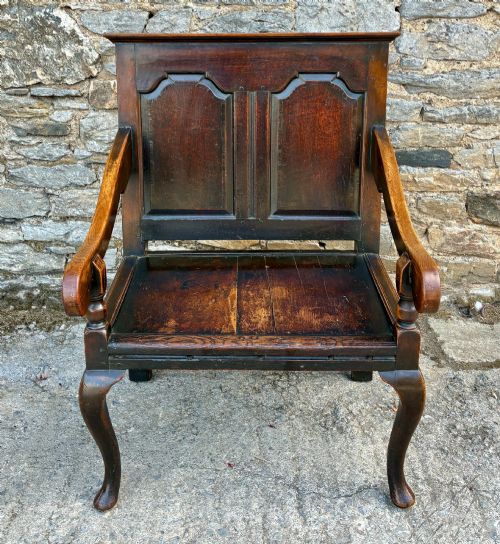
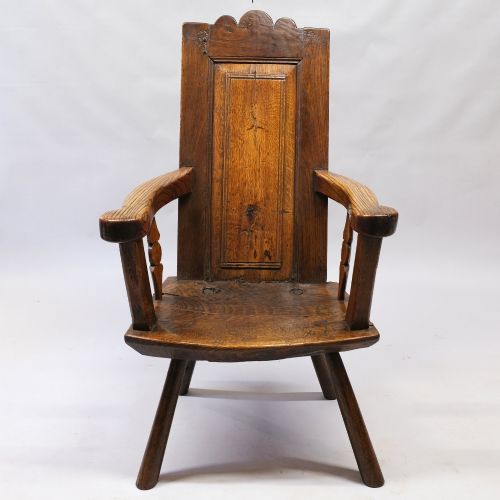
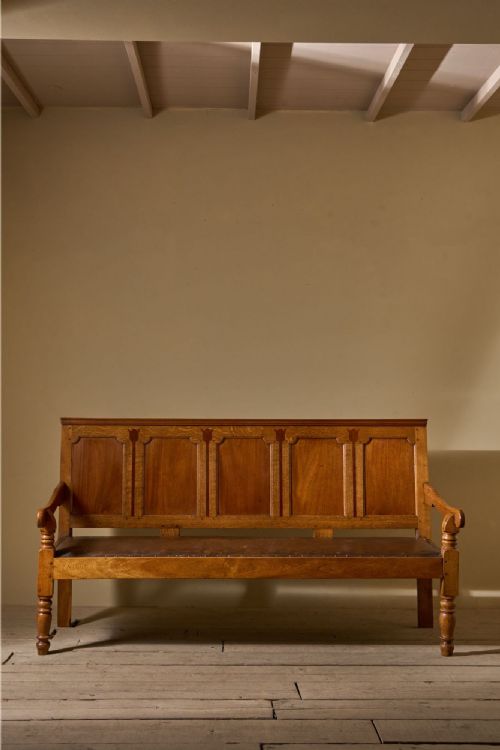
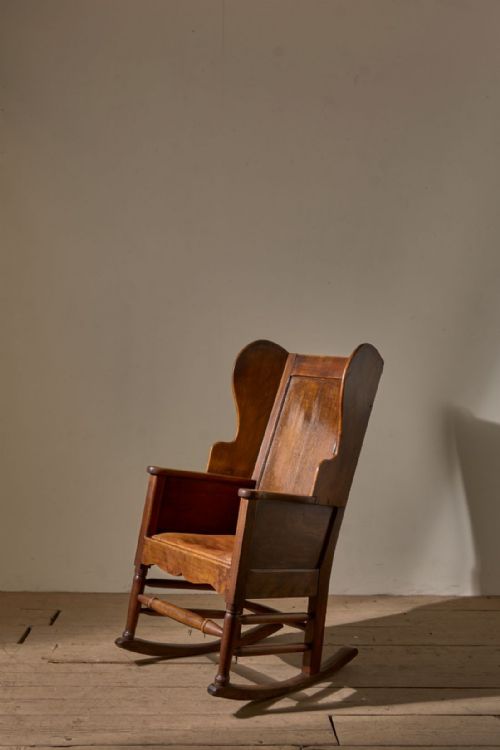
The search for a georgian panelled chair brings up solid timber seating, predominantly featuring sturdy wainscot armchairs and panel-backed seating from the eighteenth century. Buyers frequently encounter regional variations such as Welsh oak armchairs and country seating featuring carved or plain wooden backs.
Makers utilised local timbers to create robust seats for everyday use, resulting in heavy wooden armchairs and hall benches that survive in daily domestic settings. Regional vernacular styles dominate the selection, showing distinct local turning and joinery.
Materials and construction
Oak remains the primary timber for these seats, complemented by mahogany, elm, and occasional cane or fabric additions. Joiners utilised traditional mortise and tenon joints to secure the heavy wooden panels and uprights.
Surface decoration includes carved tulip motifs, bobbin turnings, and wood inlay applied to back panels and arms. Artisans shaped solid timber seats and arms using hand tools, ensuring lasting structural integrity.
Georgian Panelled Chair Retail Price Guide 2026
Typical asking prices for georgian panelled chair among the pieces listed under this phrase on Sellingantiques today, from the lower quarter to the upper quarter. They describe what is for sale here now, not the wider market.
Listings demonstrate a strong presence of eighteenth-century oak alongside Regency mahogany pieces, spanning armchairs, settles, and benches.
Assessing quality and proportion
Quality rests upon the preservation of the original timber and the crispness of any carved panel work. Pieces retaining their early surface patination and unreplaced structural members stand above heavily restored examples.
Proportion and timber selection dictate the relative standing of individual chairs within the vernacular tradition. Well-figured oak and balanced arm supports distinguish finer examples from standard utility seating.
The Georgian Panelled Chair Glossary
- Wainscot chair
- A heavy wooden armchair featuring a panelled back and solid timber seat, originating in the sixteenth and seventeenth centuries and continuing into the Georgian period. These seats were costly to produce and reserved for heads of households.
- Lambing chair
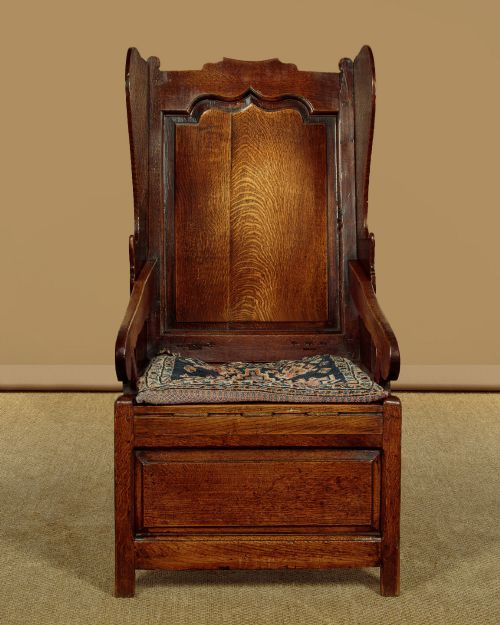
- An enclosed wooden armchair with high winged sides designed to block draughts near hearths. Many include small under-seat compartments or candle recesses.
- Settle
- A wooden bench with a high panelled back, enclosed arms, and sometimes a box base for storage. They provided communal seating near firesides in country houses.
- Bergère
- An upholstered armchair with enclosed sides, common in the Regency period. They often feature cane panels beneath the upholstery.
- Vernacular furniture
- Domestic objects made by local craftsmen using regional materials rather than following metropolitan fashion. These pieces emphasise utility and local construction methods.
Georgian Panelled Chair: Frequently Asked Questions
What is a wainscot chair?
A wainscot chair is an early wooden armchair constructed with panelled timber backs and solid seats. They were built to withstand heavy daily use in domestic interiors.
These pieces typically feature heavy oak framing and formal joinery techniques typical of vernacular cabinet making.
Where were lambing chairs used?
Lambing chairs were placed near fireplaces in country houses and farmhouses to protect occupants from cold drafts. The enclosed wings deflected air currents away from the seated person.
Their solid wooden construction made them durable fixtures in domestic living spaces.
How do you date oak furniture?
Dating relies on examining tool marks, construction joints, timber shrinkage, and surface patination developed through age and handling. Regional styles and fastening methods also provide chronological markers.
Expert assessment considers the integration of panels and the wear patterns on wooden arm supports.
What timber was used most?
Oak was the predominant wood for country seating due to its local availability and structural strength. Elm and mahogany also appear in later eighteenth-century and Regency examples.
Makers selected timbers based on regional availability and the specific structural demands of the chair.