
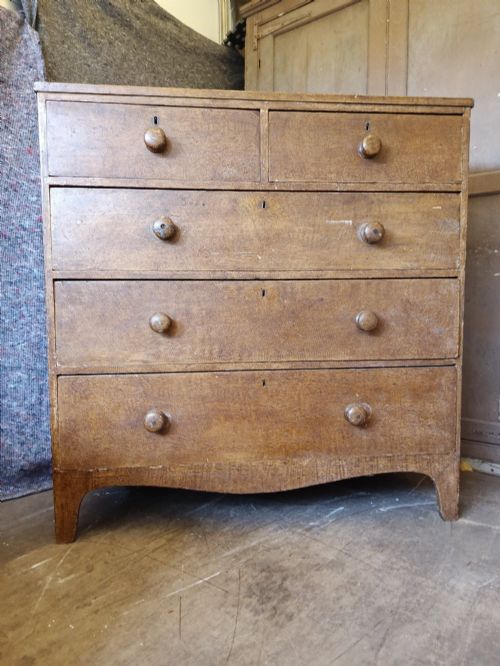

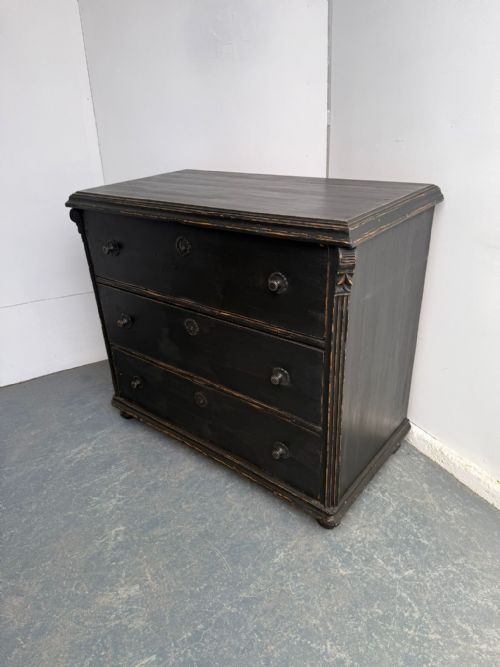
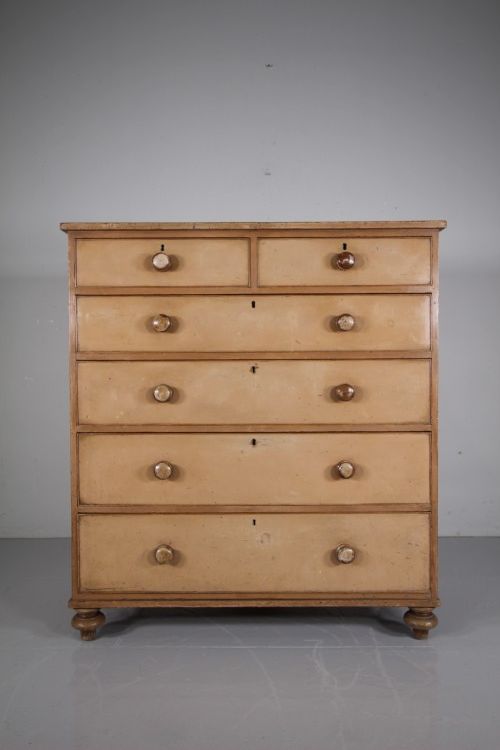


Georgian Painted Pine Chest
A georgian painted pine chest brings rugged utility and centuries of layered colour into a room.
Georgian Painted Pine Chest
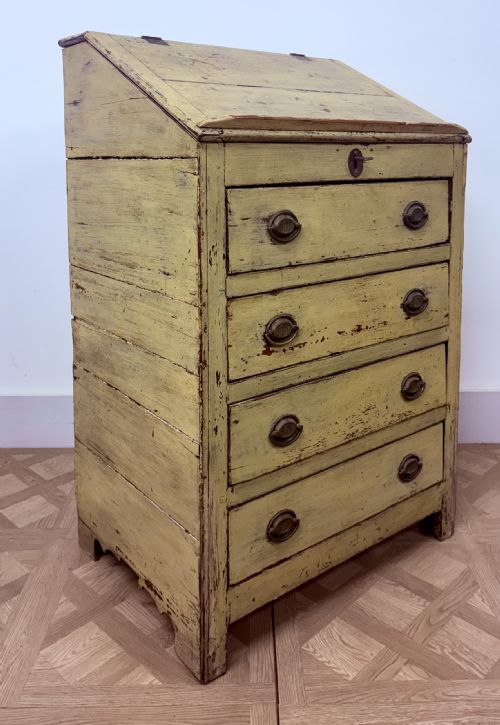
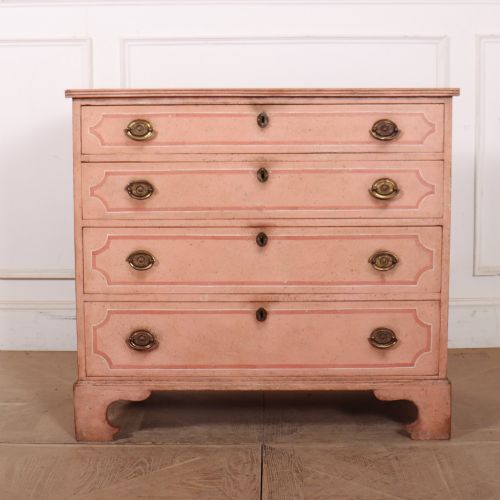
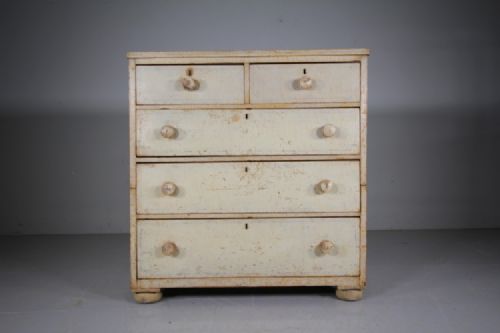
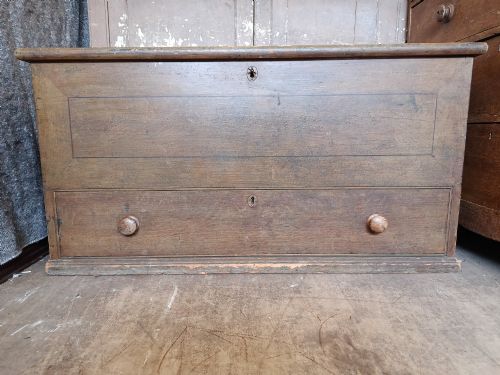
A georgian painted pine chest is a sturdy storage piece fashioned from softwood and coated in pigmented finishes, ranging from modest provincial blanket boxes to large drawer units. You will most frequently encounter English and continental examples featuring surface paint that has aged over generations.
The selection spans standard drawer chests, mule chests fitted with lower drawers, and blanket boxes originating from the eighteenth and nineteenth centuries. Regional pieces demonstrate specific local tastes, including English country workshops and Hungarian folk traditions.
Makers utilised humble timber because it took paint well, allowing workshops to imitate finer hardwoods or apply decorative finishes like scumble and simulated grain. These items served practical domestic storage needs in bedrooms, hallways and sculleries before becoming decorative focal points.
How they were made
Carpenters constructed these chests using solid pine planks joined with dovetails for drawer carcasses and pegged mortise and tenon frames for larger boxes. Iron and brass hardware such as drop handles, hinges and escutcheons secured the structures and provided functional closure.
Surfaces received multiple coats of lead-based or oil paints, sometimes layered over time to create complex patinas that show through wear and tear. Simulated graining techniques, known as scumble, involved dragging combs or brushes through wet glaze to mimic oak or other expensive woods.
Materials recorded across the inventory include solid pine, lead-based paints, iron drop handles, brass escutcheons and applied ceramic details.
What varies in quality
The survival of original surface paint distinguishes superior examples from pieces stripped or heavily repainted in later periods. Natural wear that reveals underlying layers of historic colour demonstrates authenticity and age.
Construction details such as hand-cut dovetailing, original backboards and intact brass or iron furniture elevate a piece. Proportion and regional character also dictate desirability, with well-balanced dimensions and crisp mouldings commanding greater attention.
Gillows
The Georgian Painted Pine Chest Glossary
- Scumble
- A translucent glaze applied over a lighter base coat and manipulated with combs or rags to simulate the grain of oak or exotic hardwoods. This decorative finish was popular in country houses and provincial workshops.
- Mule chest
- A storage chest featuring one or more functional drawers built into the base beneath the main compartment. They bridge the gap between traditional blanket boxes and modern chests of drawers.
- Dovetail
- A joint formed by interlocking wedge-shaped fingers, commonly used to secure drawer corners. Hand-cut variations indicate older craftsmanship before industrial machinery standardised production.
- Escutcheon
- A protective metal plate surrounding a keyhole. They are frequently made of brass or iron and help date the hardware of the piece.
- Provincial
- Describing furniture made in regional areas outside major capital cities. These items often display idiosyncratic design choices and local materials.
Georgian Painted Pine Chest: Frequently Asked Questions
How do I clean a painted pine chest?
Dust the surface regularly with a soft, dry cloth to prevent dirt accumulation. Avoid modern chemical sprays or abrasive cleaners that can soften or strip historic paint layers.
Test any mild cleaning solution on a hidden area first if stubborn marks require moisture. Preserving the dry, aged patina is essential for maintaining the character of the piece.
Were these chests always painted?
Many pine chests received paint from the moment of manufacture to protect the soft wood and provide a colourful finish. Homeowners also updated pieces across centuries by applying new coats of paint to match changing interior fashions.
Some examples were specifically painted to imitate expensive hardwoods like mahogany or oak when fine timber was too costly. Stripping often reveals this history through traces of earlier colour schemes in crevices.
Where should I place a mule chest?
A mule chest works effectively at the foot of a bed or as a statement storage piece in a hallway. The low profile allows the top surface to hold lamps, textiles or decorative objects.
Ensure the space allows the lid to lift fully if it is a top-opening box model. Keep the timber away from direct heat sources and strong sunlight to protect the fragile paint surface.
How can I tell a Georgian chest from a Victorian one?
Georgian pieces generally exhibit hand-cut joinery, simpler internal framing, and earlier paint formulations that wear to a chalky matte finish. The proportions tend to be heavier and more utilitarian compared to later iterations.
Victorian pieces often introduce machine-sawn elements and different hardware styles, though country workshops continued traditional methods well into the nineteenth century. Examining the construction inside the drawers offers the clearest indication of date.