




Georgian Newspaper
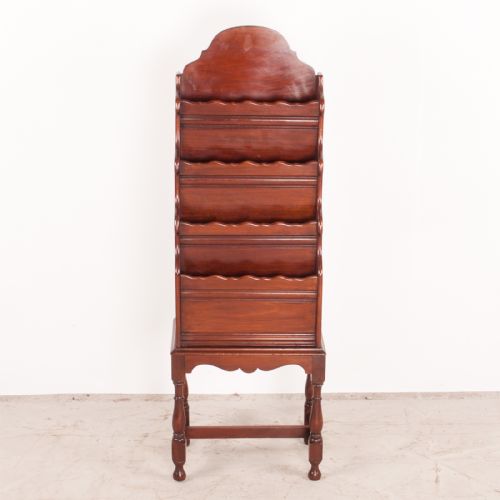
These pieces sold as a georgian newspaper stand are practical wooden folio racks designed to hold daily journals and sheets near the hearth.
Georgian Newspaper
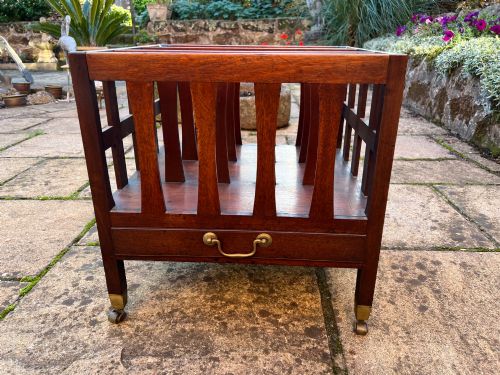
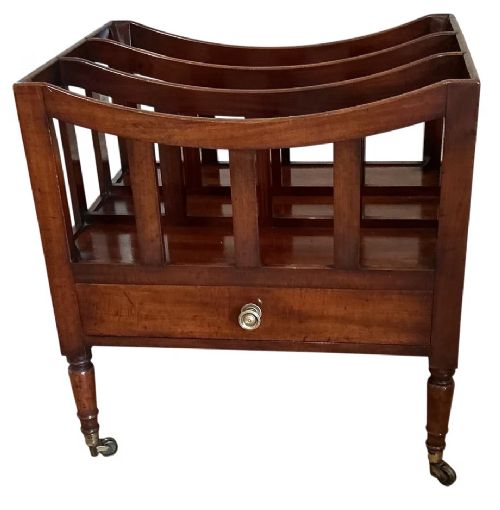
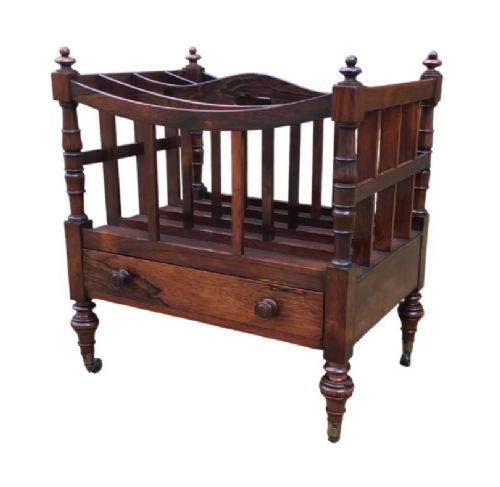
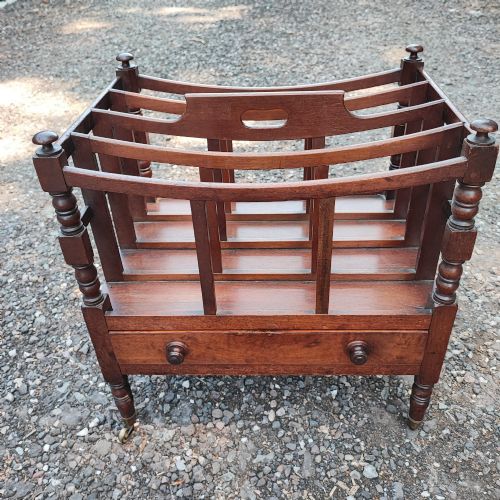
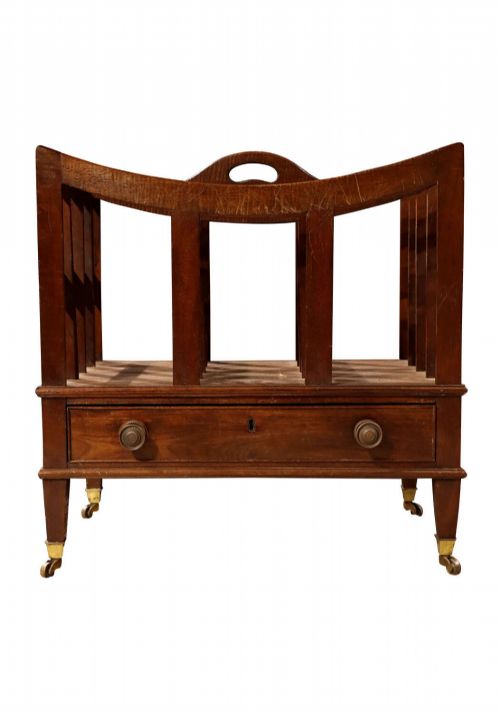
A georgian newspaper search brings up freestanding wooden canterburys and magazine racks built to organise printed sheets and folios in period interiors. The most common form met on this page is the mahogany or rosewood canterbury featuring three or four vertical divisions for sorting papers.
Makers designed these items during the Georgian, Regency and George IV periods, often incorporating a low drawer beneath the slatted divisions for smaller items. Later examples extend into the Victorian era and the early twentieth century with similar compartmentalised frames.
While often described as newspaper or sheet music stands, these pieces serve equally well as folio stands for holding large periodicals and journals close to hand.
How they were made
Cabinet makers built these stands primarily in solid mahogany and rich rosewood, frequently employing flame mahogany veneer on the exterior surfaces to create patterned grain figures. Carpenters shaped the dividers into pierced scroll or slatted patterns, mounting the entire framework upon turned legs fitted with brass castors for smooth mobility.
Construction details include crisp inlay work and delicate wreath carvings that distinguish finer examples from plain utility racks. Joinery relied on traditional methods to secure the vertical divisions and low drawers while supporting the weight of heavy paper volumes.
Georgian Newspaper Retail Price Guide 2026
Typical asking prices for georgian newspaper among the pieces listed under this phrase on Sellingantiques today, from the lower quarter to the upper quarter. They describe what is for sale here now, not the wider market.
Many of these stands glide effortlessly across the carpet on tiny brass wheels, ready to follow you from the desk to the armchair.
What varies in quality
Quality rests on the selection of timber and the crispness of the carpentry, where figured rosewood and richly grained mahogany elevate a piece far above utilitarian pine or basic hardwood. The refinement of the turned legs, the delicacy of the pierced fretwork divisions, and the presence of original brass castors separate standard stands from superior workshop productions.
Proportions also dictate distinction, with balanced boat-shaped frames and well-integrated lower drawers showing greater ambition in design. The integration of subtle inlay and careful carving reveals the hand of a more accomplished maker.
Gillows
The Georgian Newspaper Glossary
- Canterbury
- A low, freestanding stand with partitioned sections designed to hold newspapers, magazines, or sheet music. It typically includes a small drawer at the base.
- Folio Stand
- A larger rack or stand intended for holding large-format books, newspapers, or unbound plates. These pieces often feature adjustable or rigid frames.
- Regency
- An English design style spanning the early nineteenth century characterised by classical restraint, elegant curves, and dark exotic woods such as rosewood.
- Flame Mahogany
- A veneer cut from the fork of the mahogany tree where the branches join the trunk, producing a distinctive flickering flame pattern.
- Castor
- A small swivelling wheel attached to the base of furniture legs to allow easy movement across the floor. They are frequently cast in brass on better pieces.
Georgian Newspaper: Frequently Asked Questions
What is a canterbury used for?
These pieces served originally to hold daily newspapers, unbound journals, and sheet music near seating areas in polite drawing rooms. The vertical divisions kept folded pages organised and upright.
Today they function effectively beside modern seating for holding current periodicals, books, and large folios within easy reach.
How do I identify a Regency canterbury?
Regency examples typically exhibit dark rosewood or mahogany timbers, elegant boat-shaped frames, and refined turned legs fitted with brass castors. They often feature delicate pierced scroll divisions rather than heavy solid partitions.
Comparing the wood grain and leg turnings against standard Georgian or later Victorian forms helps confirm the period of manufacture.
Are these stands strong enough for heavy books?
The sturdy solid wood construction and robust joinery of these racks were originally engineered to support dense stacks of paper and heavy bound folios. Most stands handle modern magazines and books with ease.
However, care should be taken with delicate pierced divisions to avoid forcing oversized volumes into narrow compartments.
Did these pieces always have drawers?
Not all stands include a drawer beneath the partitions, as many were produced as open frameworks intended solely for vertical paper storage. Those equipped with a low drawer offered additional space for smaller items.
Both open and drawer-fitted variants date across the same periods, reflecting different workshop designs rather than a timeline of evolution.