






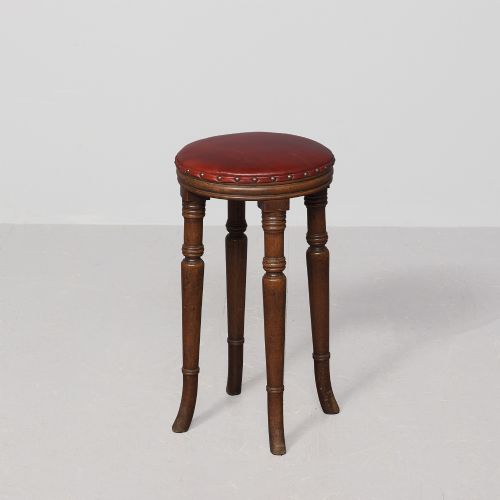


Georgian Needlepoint Stool
A georgian needlepoint stool offers practical domestic charm, combining sturdy timber frames with worked textile covers.
Georgian Needlepoint Stool
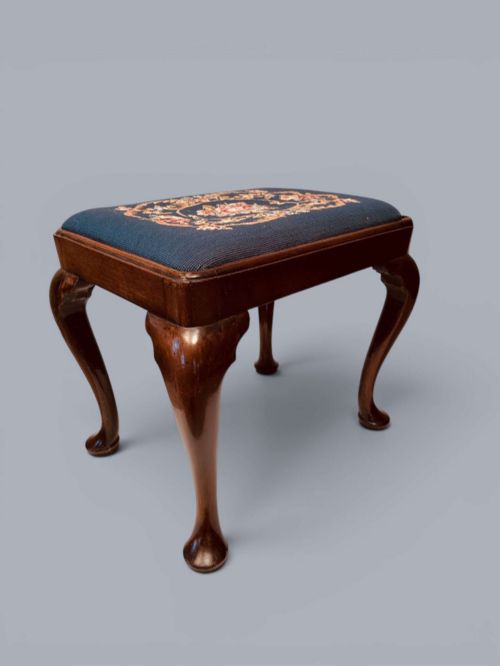
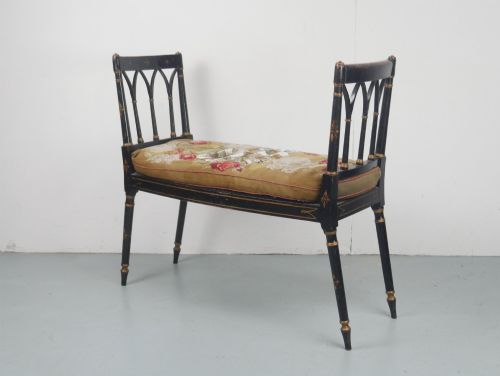
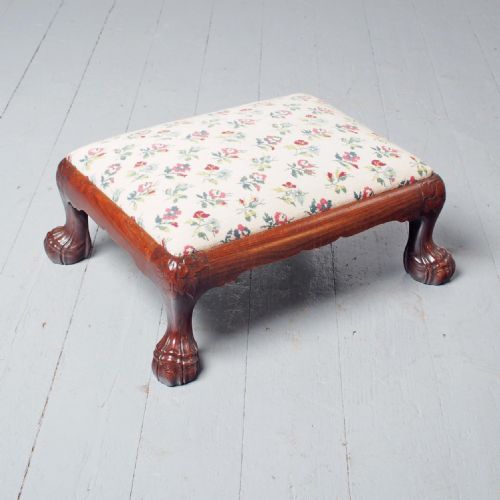
A georgian needlepoint stool provides a low seating option or footrest, frequently encountered in mahogany, walnut, or oak timbers. These pieces range from compact circular designs to elongated forms intended for dressing tables or as centre stools.
Buyers frequently encounter revival iterations alongside earlier examples, spanning the eighteenth century through to the early twentieth century. Common stylistic references include Queen Anne, Chippendale, and George III aesthetics, often paired with worked textile covers.
Materials and construction
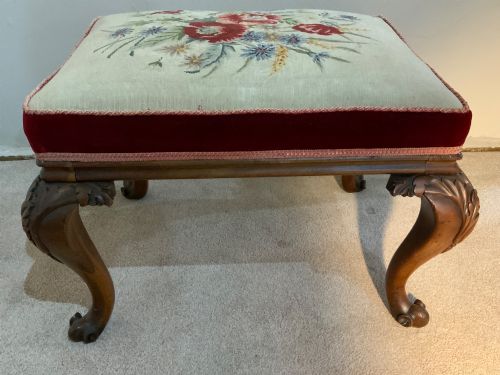
Frames rely predominantly on dense hardwoods such as mahogany and walnut, shaped into carved cabriole legs or straight supports. Joinery techniques secure these timbers to bear weight reliably during daily domestic use.
Upholstery combines textile covers like wool tapestry and needlepoint with brass elements where appropriate, stretched over supportive padding. These materials work together to create durable surfaces suited for resting feet or sitting.
Georgian Needlepoint Stool Retail Price Guide 2026
Typical asking prices for georgian needlepoint stool among the pieces listed under this phrase on Sellingantiques today, from the lower quarter to the upper quarter. They describe what is for sale here now, not the wider market.
Some circular stools arrive wearing leather instead of needlepoint, proving that even historic feet appreciated a change of texture.
Assessing quality and craftsmanship
Superior examples display crisp carving on the wooden frames and tight, even stitching within the needlepoint or tapestry cover. The precision of the joinery and the selection of well-figured timber distinguish finer items from simpler production.
The relationship between the frame's period style and the textile cover influences the overall coherence of the piece. Well-balanced proportions and harmonious integration of the upholstery elevate the standing of a stool within its type.
Whytock and Reid
The Georgian Needlepoint Stool Glossary
- Needlepoint
- A type of embroidery stitched on a stiff open-weave canvas. It forms the decorative top cover seen on many traditional footstools.
- Cabriole leg
- A furniture leg that curves out and then in, resembling an animal's leg. This shape appears frequently on walnut and mahogany pieces from the eighteenth century onwards.
- Centre stool
- A large freestanding stool designed to sit in the middle of a room rather than against a wall. These items often feature substantial upholstery and decorative frames.
- Tapestry fabric
- A thick woven textile used historically for durable upholstery. It provides a textured surface that complements carved wooden frames.
Georgian Needlepoint Stool: Frequently Asked Questions
What is a georgian needlepoint stool?
A georgian needlepoint stool is a small wooden seat or footrest upholstered with stitched textile work. These pieces utilise timber frames in forms ranging from long dressing benches to compact circular designs.
Such items serve both decorative and functional roles in traditional interiors, offering movable seating or a comfortable surface for resting feet.
How were these stools used historically?
Historically, these items served primarily as footrests near firesides or as auxiliary seats in dressing rooms and parlours. Their portable nature allowed servants to move them easily around a reception room as needed.
Over time, larger versions functioned as centre stools or long benches, accommodating multiple occupants or providing a surface in bedrooms.
How do I care for needlepoint upholstery?
Protect antique textile covers by keeping them away from direct sunlight to prevent wool fibres from fading and weakening. Gentle vacuuming through a mesh screen helps remove dust without pulling at the stitches.
Avoid placing heavy sharp objects on the textile surface to maintain the integrity of the needlepoint pattern over decades of domestic use.
How can I tell original period pieces from revivals?
Examine the timber underneath the stool for signs of age, tool marks, and construction methods consistent with past centuries. Revival pieces from later periods often show different wear patterns and machine-cut elements compared to older framing.
The integration between the upholstery and the frame also offers clues, as covers are frequently replaced or renewed to match changing interior tastes.