




Georgian Mahogany Screen
A georgian mahogany screen stands as a masterclass in domestic utility, combining rich timber and fine needlework to shield the face from a blazing hearth.
Georgian Mahogany Screen
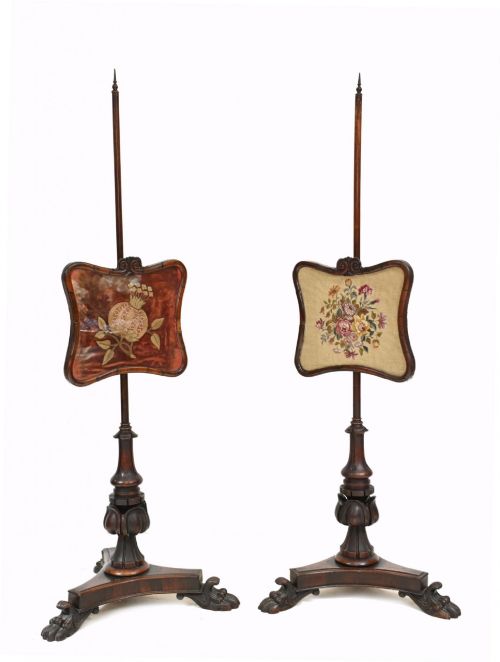
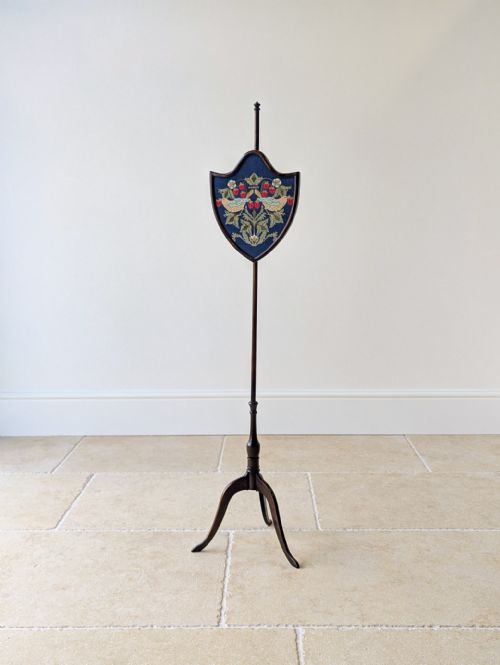
A georgian mahogany screen encompasses both tall pole screens designed for the fireplace and multi-panel room dividers built for privacy. The pole screen variant dominates current selections, featuring a vertical standard supported by a tripod base.
Makers constructed these pieces during the Georgian, Regency, and William IV periods, spanning the eighteenth and nineteenth centuries. Alongside standard fire screens, variations emerge in the form of writing tables with integrated screens.
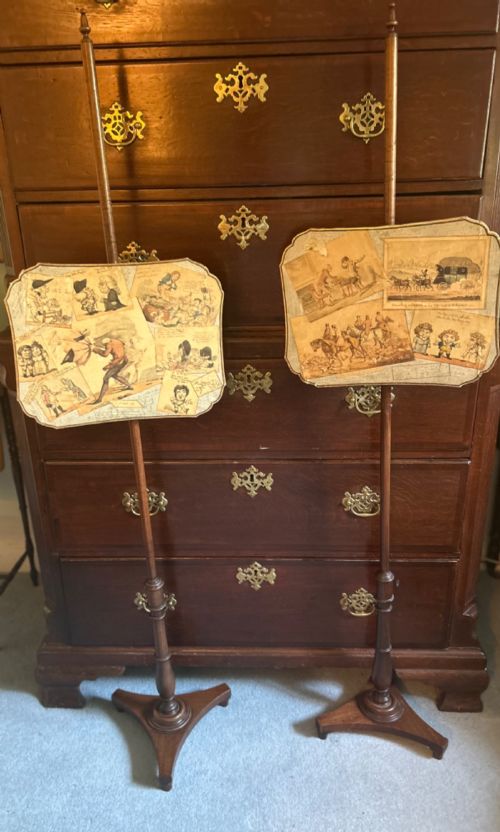
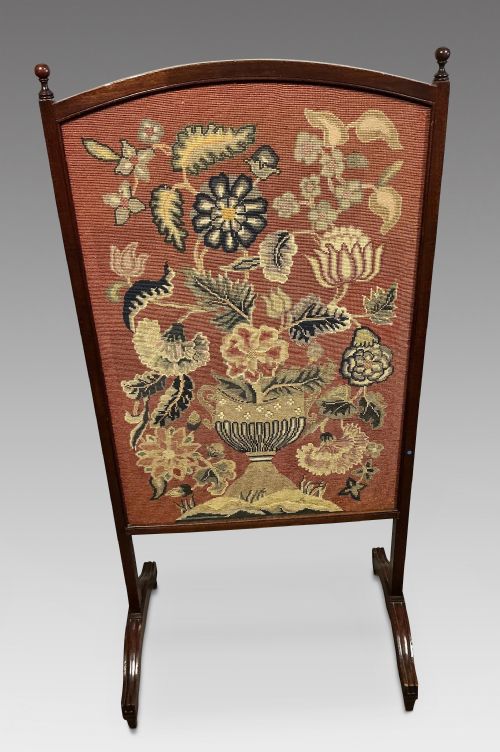
The primary function centres on directing heat away from the skin or dividing large drawing-room spaces. Surviving examples frequently retain their original needlepoint panels, embroidery, or satirical prints.
Materials and Technique
Craftsmen utilised solid mahogany for the structural frames, pole standards, and tripod legs, sometimes incorporating rosewood, goncalo alves, or satinwood for contrasting inlay. Timber selection provided the heavy, stable weight required for tall, slender standards.
Panels were worked in wool, needlepoint, tapestry, fabric, or poker work, then mounted securely into adjustable frames using brass hardware. The integration of glass and textile elements protected delicate embroideries from soot and heat.
Georgian Mahogany Screen Retail Price Guide 2026
Typical asking prices for georgian mahogany screen among the pieces listed under this phrase on Sellingantiques today, from the lower quarter to the upper quarter. They describe what is for sale here now, not the wider market.
Certain late George III pole screens arrived equipped with witty satirical prints, ensuring guests had reading material while warming their toes.
Distinctions in Execution
The sophistication of the carved base separates standard production from exceptional work, with tripod legs displaying crisp acanthus scrolls or finely turned pedestals. Superior pieces maintain rigid sliding mechanisms on the central pole without sagging.
The artistry of the needlework panel dictates overall merit, ranging from simple geometric woolwork to intricate pictorial tapestries and witty satirical prints. Timber grain consistency and original brass adjustments also mark the division between ordinary and superior output.
The Georgian Mahogany Screen Glossary
- Pole screen
- A freestanding firescreen comprising a vertical wooden shaft on a tripod base that holds a sliding shield. This device allowed occupants to adjust the height of the panel against radiant heat.
- Poker work
- A method of decorating wood by burning designs into the surface with heated metal tools. It appears on selected panels as an alternative to woven textiles.
- Needlepoint
- A type of counted thread embroidery stitched onto canvas stretched over a frame. These panels form the central decorative element of most firescreens.
- Tripod base
- A three-legged support structure commonly utilised on pole standards to ensure stability on uneven floorboards. The legs often terminate in pad feet or scroll feet.
- Goncalo alves
- A dense exotic hardwood with striking contrasting grain patterns, occasionally utilised for distinctive furniture pieces. It provides a rich brown surface figure.
Georgian Mahogany Screen: Frequently Asked Questions
What is a pole screen used for?
A pole screen protected the face and complexion of a lady from the intense heat of an open coal fire.
The adjustable panel slid up and down the vertical shaft to block the heat precisely where needed.
How do you adjust the panel height?
A small brass thumbscrew or internal friction collar secures the sliding shield to the central wooden pole.
Loosening this mechanism allows the needlework panel to glide freely to the desired height.
Are the needlework panels original?
Many screens retain their period needlepoint or tapestry work, though some pieces received replacement textiles during later centuries.
Close inspection of the canvas wear and mounting technique helps determine the age of the embroidery.
Where were these placed in a room?
These screens stood directly between the fireside seating and the hearth during colder months.
When not in use near the fireplace, they functioned as decorative items positioned against drawing room walls.