

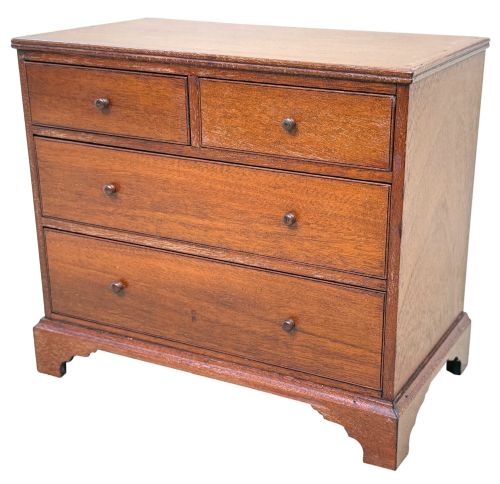
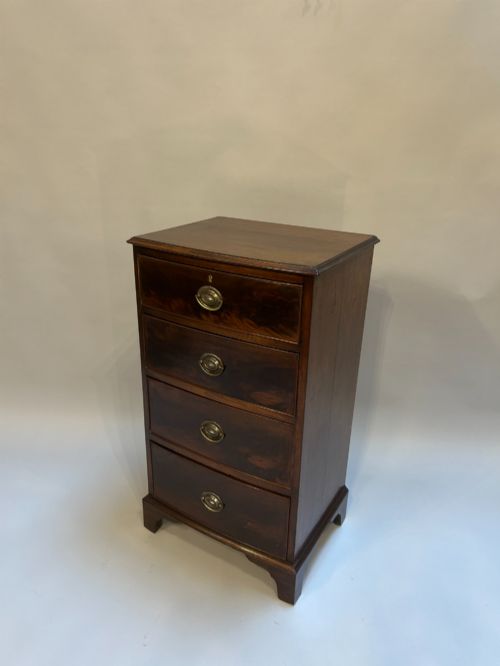
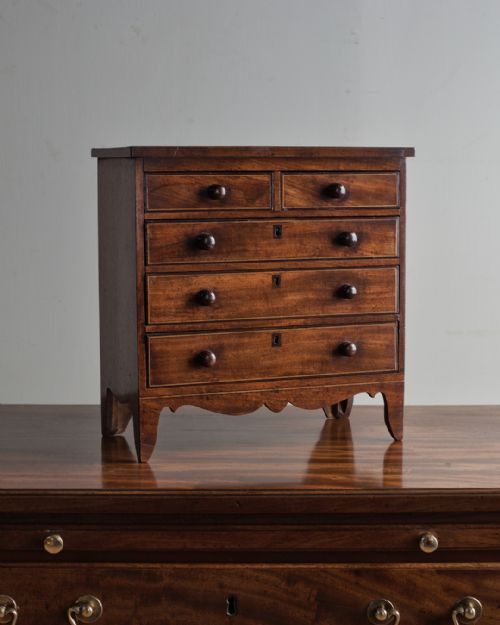
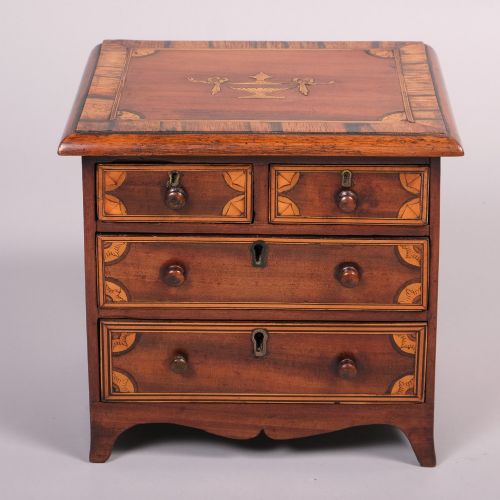

Georgian Mahogany Collector Chest
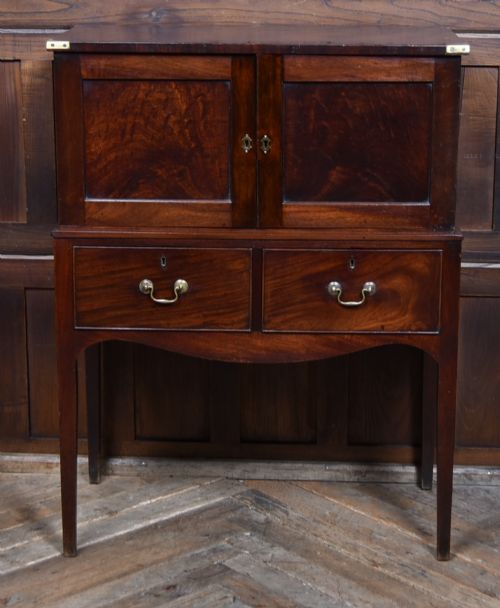
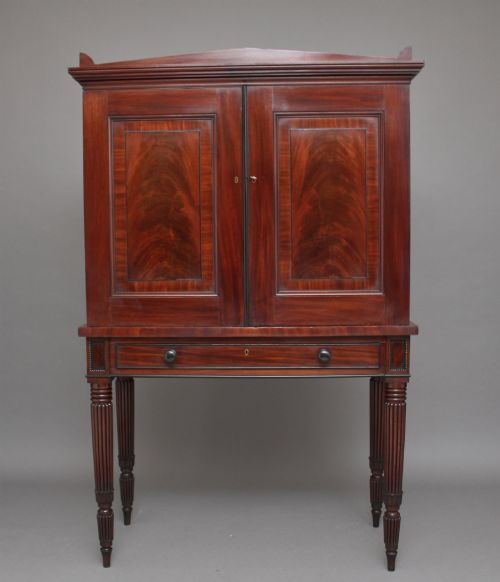
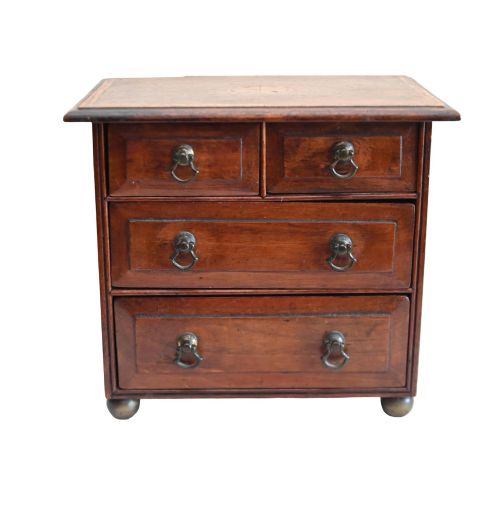
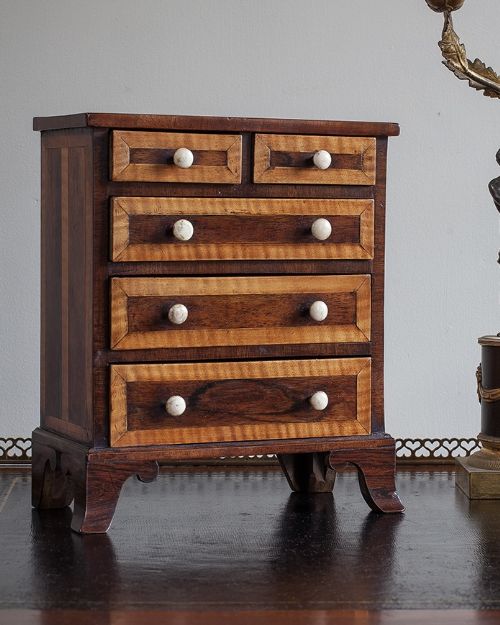
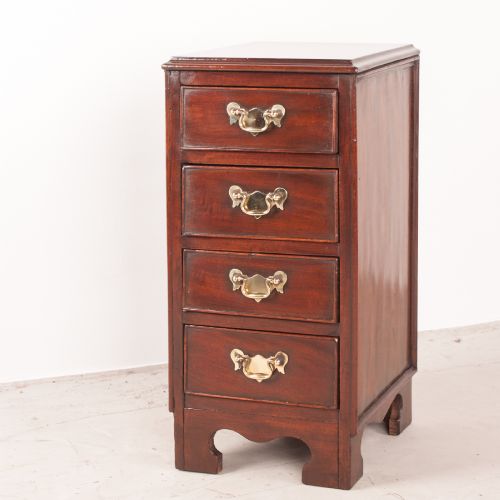
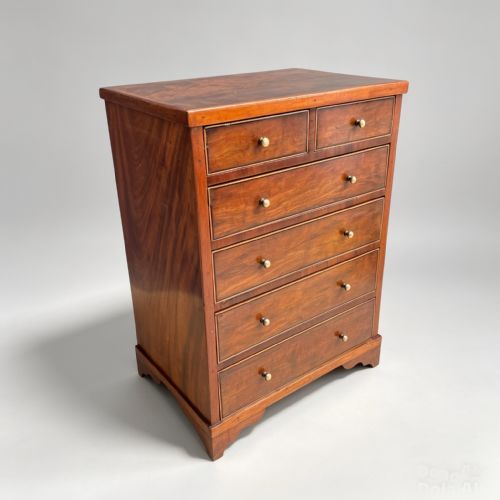
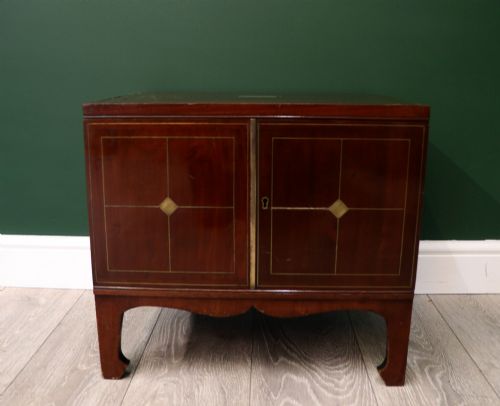
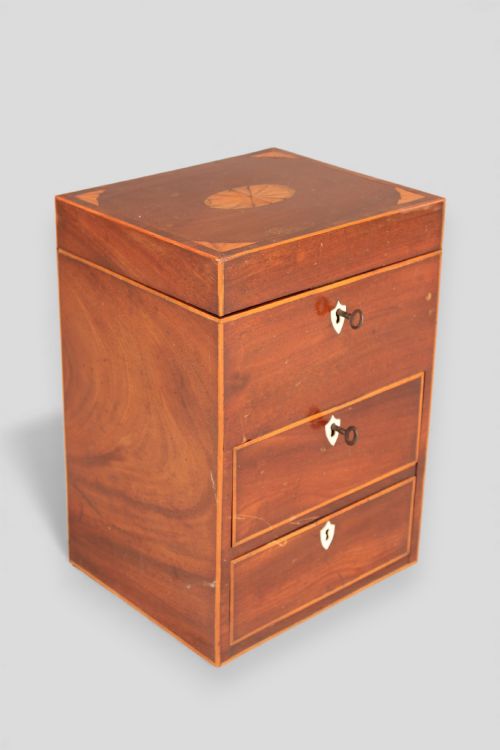
A georgian mahogany collector chest organises small specimens and treasures in timber of deep, warm tone with fitted internal drawers.
Georgian Mahogany Collector Chest
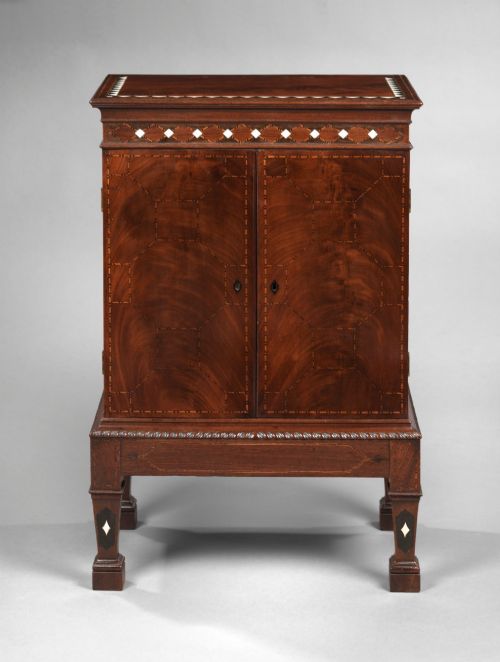
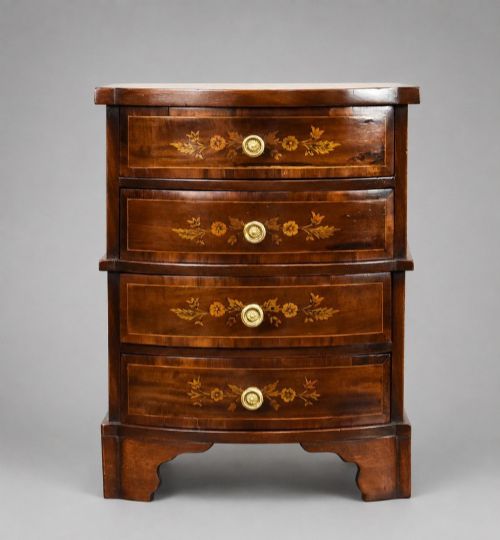
A georgian mahogany collector chest represents compact storage designed for natural history specimens, coins, or trinkets, typically appearing as miniature chests, banks of small drawers, or cabinets on stands.
The pieces on this page span the eighteenth and nineteenth centuries, featuring George III examples alongside later revivals, apprentice pieces, and related apothecary or estate cabinets.
Makers constructed these units with numerous shallow drawers to house delicate collections safely, often incorporating secure locking mechanisms and brass drop handles.
Materials and construction methods
Cabinet makers utilised dense mahogany, frequently Cuban in origin, complemented by secondary timbers such as oak, pine, and boxwood inlay for internal divisions and stringing.
Joinery techniques include precise dovetailing on the multiple small drawers required to house specimens securely within the compact carcase.
Georgian Mahogany Collector Chest Retail Price Guide 2026
Typical asking prices for georgian mahogany collector chest among the pieces listed under this phrase on Sellingantiques today, from the lower quarter to the upper quarter. They describe what is for sale here now, not the wider market.
Listings feature mahogany, boxwood inlay, bone, and brass across periods ranging from the eighteenth century to Edwardian revivals.
Judging the quality of a collector chest
Quality rests upon the density and figure of the mahogany timber selected for the facade, alongside the precision of the boxwood inlay and brass work.
The internal complexity elevates a piece, distinguishing standard small drawer banks from fitted estate cabinets containing numerous graduated tiers for specialised collections.
Original hardware, sound drawer runners, and intact locks demonstrate superior preservation compared to units with replaced components or modified interiors.
Charles William Schofield·William John Burchall·J. C. Dale
The Georgian Mahogany Collector Chest Glossary
- Collector chest
- A small cabinet featuring multiple shallow drawers built to house natural history specimens, coins, or small valuables. These items require careful internal organisation and tight drawer tolerances.
- Apprentice chest
- A small-scale piece created to demonstrate a woodworker's proficiency to a guild or master. They mirror full-sized furniture in construction detail and timber choice.
- Campaign style
- Furniture designed for travel, featuring recessed brass handles and corner brackets to protect the timber during transit. This utilitarian approach often includes reinforced joints.
- Estate cabinet
- A larger storage unit used for managing estate records, maps, or herbarium sheets. They contain numerous internal compartments or shallow trays.
- Bow front
- A convex curved cabinet facade that projects outward at the centre. This decorative shaping requires advanced woodworking skill to fit the drawers accurately.
Georgian Mahogany Collector Chest: Frequently Asked Questions
What were collector chests originally used for?
Naturalists and antiquarians utilised these multi-drawer cabinets to organise insects, minerals, shells, and coins safely away from light and dust.
The shallow internal configuration prevented fragile items from shifting and sustaining damage during examination.
How do I tell an apprentice chest from a miniature?
Apprentice pieces often display experimental joinery or showcase varied techniques to prove a craftsman's skill to a guild master.
Miniatures were simply produced as domestic furnishings for small rooms or specialised storage rather than formal trade tests.
Where should I place a collector chest at home?
These compact units suit tabletops, sideboards, or dedicated display stands where their fine timber grain and small drawers remain easily accessible.
Keep them away from direct sunlight and radiators to protect the antique mahogany surface and prevent timber shrinkage.
Are apothecary chests the same as collector chests?
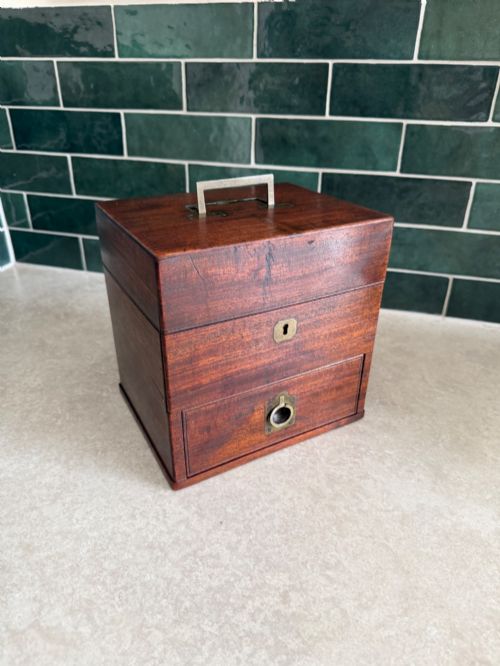
Apothecary and homeopathic chests share the same multi-drawer format but were built specifically for storing medicinal bottles, herbs, and compounding scales.
Collector chests focus on flat specimen trays or coin storage rather than deep bottle recesses.