


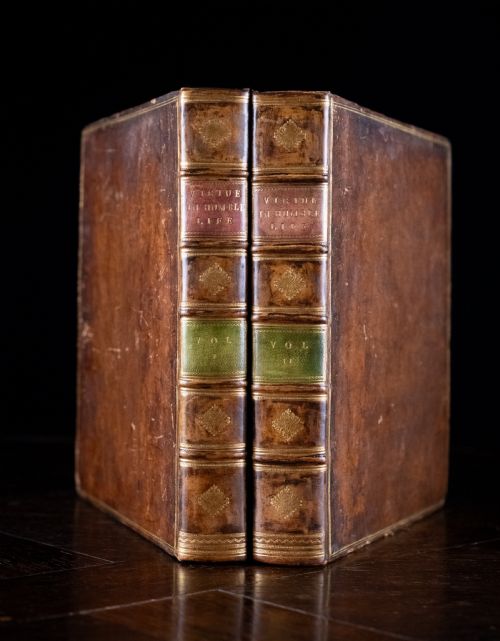
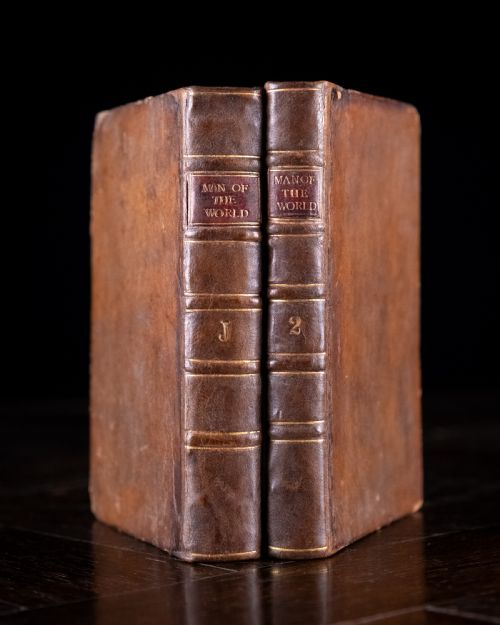


Georgian Leather Volumes
Georgian leather volumes are bound sets and individual works that bring tactile warmth and period weight to a shelf.
Georgian Leather Volumes
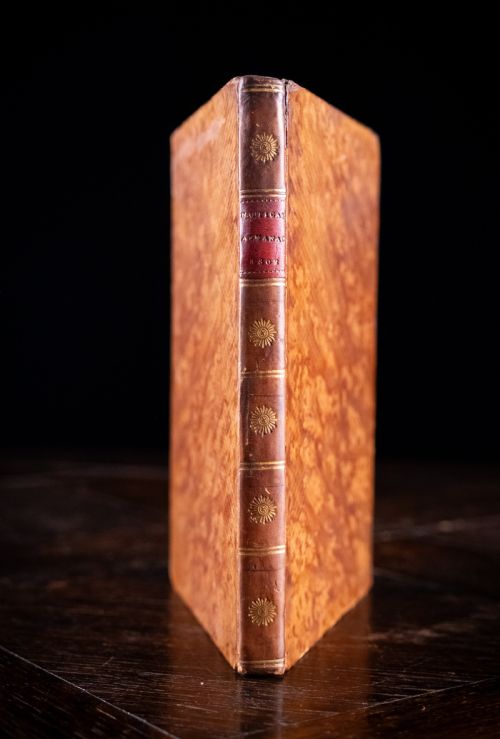
When you search for georgian leather volumes, you encounter antique books, antiquarian sets and miniature volumes spanning the eighteenth century and the Regency period. These items range from single volumes like nautical almanacs and thumb bibles to multi-volume sets of plays, essays and historical works.
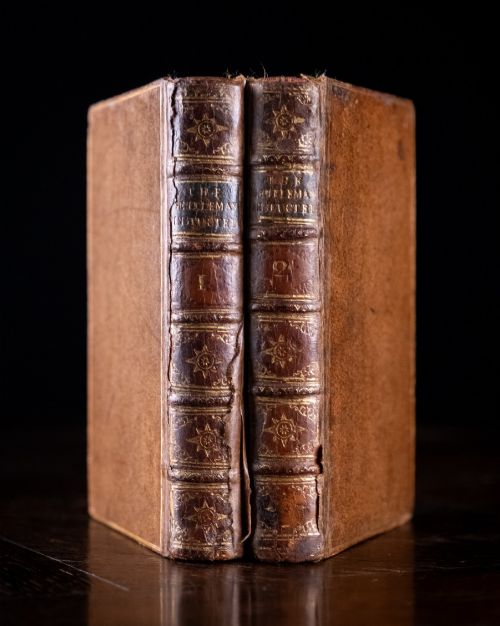
The versions most frequently met on this page include multi-volume literary sets such as Shakespeare plays or historical biographies, bound uniformly for gentlemanly libraries. Single volumes of religious texts or travel letters also appear, often showing the smaller formats popular in the period.
Originating largely from British printing and publishing traditions, these bindings reflect the domestic reading habits of the Georgian era. They serve as both historical documents and decorative shelf furniture, carrying the physical marks of centuries of handling.
How they were made
Makers bound these books using calfskin leather stretched over sturdy boards, paired with paper text blocks and reinforced with metal elements where necessary. The leather was often treated to achieve a smooth or speckled finish suited to domestic libraries.
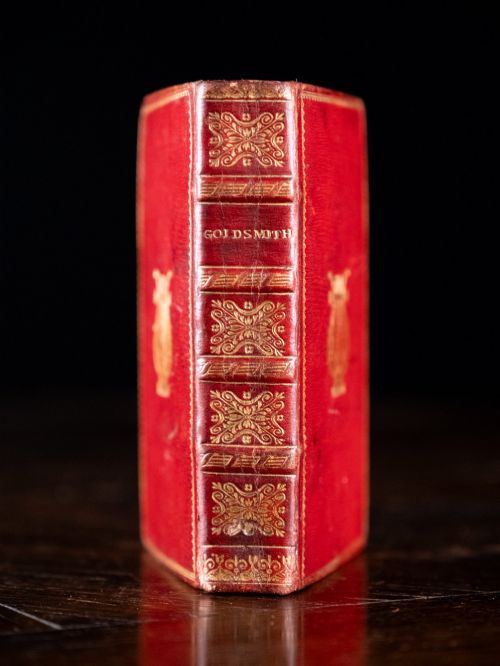
Binders applied gold leaf tooling to the spines and boards, pressing heated metal stamps into the leather to create lettering, decorative panels and floral borders. This gilding catches the light and distinguishes the more formal editions from plain utilitarian bindings.
Georgian Leather Volumes Retail Price Guide 2026
Typical asking prices for georgian leather volumes among the pieces listed under this phrase on Sellingantiques today, from the lower quarter to the upper quarter. They describe what is for sale here now, not the wider market.
Thumb bibles let eighteenth-century readers carry entire testaments in the palm of a hand.
What varies in quality
The quality of georgian leather volumes rests largely on the uniformity of the set, the crispness of the gold leaf tooling on the spine, and the suppleness of the calfskin leather. Complete multi-volume sets that retain matching contemporary bindings stand apart from mismatched assemblies.
The legibility of the typography, the quality of the paper stock, and the preservation of original endpapers also define the standing of a volume. Bindings that show clean tooling and tight structural integrity command greater attention from collectors.
J. & R. Tonson·J. Wheble·Jean Dassier·R Wilkin
The Georgian Leather Volumes Glossary
- Calfskin
- A fine, smooth leather prepared from the skin of a calf, commonly utilised for binding quality books throughout the Georgian period.
- Gold leaf
- A very thin sheet of beaten gold applied to leather bindings during the tooling process to create lasting metallic decoration and lettering.
- Miniature book
- A tiny format volume, often produced for ease of travel or private devotion, measuring only a few inches in height.
- Thumb bible
- A miniature religious text designed to be easily held in the hand or pocket, popular in the eighteenth century.
- Tooling
- The craft of pressing heated metal stamps and rolls into leather bindings to create decorative patterns and titles.
Georgian Leather Volumes: Frequently Asked Questions
Are these book sets complete?
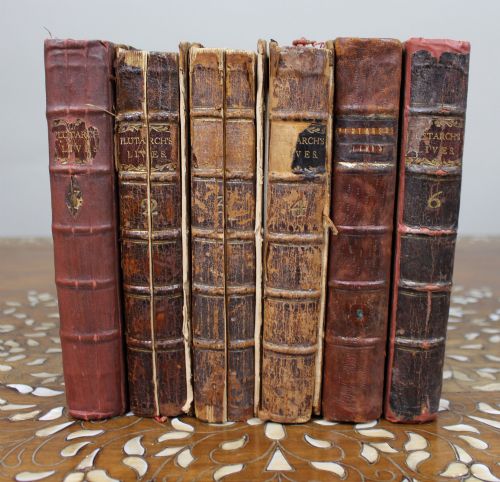
Many listings detail complete multi-volume sets, such as twelve-volume Shakespeare editions or six-volume historical works, preserved together from the period.
Individual descriptions specify whether a set is complete or if a single volume stands alone.
How do I care for antique leather bindings?
These leather volumes require stable room humidity and protection from direct sunlight to prevent the calfskin from drying out.
Handling them with clean hands and supporting the spines when removing them from a shelf preserves the historical bindings.
What subjects do these books cover?
The listings encompass a wide range of eighteenth and early nineteenth century literature, including plays, poetry, essays, religious texts and astronomical almanacs.
This variety reflects the broad reading interests of Georgian collectors and households.
How do I identify a Regency binding?
Regency bindings often display distinct typographic styles and tooling patterns characteristic of the early nineteenth century.
Dates printed on the title pages or within the front matter help confirm the exact period of publication.