




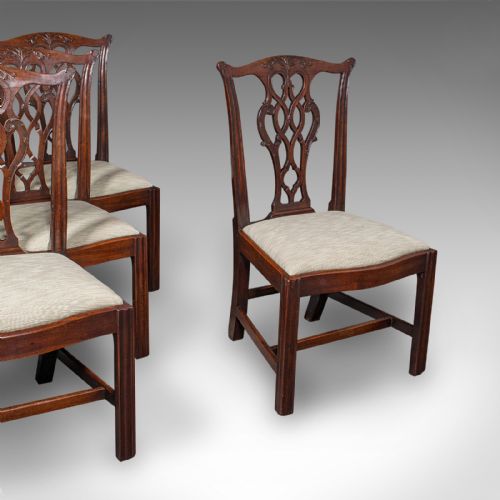


Georgian Fretwork Seat
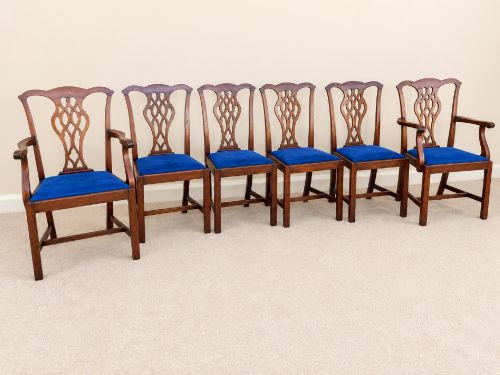
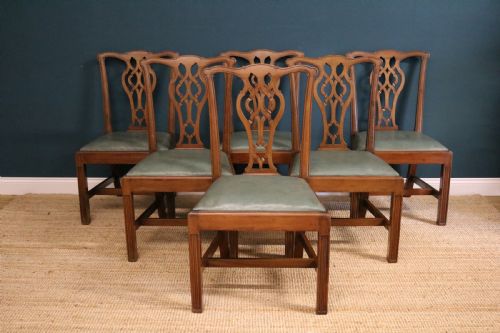
These georgian fretwork seat pieces combine pierced splats with solid timber frames, offering the exact formal seating that collectors acquire for period dining rooms.
Georgian Fretwork Seat
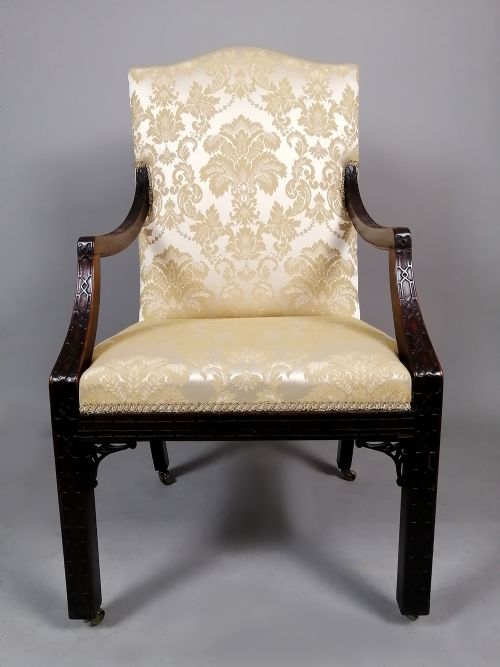
A georgian fretwork seat appears primarily in dining chairs, armchairs, and side chairs fashioned from timber like mahogany. The forms follow distinct stylistic lineages, most notably Chinese Chippendale and George III design, spanning the eighteenth through the nineteenth centuries.
The version most commonly met on this page is the dining chair or side chair executed in mahogany, often carrying the characteristic pierced splat associated with Chippendale work. These pieces also emerge in later revivals, reflecting the enduring appeal of carved geometric woodwork.
How they were made
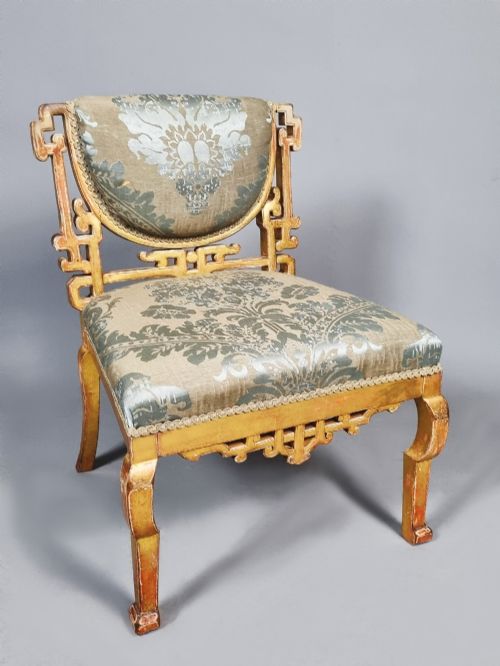
Makers utilised solid mahogany to construct the structural frames, allowing for intricate pierced fretwork without compromising the load-bearing strength of the seat. Giltwood also appears on specialised seating, while upholstery incorporates traditional materials like silk damask, fabric, and leather.
Joinery techniques relied on precise mortise and tenon construction to secure the legs and rails, complemented by hand-carved details along the crest rails and splats. Brass elements occasionally figure in the hardware or castors where applicable.
Georgian Fretwork Seat Retail Price Guide 2026
Typical asking prices for georgian fretwork seat among the pieces listed under this phrase on Sellingantiques today, from the lower quarter to the upper quarter. They describe what is for sale here now, not the wider market.
Among the stately dining chairs sits a lone pagoda-crowned seat ready to preside over tea.
What varies in quality
The distinction between top-tier examples and lesser pieces lies in the crispness of the hand-carved fretwork and the depth of the timber figuring. Superior seating demonstrates meticulous execution in the pierced splats, whereas lower ranges show softer edge definition and simpler joinery.
Proportion and the integration of the upholstery, whether silk damask or plain leather, dictate the overall harmony of the design. Original frames that retain their structural integrity command greater appreciation than heavily altered or reconstructed examples.
Waugh & Son·Thomas Chippendale
The Georgian Fretwork Seat Glossary
- Fretwork
- Pierced ornamental woodwork resembling lattice patterns. This technique defines the openwork splats characteristic of the chairs.
- Splat
- The vertical wooden strip down the centre of a chair back. It receives the intricate fretwork carving in these pieces.
- Giltwood
- Timber treated with gold leaf or gold paint. It appears on select decorative seating in the evidence.
- Damask
- A reversible figured fabric often utilised for upholstery. Silk variants are recorded on these seats.
- Klismos
- An ancient Greek chair form with curved legs and a concave backrest. The evidence includes a carved variant with a bergere seat.
Georgian Fretwork Seat: Frequently Asked Questions
What is a georgian fretwork seat?
A georgian fretwork seat is a chair featuring pierced wooden lattice designs, primarily found on eighteenth-century and revival dining and armchairs.
These pieces use carved mahogany to create elaborate openwork patterns along the back splat.
How do I identify Chinese Chippendale style?
Chinese Chippendale styling is marked by geometric fretwork, pagoda motifs, and straight legs rather than cabriole forms.
This aesthetic draws heavily on Asian decorative arts popularised in eighteenth-century English furniture making.
Are these chairs suitable for daily use?
Many of these pieces function well as dining or library seating when the underlying timber frame remains sound.
Care should be taken with antique upholstery fabrics such as silk damask to preserve the textile integrity.
How do I distinguish eighteenth-century pieces from later revivals?
Period pieces display the tool marks, timber ageing, and construction methods specific to Georgian workshops.
Later nineteenth-century and early twentieth-century revivals replicate the style using manufacturing techniques characteristic of their own eras.