





Georgian Flintlock Gun
A georgian flintlock gun brings mechanical history to life, offering collectors tangible ties to eighteenth and nineteenth century military and civilian defence.
Georgian Flintlock Gun
A georgian flintlock gun encompasses arms produced during the eighteenth and early nineteenth centuries, ranging from heavy muskets and blunderbusses to compact pocket pistols. Buyers searching for a georgian flintlock gun typically encounter pieces fashioned for military service, naval defence, or private protection.
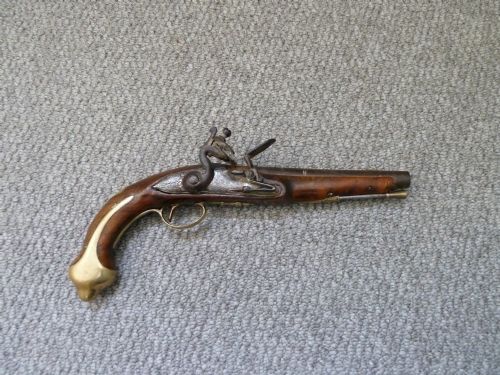
The selections span standard military issues like the Brown Bess and Tower service pistols, alongside refined civilian pieces carrying maker signatures from London, Birmingham, and provincial centres. Many surviving examples date from the mid-eighteenth century through the Napoleonic period.
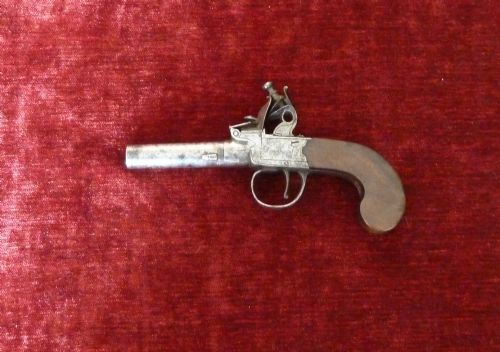
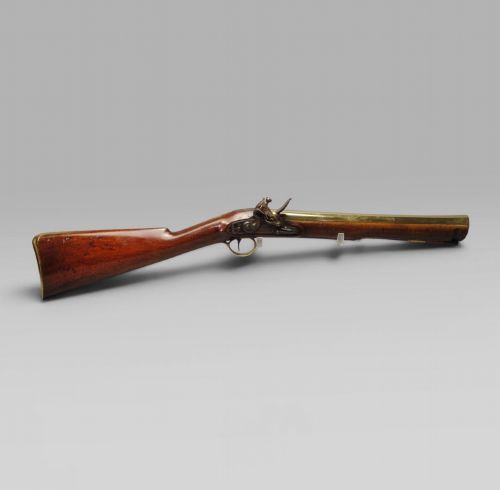
Forms vary from full-length muskets and sporting pieces to short-barrelled blunderbusses equipped with sprung bayonets and pocket pistols featuring silver wire inlay. Each variation reflects the specific tactical or domestic requirements of its original owner.
Materials and construction
Makers constructed stocks primarily from figured walnut or dense wood, often enhancing civilian arms with delicate silver wire inlay or cast brass furniture. Barrels and locks rely on forged steel and iron, whilst specific naval and civilian pattern arms incorporate heavy brass barrels designed to resist marine corrosion.
Lock mechanisms depend upon precise metalwork operating via a flint striking a steel frizzen to create the spark that ignites the powder charge. Stock carving and barrel profiling demonstrate traditional hand-tool methods utilised by period gunsmiths across Britain, Ireland, and continental workshops.
Georgian Flintlock Gun Retail Price Guide 2026
Typical asking prices for georgian flintlock gun among the pieces listed under this phrase on Sellingantiques today, from the lower quarter to the upper quarter. They describe what is for sale here now, not the wider market.
Some pocket pistols hid folding triggers that only snapped outward when the cock was pulled back, saving eighteenth-century pockets from accidental snags.
Distinctions in quality
Quality in a georgian flintlock gun rests upon the crispness of maker signatures, the integration of silver wire or brass mounts, and the proportion of the walnut stock. Master gunsmiths achieved superior balance and finer line engraving on locks and trigger guards.
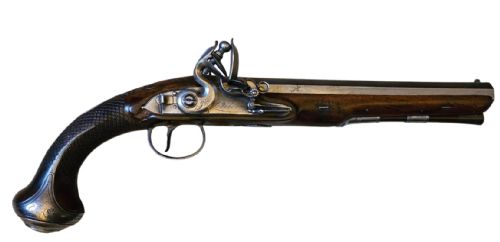
Military contracts prioritized robust utility over decoration, whereas private duelling and pocket arms display refined craftsmanship through slender forms, checkering, and high-grade metal finishing.
Harrison of London·Henry Nock·Sargant and Son·James Barber·Timothy Hughes·Meyer and Mortimer·Barber of Newark
The Georgian Flintlock Gun Glossary
- Flintlock
- Ignition mechanism utilising a flint held in a cock to strike a steel frizzen, generating sparks to fire the main charge. This system dominated firearms technology throughout the eighteenth century.
- Blunderbuss
- Short-range firearm featuring a flared muzzle designed to scatter lead shot effectively in confined spaces. These weapons saw frequent use on coaches and naval vessels.
- Brown Bess
- Standard-issue flintlock smoothbore musket used by the British Army for over a century. The designation covers several pattern evolutions spanning the Georgian era.
- Frizzen
- Steel plate struck by the flint to produce sparks while simultaneously covering the priming pan. It is an essential component of the mechanical lock assembly.
- Touchhole
- Small aperture connecting the exterior priming pan to the main barrel chamber. It transmits the ignition flame to fire the projectile.
Georgian Flintlock Gun: Frequently Asked Questions
What is a georgian flintlock gun?
A georgian flintlock gun is a muzzle-loading firearm produced during the reigns of the Georges, utilising a flint and steel ignition system.
These pieces include military muskets, service pistols, and civilian pocket arms manufactured between the mid-eighteenth and early nineteenth centuries.
How were these guns used?
These arms served infantry soldiers, cavalry troopers, naval personnel, and private citizens for self-defence and hunting.
Military versions equipped British forces during major conflicts, whilst smaller pocket and duelling variants provided personal protection for civilians.
How do I identify military versus civilian pieces?
Military arms typically feature government inspection stamps, Tower markings, and standardised brass furniture for durability in the field.
Civilian pieces often display private maker signatures, finer wood stocks with silver wire inlay, and lighter barrel profiles.
How should I display a flintlock gun?
Display these arms in stable, dry environments away from direct sunlight to preserve the walnut wood stocks and metal finishes.
Secure wall brackets or specialised glass display cabinets allow the mechanisms and overall form to be appreciated safely.