






Georgian Desk Clock
A georgian desk clock brings refined timekeeping to a study, built in mahogany or rosewood with precision brass movements.
Georgian Desk Clock
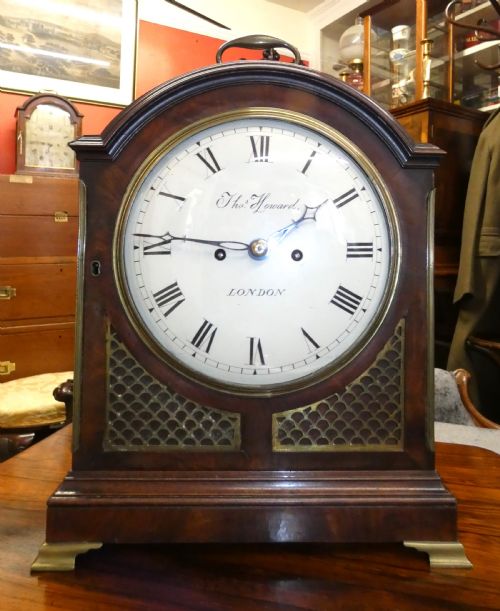
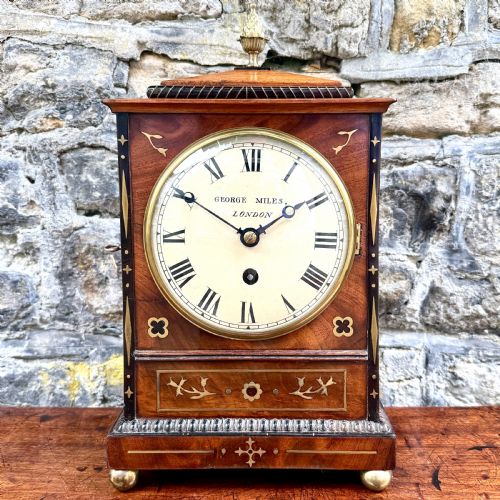
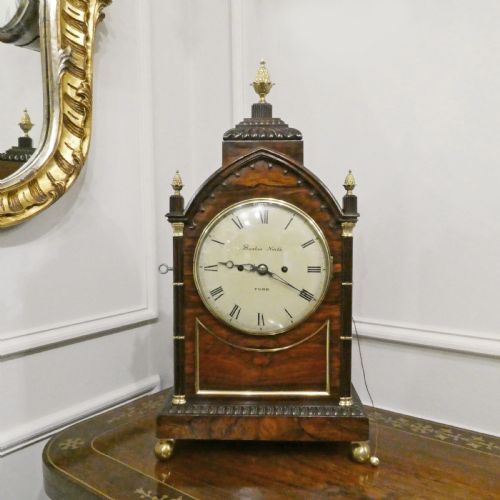
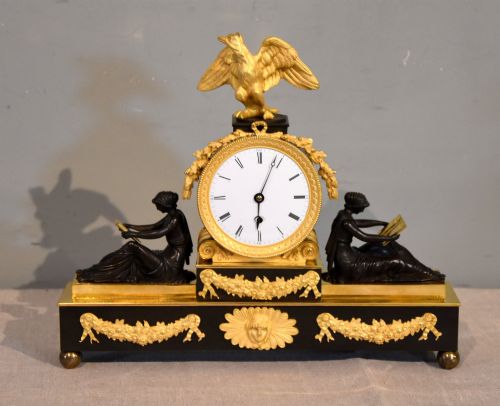
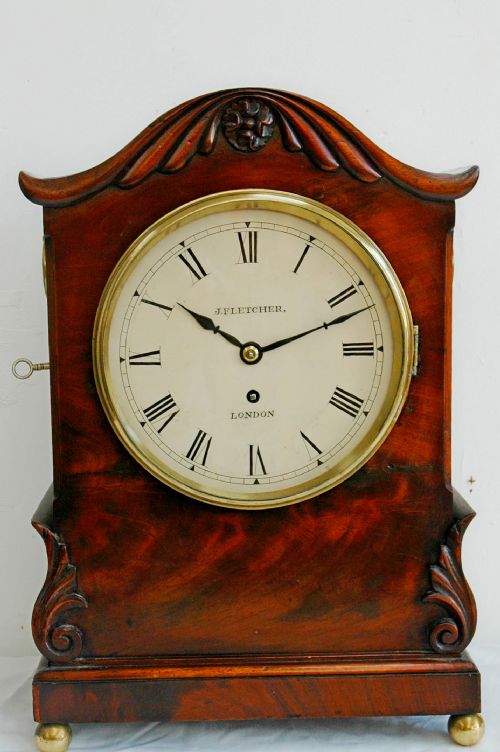
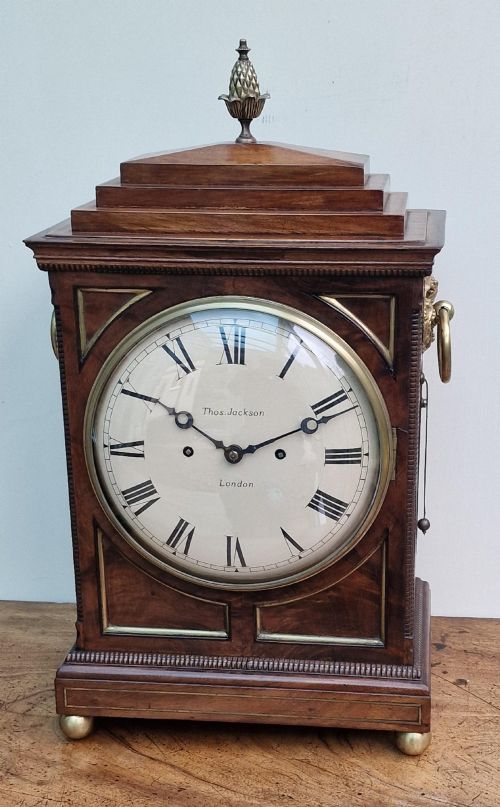
A georgian desk clock encompasses library clocks, bracket clocks, and mantel timepieces spanning the Georgian, Regency, and Victorian eras. These portable timepieces served practical and decorative functions in private rooms and public offices.
Mahogany and rosewood cases dominate the selection, frequently shaped with lancet tops, pad tops, or bell tops. Dial configurations vary from simple painted enamel faces to intricate brass chapter rings with subsidiary hands.
Regional makers from London, York, Edinburgh, and Leicester contributed distinct regional variations to the standard table clock form. Many examples display neoclassical or revivalist design details inspired by earlier centuries.
Materials and construction
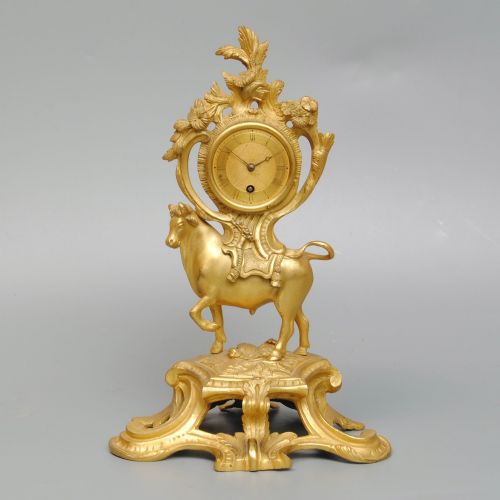
Cabinetmakers utilised dense hardwoods such as mahogany, rosewood, walnut, and ebonised wood to build sturdy architectural housings for delicate clockwork. Fine brass inlays, ormolu mounts, and gilt bronze accents embellished the wooden structures.
Mechanical movements relied on fusee or chain fusee systems to maintain steady power delivery as the mainspring unwound. Enamel dials protected by heavy glass bezels offered clear legibility for daily use.
Georgian Desk Clock Retail Price Guide 2026
Typical asking prices for georgian desk clock among the pieces listed under this phrase on Sellingantiques today, from the lower quarter to the upper quarter. They describe what is for sale here now, not the wider market.
Several clocks carry the distinct signature of Camberwell and Strand workshops, reminding us that London suburbs once buzzed with industrious tickings.
Quality factors
Superior examples feature crisp timber grain selection and meticulous brass inlay work that integrates smoothly into the wood case. Movement complexity, such as quarter striking capabilities and signed dial plates, separates standard timepieces from high-grade commissions.
Proportion and execution define the hierarchy of these objects, where finely cast gilt bronze mounts and balanced dial typography signal skilled workshops. Original movement components and well-preserved casework retain the integrity intended by the maker.
Thomas Howard·Mappin & Webb·Barber & North·Thomas Jackson·Bush of London·Viner London·Turner of London·Hampson & Son·Pennington of Camberwell·William Hardy London·Berguer of the Strand·McCabe London·Purvis of London·Plumbly & Tupman·FB Adams London·John Taylor·Baldwin of Loughborough·Bently & Beck London
The Georgian Desk Clock Glossary
- Fusee
- A conical pulley designed to equalise the torque of the mainspring as it runs down, ensuring steady timekeeping.
- Bracket clock
- A portable spring-driven clock originally designed to sit on a wall bracket or desk.
- Lancet top
- A pointed, Gothic-arch case shape popular on nineteenth-century table and mantel clocks.
- Chain fusee
- A movement mechanism utilising a fine steel chain rather than catgut to connect the barrel to the fusee cone.
- Chapter ring
- The circular metal ring on a clock dial that bears the hour numerals.
Georgian Desk Clock: Frequently Asked Questions
What is a georgian desk clock?
A georgian desk clock is a portable spring-driven timepiece housed in wood such as mahogany or rosewood, designed for placement on a desk, shelf, or bracket.
These clocks combine functional timekeeping with decorative cabinetwork reflecting Georgian and Regency styles.
How do fusee movements work?
A fusee movement uses a conical pulley connected to the mainspring by a chain or cord, which equalises power delivery as the spring unwinds.
This mechanism ensures consistent force reaches the escapement, resulting in more accurate timekeeping throughout the power reserve.
How do I care for a mechanical desk clock?
Mechanical desk clocks require stable placement away from direct sunlight and drafts, combined with periodic professional servicing to clean and oil the brass gears.
Winding should be performed gently using the appropriate key without over-tensioning the mainspring.
How do I distinguish Regency from Victorian examples?
Regency clocks typically exhibit restrained neoclassical lines, brass inlay, and crisp ormolu mounts influenced by the early nineteenth century.
Victorian and later revival pieces often incorporate heavier proportions, elaborate carving, or specific regional variations stamped with maker signatures.