

Georgian Console
A georgian console offers understated elegance for a hallway or reception room, bringing timeless timber grain and refined proportions to period interiors.
Georgian Console
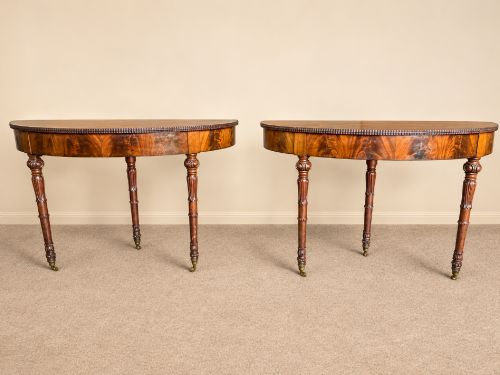
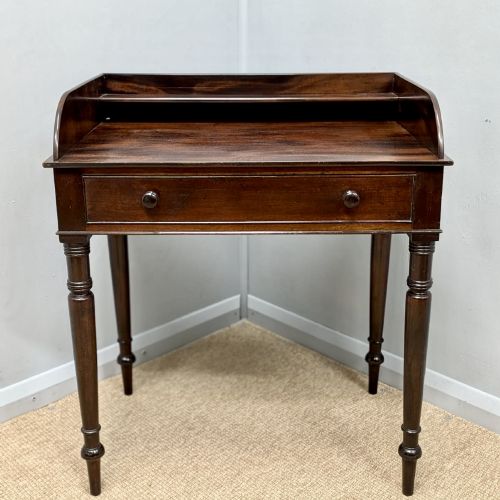
When searching for a georgian console, a buyer encounters a refined selection of side tables, demilune tables, and serving pieces intended to sit gracefully against a wall. These furnishings span the eighteenth and nineteenth centuries, alongside later Edwardian revivals mirroring earlier classical lines.
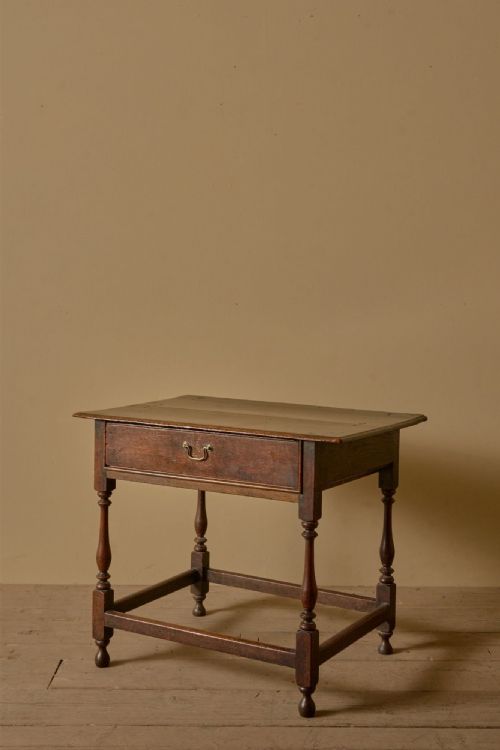
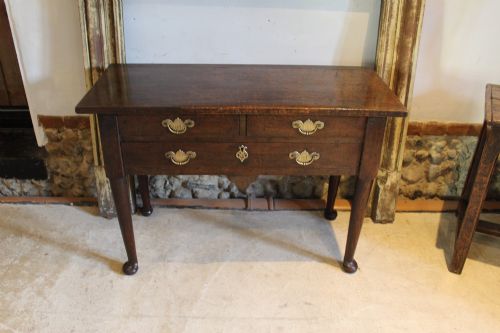
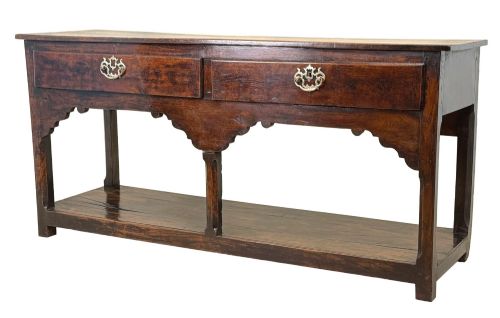
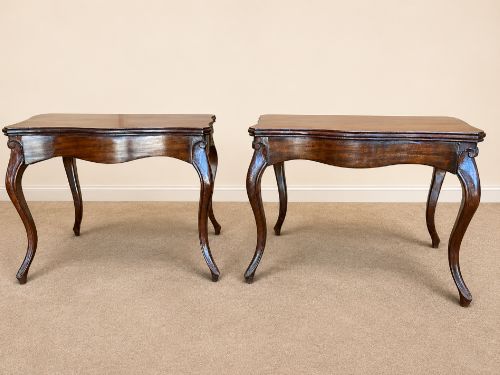
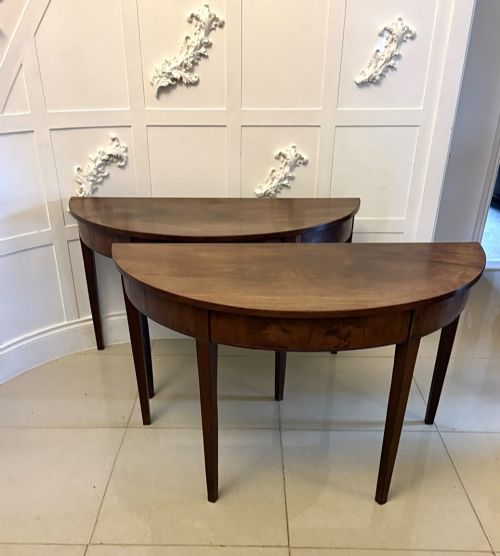
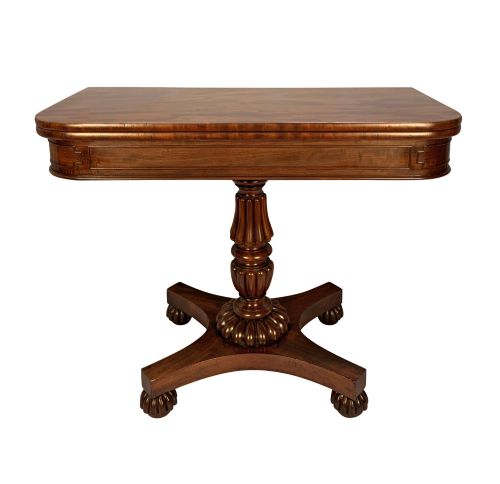
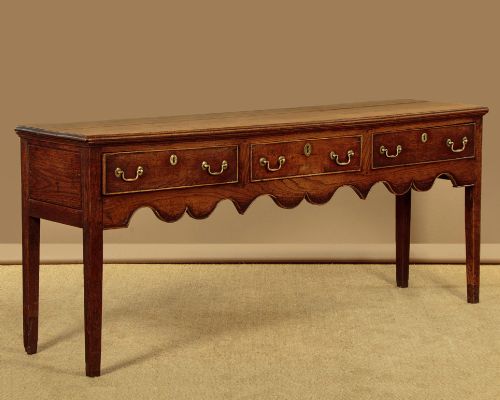
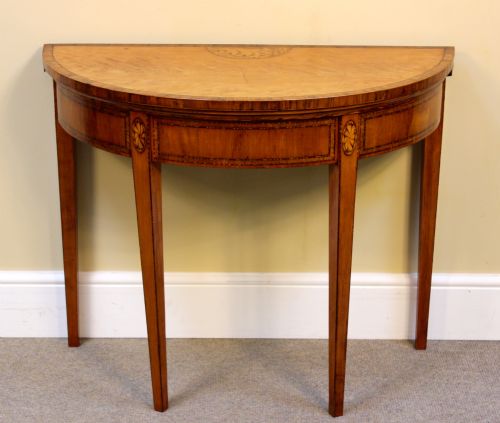
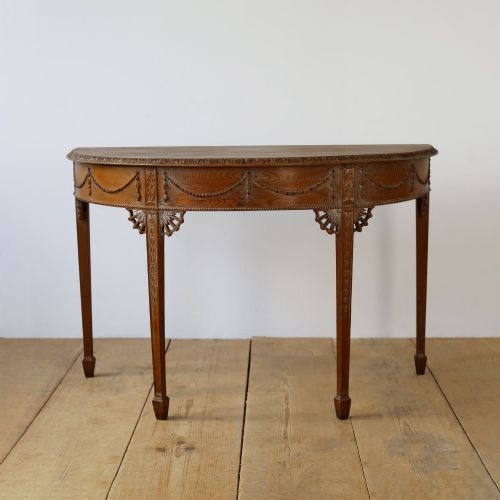
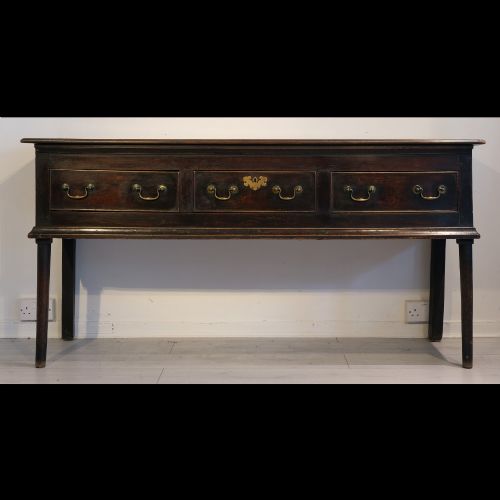
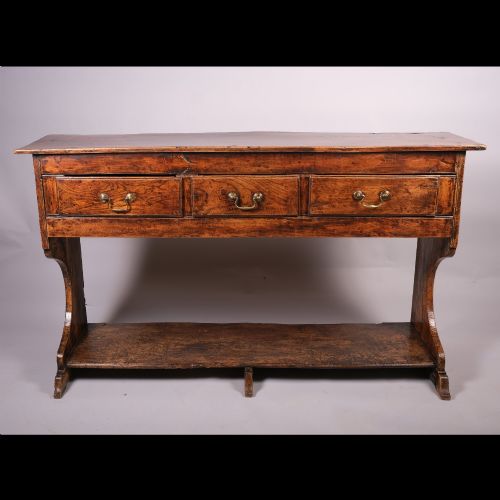
The dominant forms on this page include mahogany demilune tables, side tables with pad or cabriole legs, and occasional folding card or tea tables. Oak lowboys and walnut dresser bases also appear, representing the practical domestic cabinetry of the period.
Origins remain firmly rooted in English workshop traditions, incorporating regional timbers such as Welsh or Montgomeryshire oak alongside imported Cuban and figured mahogany. Pieces range from austere George II and George III designs to lighter Sheraton-influenced satinwood creations and Regency interpretations.
Materials and Construction Methods
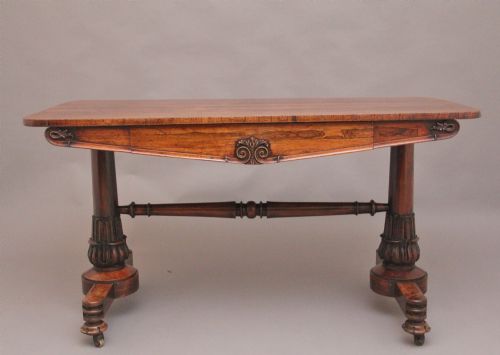
Cabinetmakers relied heavily on solid mahogany, oak, and walnut, frequently enhancing surfaces with contrasting veneers of satinwood, boxwood, and rosewood crossbanding. Certain examples incorporate marble tops paired with pine frames, or utilise elm and burr yew wood for distinct grain patterns.
Joinery techniques focus on stability and display, utilising foldover top mechanisms for card tables, delicate stringing, and hand-painted decorative accents. Timber surfaces are traditionally finished to highlight natural figuring rather than heavy pigmentation.
Georgian Console Retail Price Guide 2026
Typical asking prices for georgian console among the pieces listed under this phrase on Sellingantiques today, from the lower quarter to the upper quarter. They describe what is for sale here now, not the wider market.
Listings feature eighteenth-century oak lowboys alongside Edwardian satinwood servers and nineteenth-century mahogany card tables.
Distinguishing Quality in Period Tables
Superior examples demonstrate exceptional choice of timber, such as highly figured Cuban mahogany or intricate burr walnut, matched with crisp carving on legs and friezes. Finer tables exhibit precise crossbanding and harmonious proportions that elevate them beyond utilitarian daily furniture.
Construction integrity distinguishes the finest pieces, seen in the seamless operation of foldover mechanisms, well-preserved original hardware, and uncompromised structural frames. Lesser pieces often rely on later assembled components or simplified secondary timbers.
The Georgian Console Glossary
- Demilune
- A half-moon shape popular for console and card tables designed to stand flat against a wall. This profile saves floor space while providing a decorative surface.
- Crossbanding
- A border veneer applied around the edges of a table top with the wood grain running perpendicular to the centre panel. This technique frames the primary timber.
- Lowboy
- A small oak or walnut table featuring one or more rows of drawers, commonly used as a dressing table or side table during the eighteenth century.
- Card table
- A foldover top table designed for gaming, featuring a hinged leaf that opens to reveal a baize-lined playing surface supported by a swing leg.
Georgian Console: Frequently Asked Questions
Where should a console table be placed?
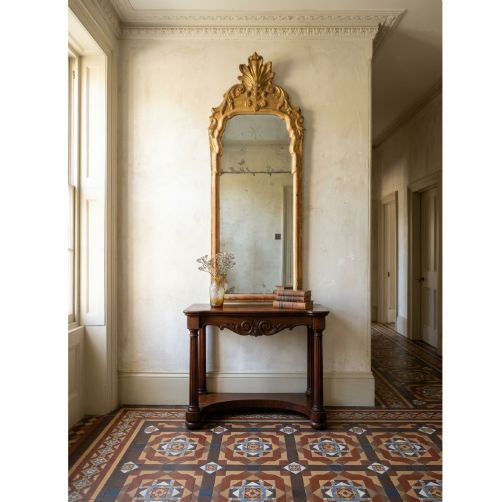
These tables sit flat against a wall, making them well-suited for narrow hallways, entrance passages, or beneath a mirror in a reception room.
Their shallow depth ensures they occupy minimal floor space while providing a convenient surface for lamps or decorative objects.
How do I identify a George III piece?
Pieces from the reign of George III often display classical restraint, featuring straight tapered legs, subtle stringing, and balanced proportions.
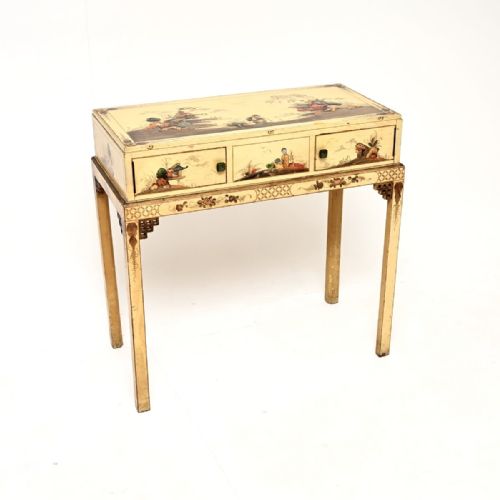
Later Edwardian interpretations of this style frequently incorporate painted satinwood decoration or lighter scaling while retaining the overarching classical silhouette.
What is the difference between a console and a side table?
Console tables historically required wall fixing or brackets for stability, whereas standard side tables stand independently on four legs.
In modern usage, the terms frequently overlap to describe decorative wall-mounted or freestanding surfaces utilised for display.
How should I care for antique mahogany timber?
Maintain antique mahogany by keeping it away from direct sunlight and sudden temperature changes that can dry out the wood.
Apply traditional beeswax sparingly and buff gently with a soft cloth to preserve the natural lustre of the polished surface.