

Georgian Center Table
A georgian centre table stands independently in a room, offering surface space from every angle and holding books, lamps or dining ware.
Georgian Center Table
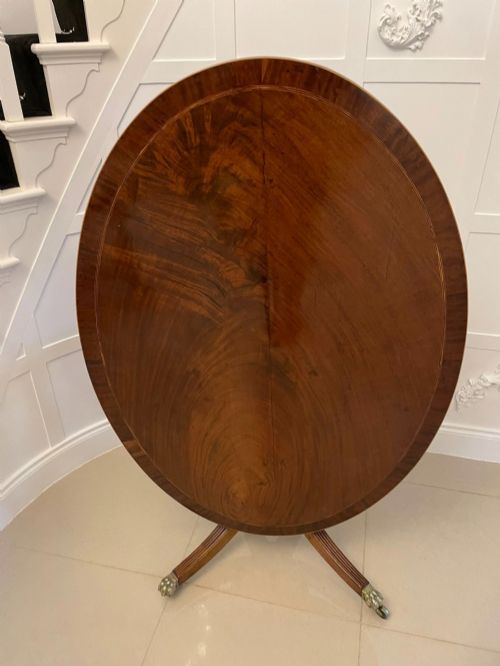
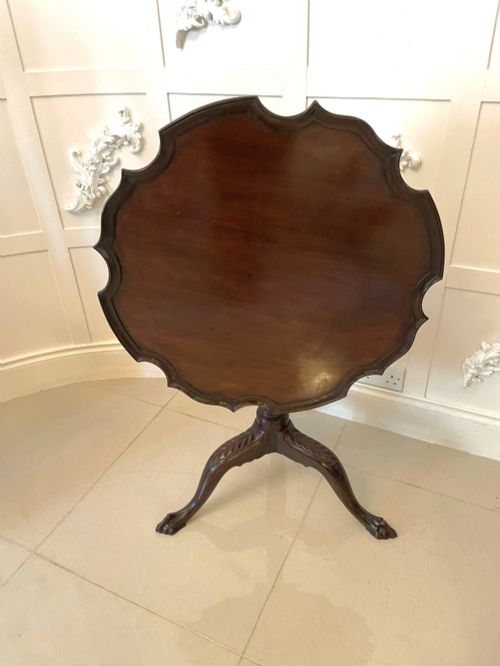
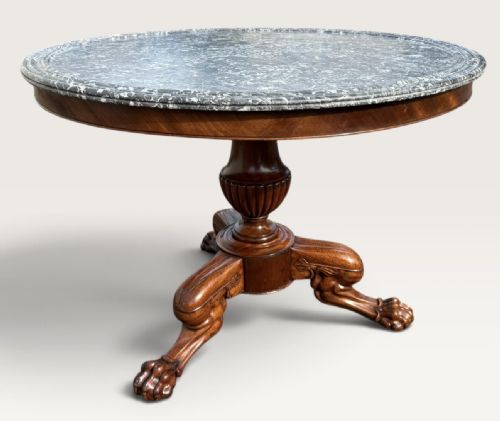
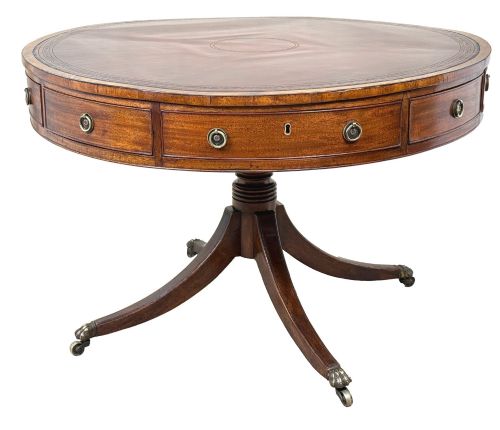
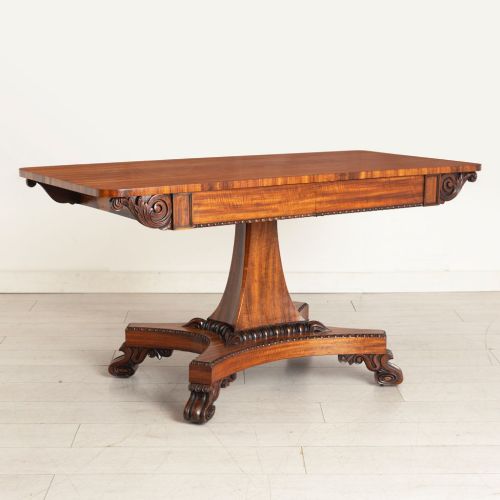
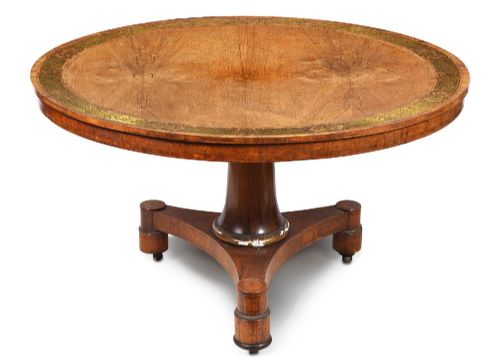
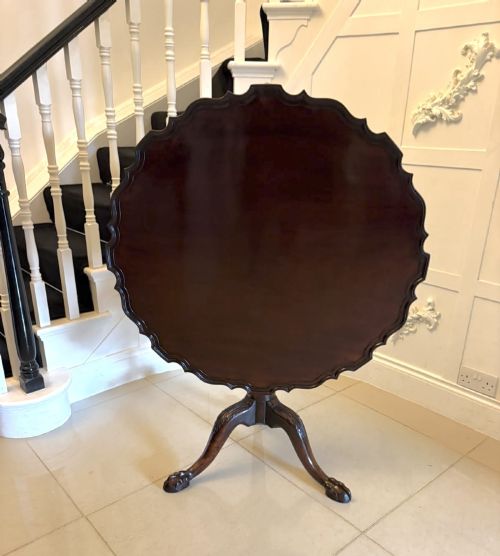
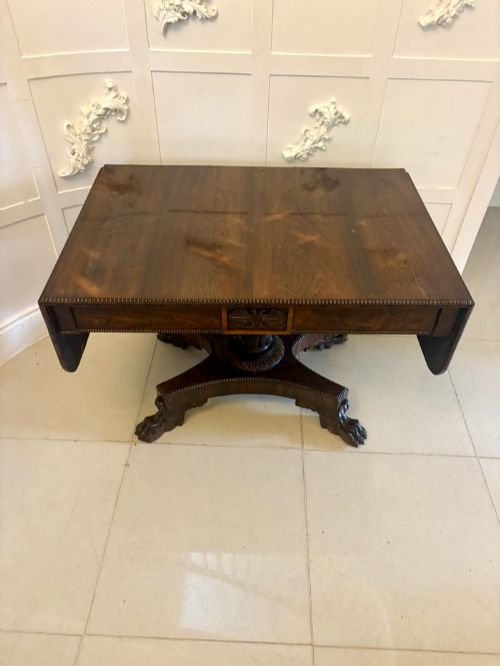
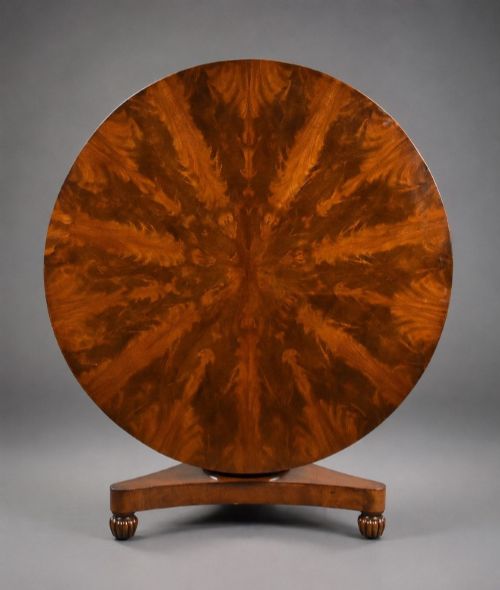
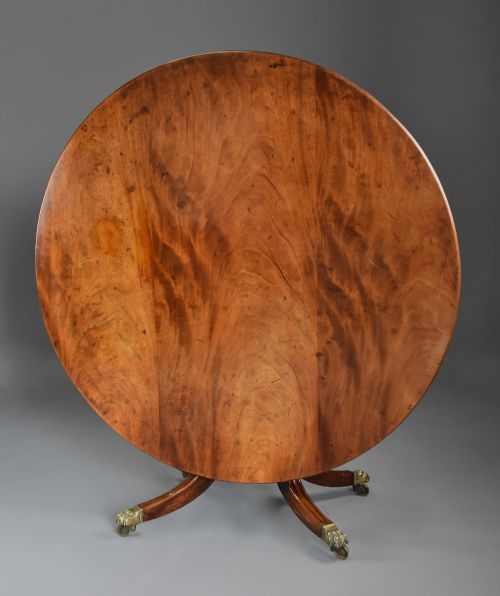
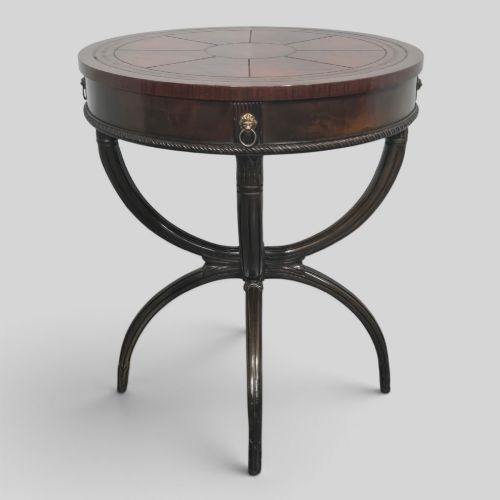
A georgian centre table is designed to stand free in the middle of a room rather than against a wall, making it accessible from all sides. These pieces include pedestal breakfast tables, drum library tables and drop-leaf formats intended for dining or general use.
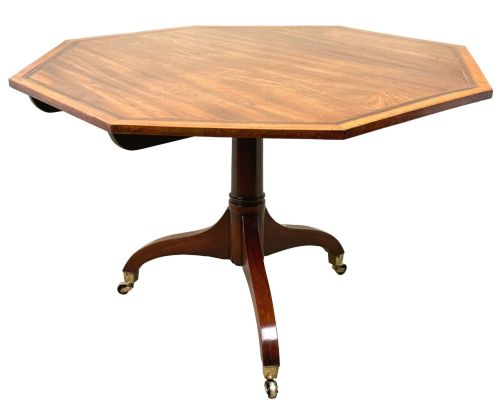
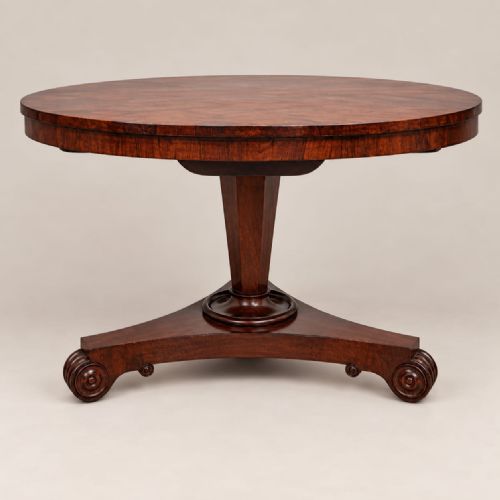
The versions most common on this page date from the Georgian and Regency periods, utilising mahogany, rosewood and oak. Formats range from round tilt-top breakfast models to octagonal hall tables and drum tables with revolving tops.
Materials and construction
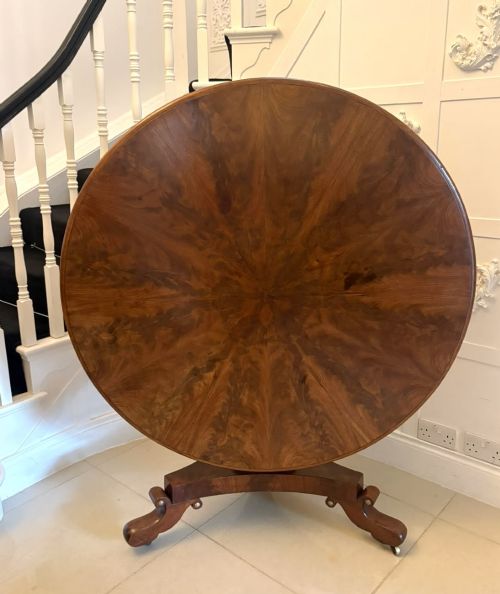
Cabinetmakers constructed these tables using dense timbers such as mahogany, rosewood, walnut and fruitwood, often selecting figured veneers and flame mahogany for prominent surfaces. Solid timbers formed structural elements like tripod legs, pillars and drop leaves.
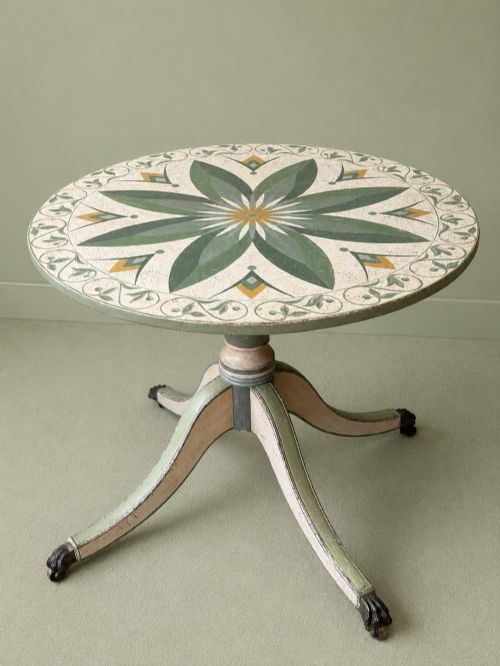
Decoration relied on contrasting materials and precise joinery, incorporating brass inlay, crossbanded borders and amboyna or ebony details. Tilt-top mechanisms utilised stable brass or iron catches to secure the top when horizontal.
Some tables double as drum storage units, proving that Georgian furniture designers took household percussion very seriously indeed.
Factors of quality
Quality rests upon the selection of timber figure, such as well-matched flame mahogany or richly grained rosewood, paired with crispness in brass inlay and carved tripod bases. Cabinetmakers who paid attention to secondary timbers and stable tilt-top actions produced enduring examples.
Proportion and stability separate standard pieces from finer works, particularly in pedestal tables where the weight of the top requires a sturdy triform or four-pillar base to prevent tipping.
Gillows·Walker-Lancaster
The Georgian Center Table Glossary
- Tilt-top
- A table top hinged to tip vertically when not in use, allowing the piece to be stored against a wall.
- Drum table
- A circular library table with a deep top containing drawers, resembling the shape of a drum.
- Crossbanding
- A border of veneer laid perpendicular to the grain of the main surface to create a framed effect.
- Triform base
- A three-sided pedestal support, typical of Regency and William IV breakfast tables.
- Gueridon
- A small ornamental stand or table, often of French inspiration, used as a centre table.
Georgian Center Table: Frequently Asked Questions
Where should a centre table be placed?
These tables are designed to occupy the middle of a room, allowing people to walk around them completely.
They serve as focal points in large halls, libraries or drawing rooms, often holding lamps, books or floral arrangements.
What is a tilt-top table used for?
The tilting mechanism allowed large dining and breakfast tables to be tipped upright and pushed aside to save floor space when not in dining use.
Today, this feature permits easier movement between rooms and reveals the underside construction of the table top.
What woods were used for these tables?
Cabinetmakers primarily utilised mahogany, rosewood and oak, supplementing them with figured veneers such as burr yew, amboyna and ebony.
Earlier pieces occasionally feature fruitwood or walnut, while tropical hardwoods appear in Regency examples.