
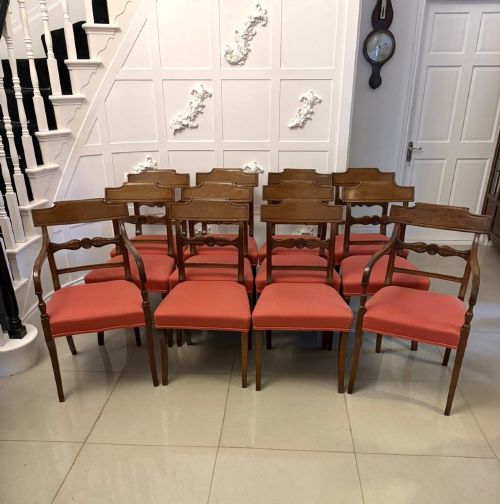
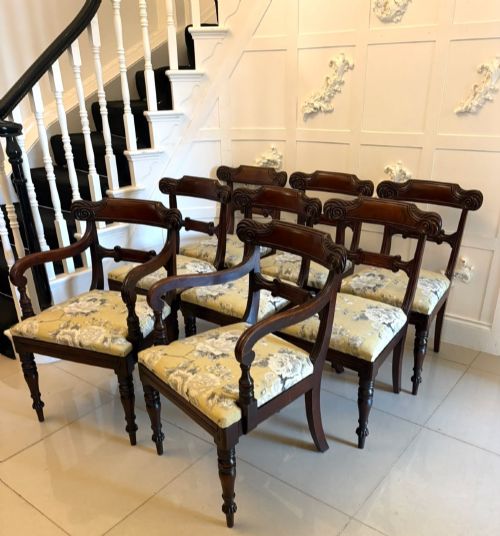
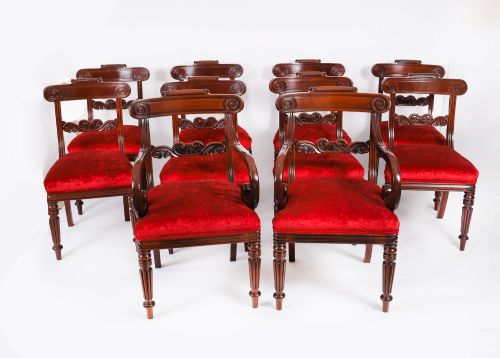
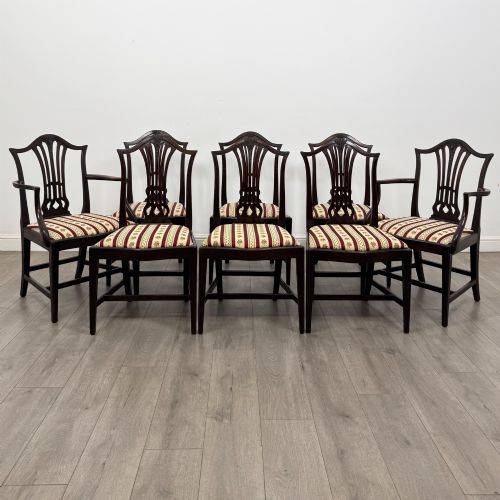
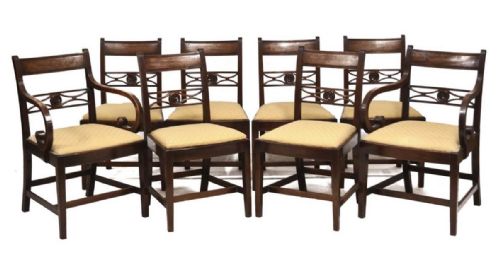
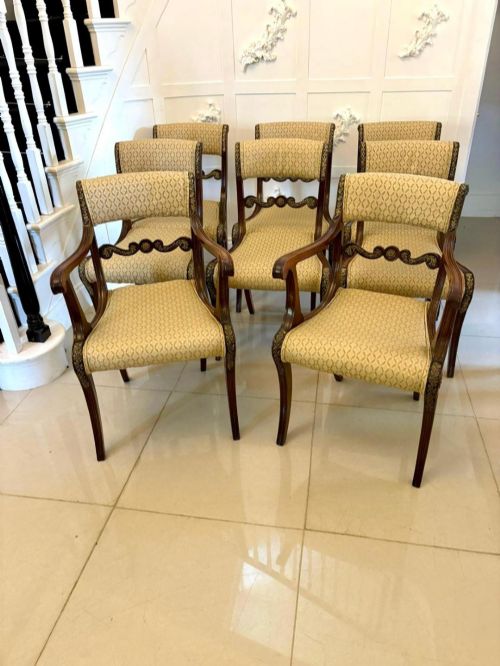
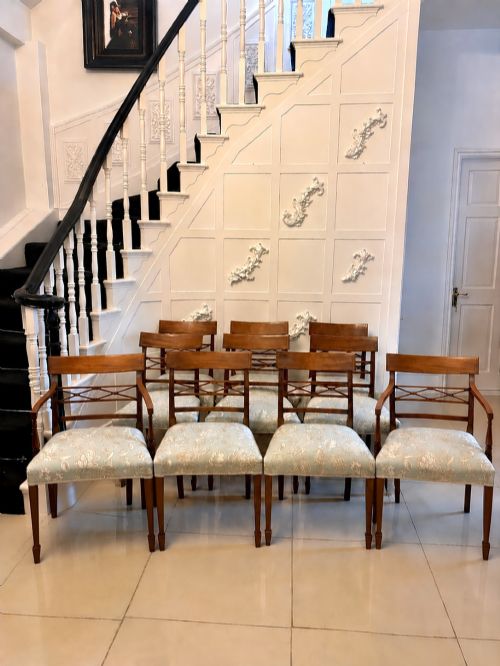
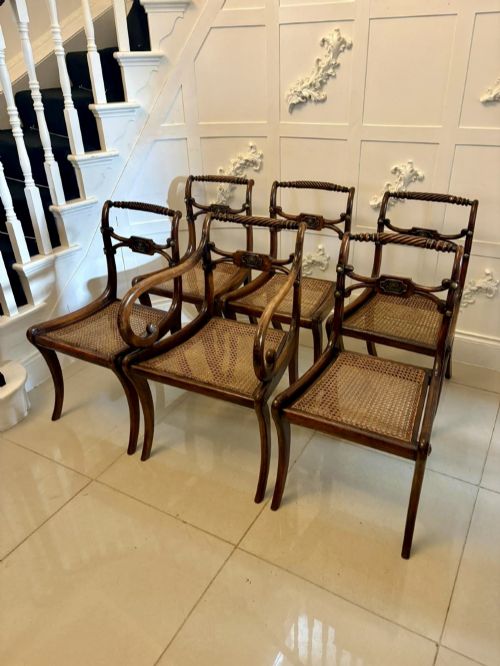
Georgian Carver Side Chairs
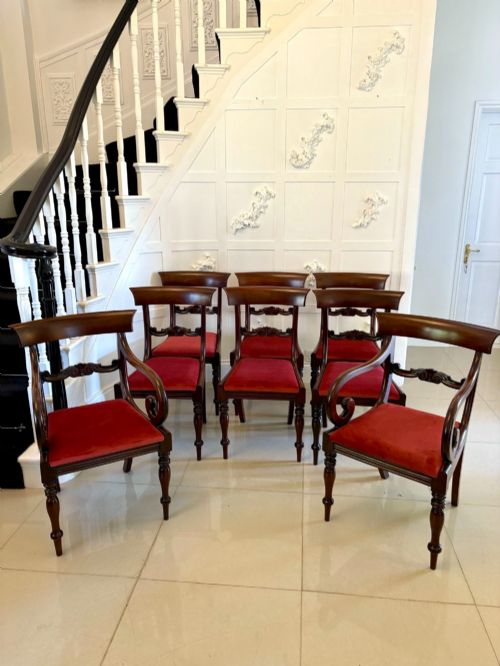
Georgian carver side chairs combine sturdy timber with open armrests designed to sit at the head of a dining table or by a desk.
Georgian Carver Side Chairs
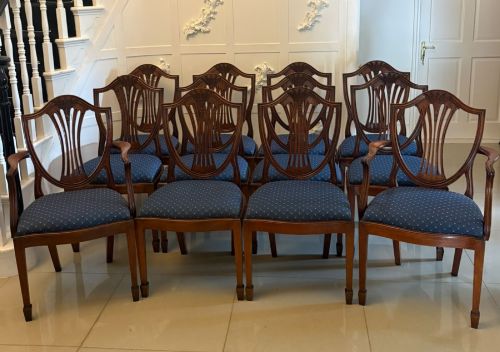
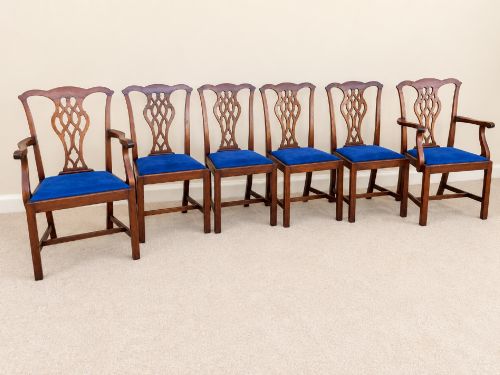
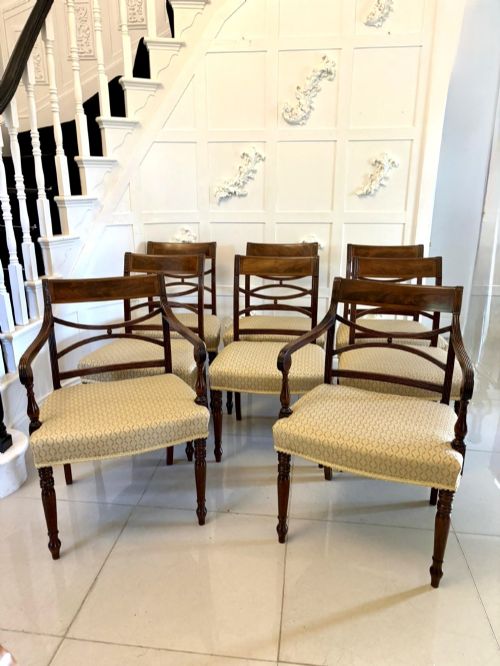
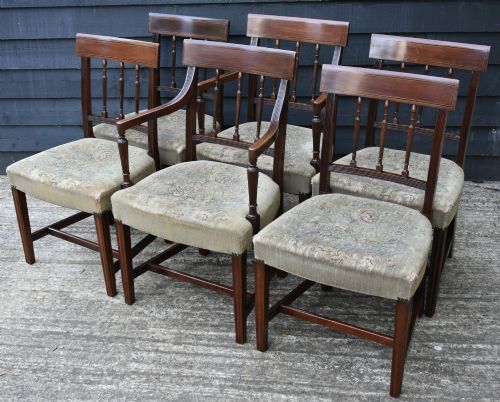
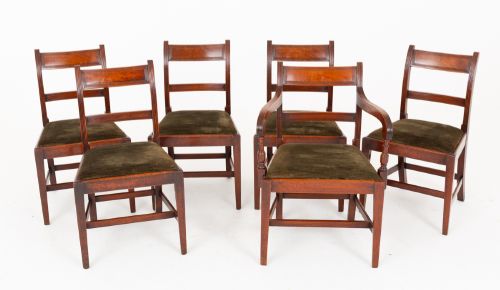
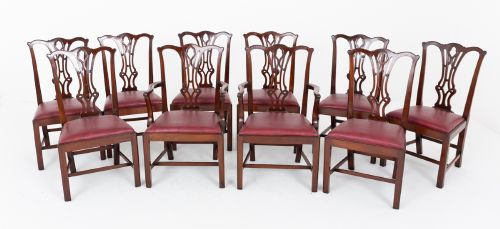
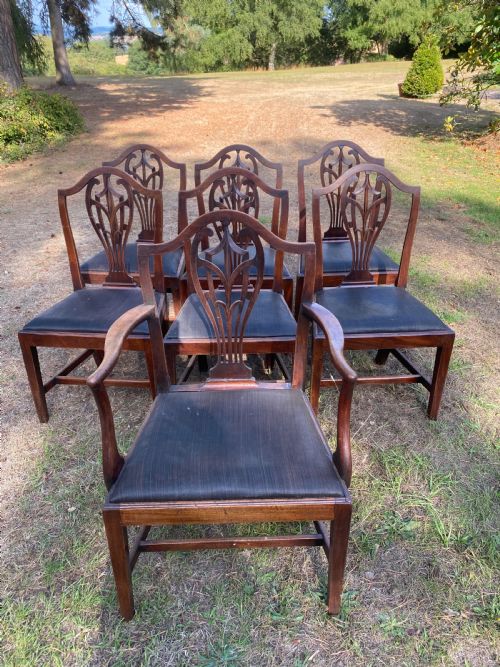
Georgian carver side chairs are formal seating options featuring armrests alongside matching single chairs, appearing in sets or pairs across this selection. These pieces frequently date from the Georgian era or emerge through later revivals in the nineteenth and twentieth centuries.
The inventory on this page spans walnut, oak, and primarily mahogany frames, often styled after Chippendale, Hepplewhite, or Sheraton designs. Buyers encounter these chairs arranged in large dining sets or utilised individually as library and desk armchairs.
How they were made
Makers constructed these chairs primarily from solid mahogany, walnut, or oak, employing traditional joinery to secure the frames. Timber surfaces received hand-carving along the splats and shield backs, alongside painted or inlaid satinwood decorations.
Seating portions utilised drop-in frames or upholstered pads covered in fabric, leather, velvet, or tapestry. Brass details and cane seating also appear on specific models within the records.
The listings here feature periods ranging from the eighteenth century through to nineteen-thirty, alongside nineteenth-century Victorian and Regency eras.
What varies in quality
Quality rests in the crispness of the carved details on the backs and the structural integrity of the arm supports. Higher-tier examples display superior timber selection and finer joinery that withstands centuries of use.
Original condition and matched sets command distinct attention compared to assembled sets or pieces with extensive later alterations. The balance of proportions between the carver arms and the accompanying single chairs dictates overall visual harmony.
The Georgian Carver Side Chairs Glossary
- Carver
- An armchair designed with open sides to match a set of single dining chairs. These sat at the ends of the dining table.
- Shield back
- A chair back shaped like a heraldic shield, popularised by cabinet makers in the late eighteenth century. This design often incorporates carved feather or urn motifs.
- Splat
- The vertical wooden strip down the centre of a chair back. It provides structural support and carries the decorative carving.
- Revival
- A later period style that copies or adapts designs from an earlier era. Many pieces on this market date from these later revivals.
Georgian Carver Side Chairs: Frequently Asked Questions
What is a carver chair?
A carver chair is an armchair built with open sides to match a set of dining chairs. They traditionally sat at the head and foot of the dining table.
Cabinet makers designed them with armrests high enough to clear the table apron while offering comfortable support during long meals.
How do I spot a revival piece?
Revival pieces date from later periods like the late nineteenth or early twentieth century while copying eighteenth-century styles. Cabinet makers during these later decades adopted older forms such as Chippendale and Hepplewhite designs.
Examination of the timber age, construction methods, and tool marks helps separate original eighteenth-century work from later revivals.
What wood was used?
Mahogany is the dominant timber across these listings, alongside walnut and oak on specific period examples. Cabinet makers prized mahogany for its strength and rich grain.
Inlaid details often featured contrasting satinwood or exotic veneers to highlight the decorative elements of the backs and legs.
How were the seats finished?
Seats typically consisted of drop-in frames covered in upholstery fabric, leather, velvet, or tapestry. Some examples featured woven cane seating for a lighter appearance.
Owners updated these coverings over the generations to match changing interior tastes while keeping the wooden frames intact.