

Georgian Buffet Sideboard
A georgian buffet sideboard provides sturdy timber storage and generous serving surface, combining practical dining utility with classical proportions.
Georgian Buffet Sideboard
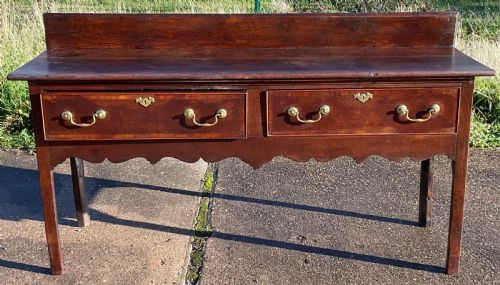
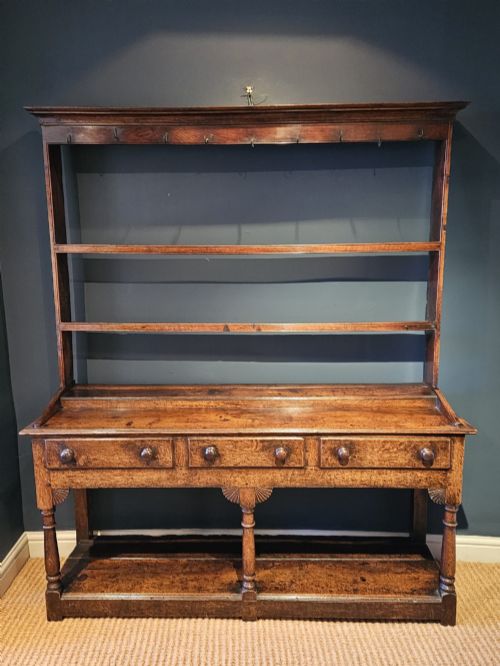
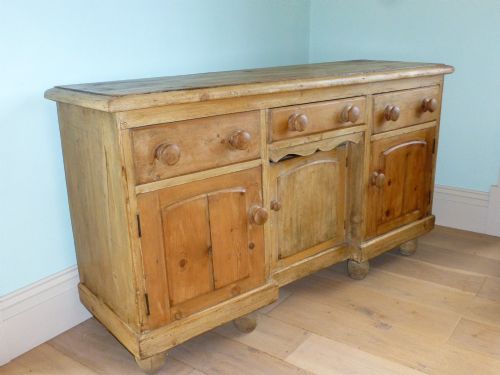
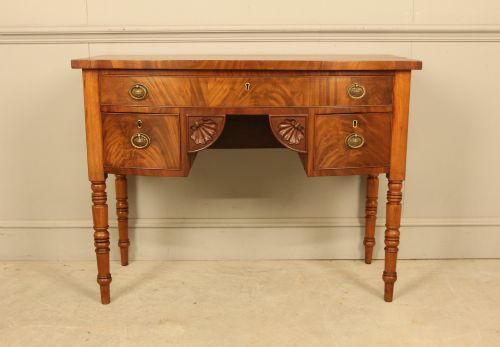
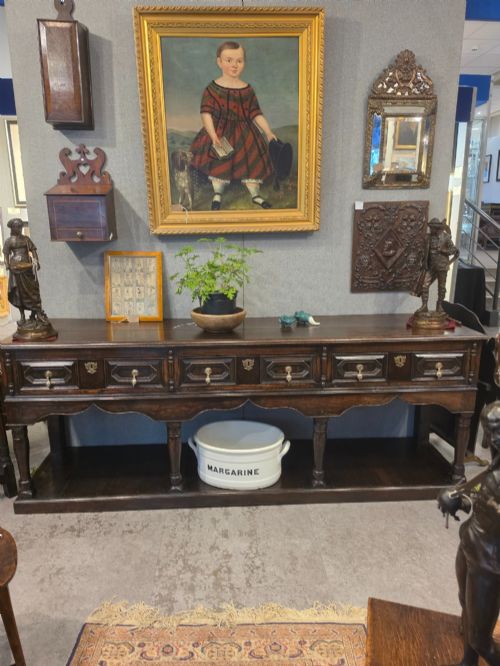
A georgian buffet sideboard typically takes the form of a substantial timber console, serving table, or dresser base designed for dining rooms. These pieces originate across the eighteenth and nineteenth centuries, alongside later revival interpretations.
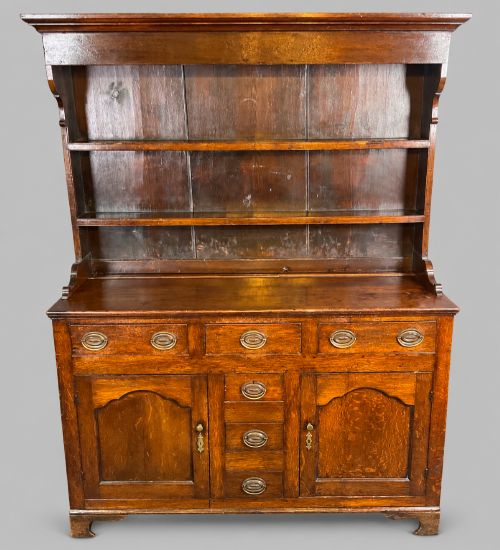
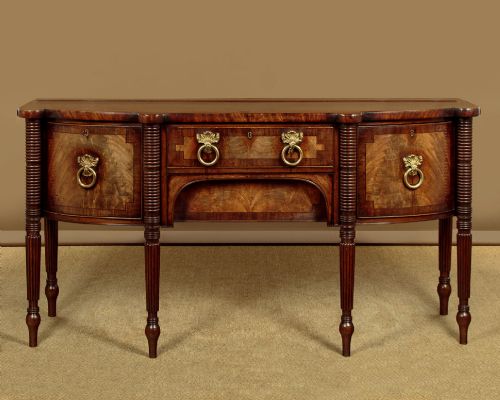
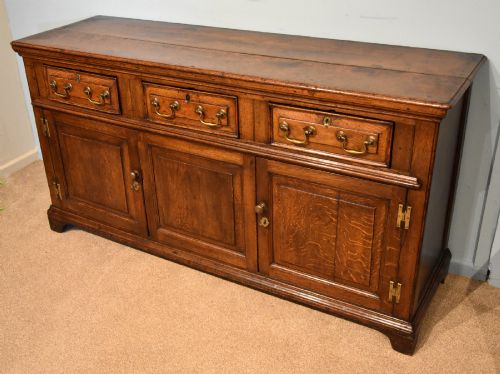
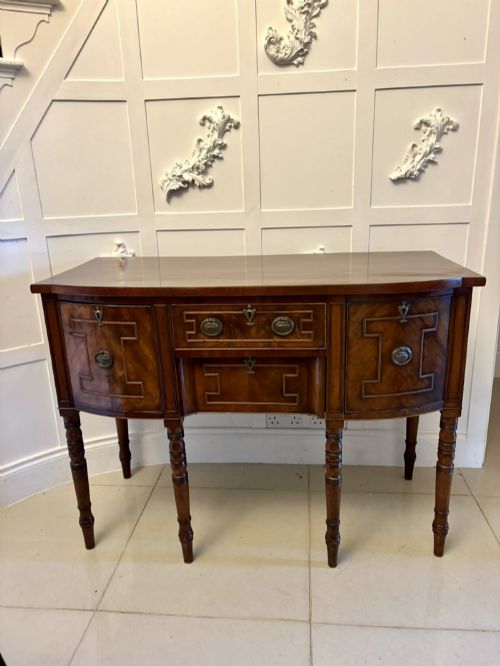
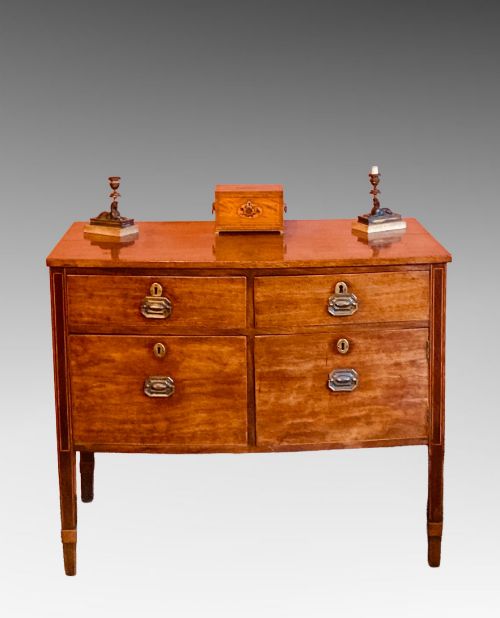
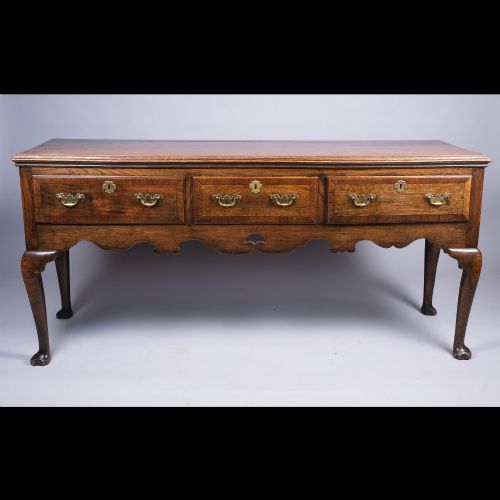
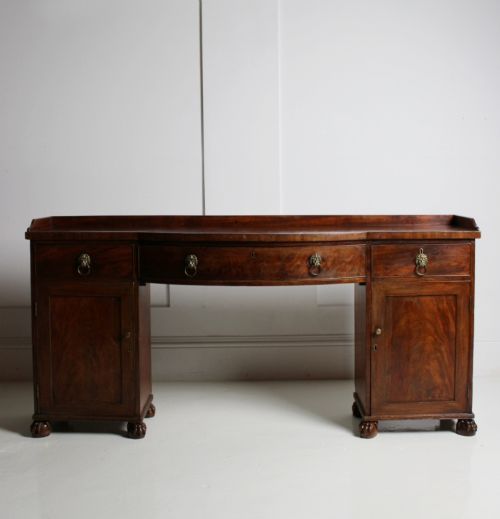
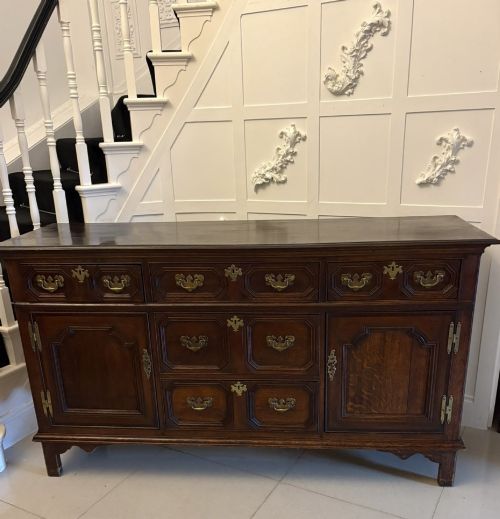
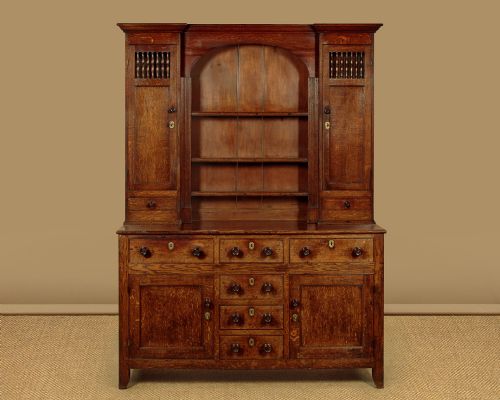
The most common versions encountered on this page feature mahogany timbers, often configured with bow fronts, breakfronts, or serpentine lines. Oak dresser bases and Edwardian satinwood variations also appear regularly.
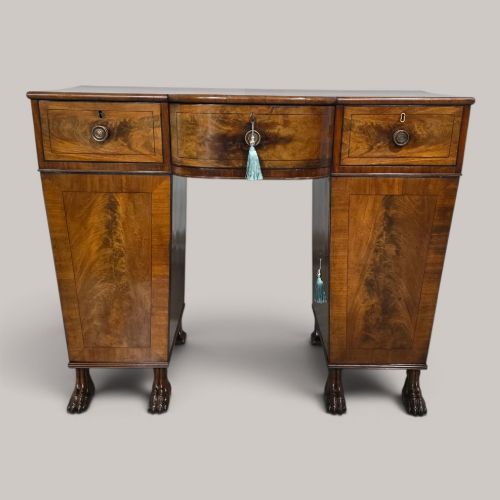
Makers utilised various configurations including pedestals, brass galleries, and inlaid boxwood details to elevate the functional storage of dining utensils and serving dishes.
Materials and construction
Cabinet makers constructed these pieces primarily from solid mahogany and oak, often applying figured mahogany and flame mahogany veneers to primary surfaces. Timber selection governed both the structural integrity and the decorative grain pattern of the front elevation.
Craftsmen incorporated decorative elements such as boxwood inlay, satinwood banding, and cast brass fittings including galleries and lion paw feet. These additions complemented the polished timber surfaces while providing functional support and contrast.
Georgian Buffet Sideboard Retail Price Guide 2026
Typical asking prices for georgian buffet sideboard among the pieces listed under this phrase on Sellingantiques today, from the lower quarter to the upper quarter. They describe what is for sale here now, not the wider market.
Listings feature mahogany, oak, satinwood, and brass materials across periods spanning from the eighteenth century through the Edwardian era.
Craftsmanship and distinction
Superior examples distinguish themselves through the choice of figured and flame mahogany veneers, matched carefully across the drawer fronts and doors. Finer pieces display crisp boxwood inlay and well-defined mouldings rather than plain timber surfaces.
The quality of construction shows in the selection of secondary timbers, the precision of the dovetail joints within the drawers, and the integration of original brass hardware or distinctive feet such as claw and ball.
George III·Regency
The Georgian Buffet Sideboard Glossary
- Bowfront
- A curved front elevation that swells outward in the centre, commonly seen on mahogany sideboards from the Georgian and Regency periods. This shape softens the rectangular lines of the dining room.
- Breakfront
- A cabinet design where the central section projects forward from the flanking outer sections. It creates depth and architectural interest across the front of the sideboard.
- Dresser base
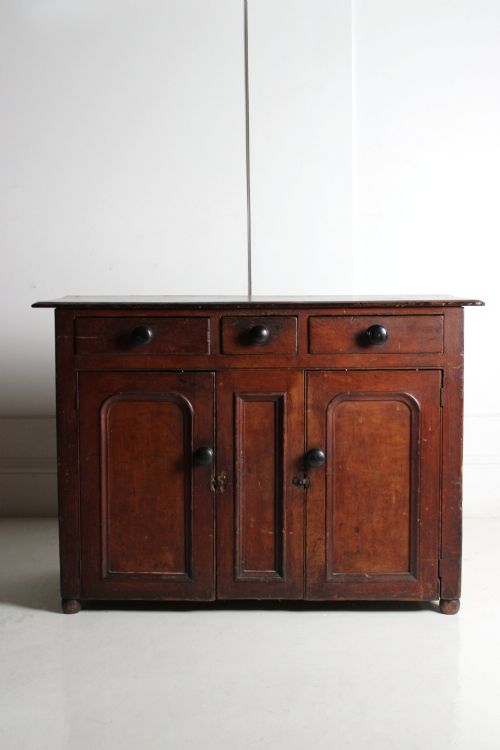
- A low wooden storage unit featuring drawers and cupboards, historically used in kitchens or dining rooms for domestic provisions. These pieces often lack the upper plate rack of a full dresser.
- Serpentine
- A front contour characterised by a convex central section flanked by concave curves, forming a gentle wave shape. This complex profile requires skilled carpentry to execute successfully.
- Flame mahogany veneer
- A sliced timber veneer displaying a distinctive flickering flame pattern derived from the branch junctions of the mahogany tree. Cabinet makers prized this figure for its visual impact on primary surfaces.
Georgian Buffet Sideboard: Frequently Asked Questions
What is a georgian buffet sideboard used for?
These pieces served historically in dining rooms for holding serving dishes, cutlery, and glassware during meals. They provided both a top surface for food presentation and enclosed storage underneath.
Today, they function similarly in modern homes while serving as focal points in dining spaces or hallways for display and storage.
How do I identify a Georgian piece?
Look for classical proportions, premium mahogany or oak timbers, and restrained decorative details like boxwood stringing or subtle brass hardware. Construction methods such as hand-cut dovetails point toward the period.
Many listings also span later revival styles, so checking timber ageing and construction characteristics helps distinguish eighteenth-century work from later interpretations.
How do I care for mahogany surfaces?
Keep wooden furniture away from direct sunlight and steady heat sources to prevent the timber and veneer from drying out or splitting. Dust regularly with a soft, dry cloth rather than using silicone sprays.
Applying a traditional beeswax polish occasionally helps nourish the grain and maintains the natural lustre of the polished mahogany.