

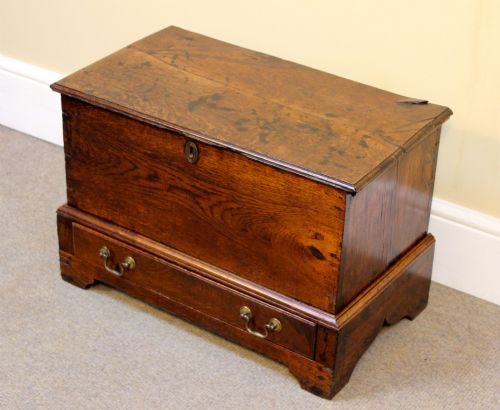
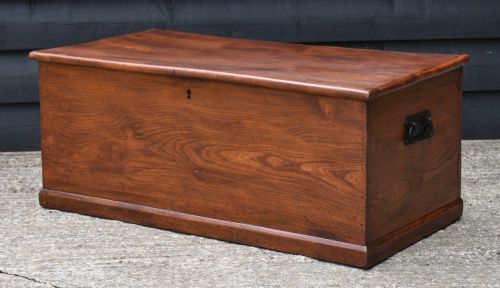
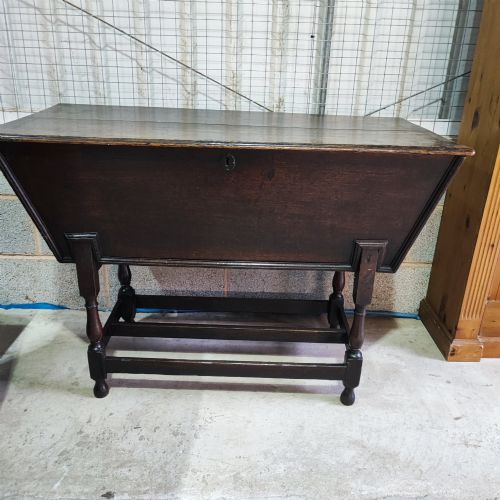

Georgian Brown Box
A georgian brown box brings compact timber storage and sturdy domestic utility into a room with genuine period character.
Georgian Brown Box
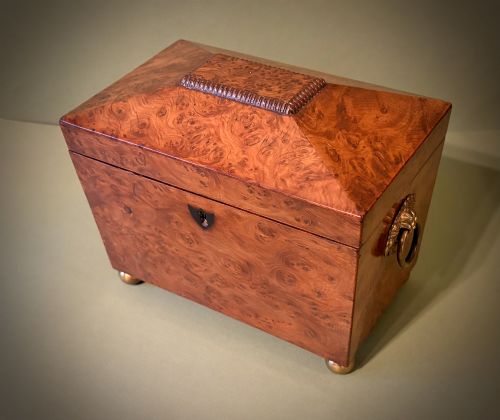
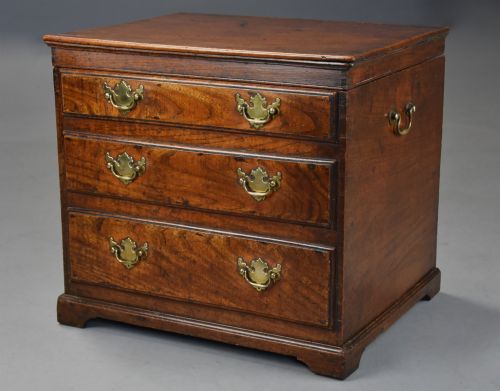
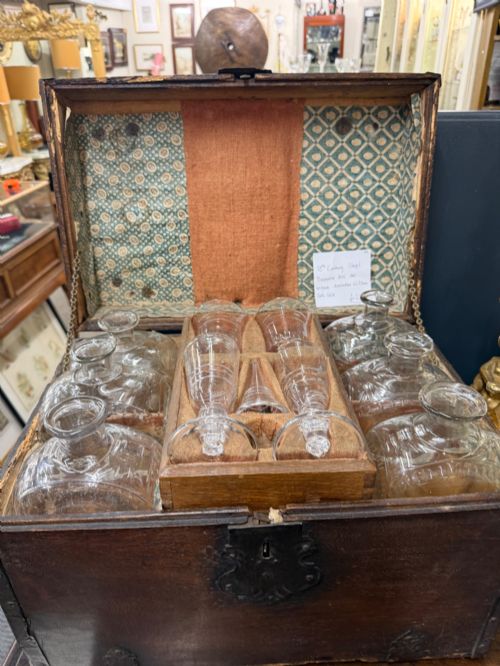
A search for georgian brown box covers a practical domestic repertoire of timber containers, from tea caddies and document boxes to miniature chests, blanket coffers, and cellarettes. These items date primarily from the eighteenth and nineteenth centuries, spanning the Georgian, Regency, and early Victorian eras.
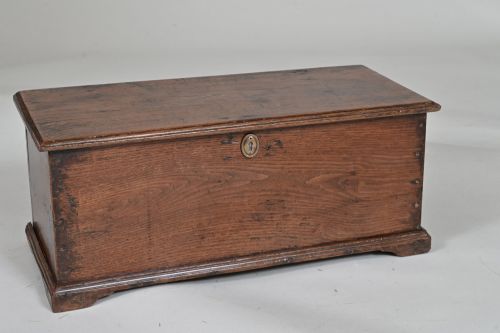
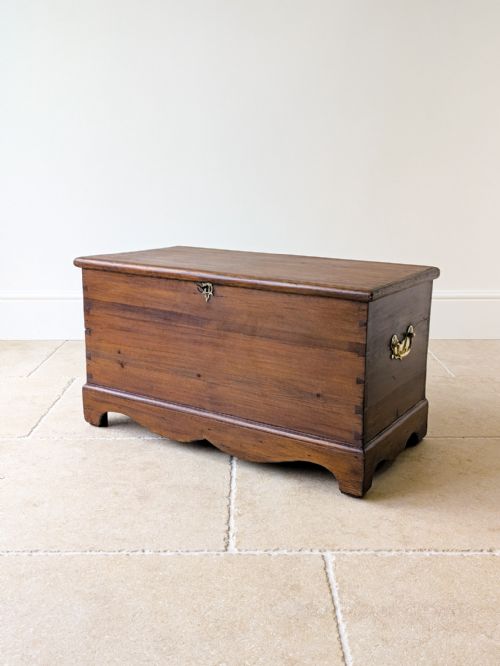
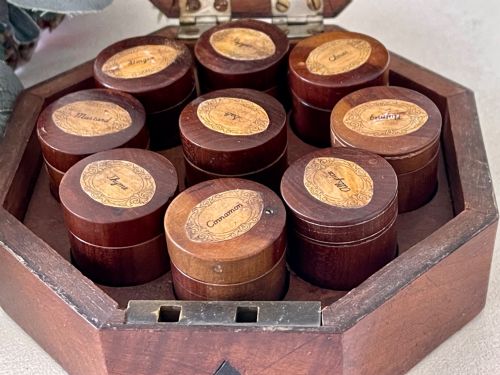
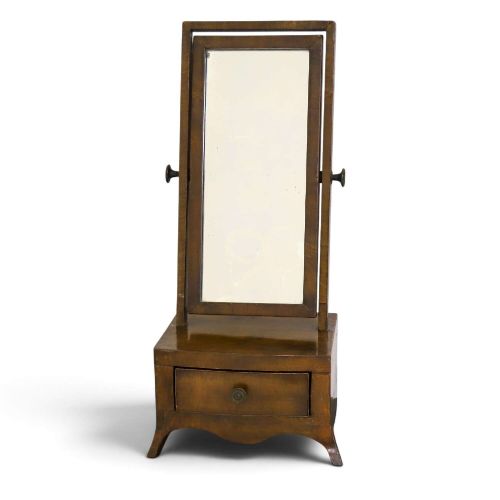
The versions most commonly met on this page are constructed from oak and mahogany, often taking the form of panelled blanket boxes, spice cupboards, tea caddies, or small drawer chests. Makers of the period designed these containers for secure household storage, travel, or tabletop use.
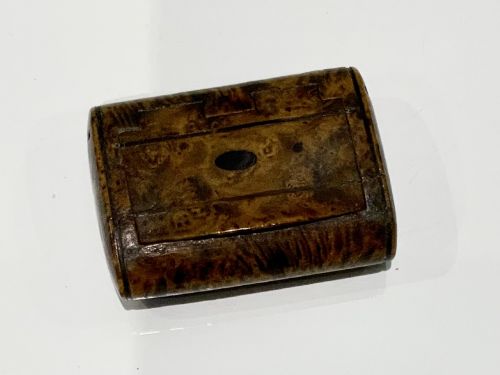
Rural examples display regional vernacular traits in elm or country oak, while formal urban pieces utilise figured mahogany and brass hardware. Buyers encounter everything from small snuff boxes to large travelling chests and mule chests.
How they were made
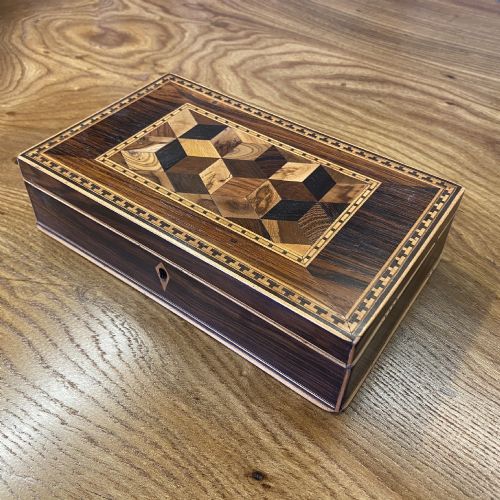
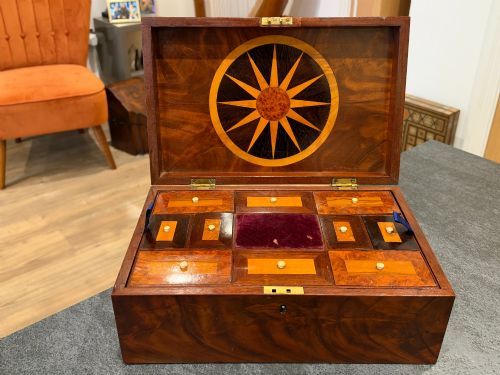
Cabinet makers built these brown boxes using solid native and imported timbers, predominantly oak, mahogany, and elm, joined with traditional framing techniques such as dovetails and pegged mortise and tenon joints. Grain selection determined the visual appeal, utilising flame mahogany, burr walnut, and golden oak.
Surface decoration relied on natural timber figures supplemented by brass handles, studded leather, bone details, and engine turned patterns on smaller personal items. Iron locks and brass hinges provided the functional security required for portable storage.
Secondary woods such as pine or cedar often lined the interiors of tea caddies and document boxes, protecting the contents while maintaining structural integrity.
Georgian Brown Box Retail Price Guide 2026
Typical asking prices for georgian brown box among the pieces listed under this phrase on Sellingantiques today, from the lower quarter to the upper quarter. They describe what is for sale here now, not the wider market.
What varies in quality
Quality separates through the choice of timber and the precision of the joinery, distinguishing utilitarian containers from high status furnishings. Superior pieces exhibit carefully matched timber grains, such as figured mahogany or burr walnut, integrated seamlessly into the box carcass.
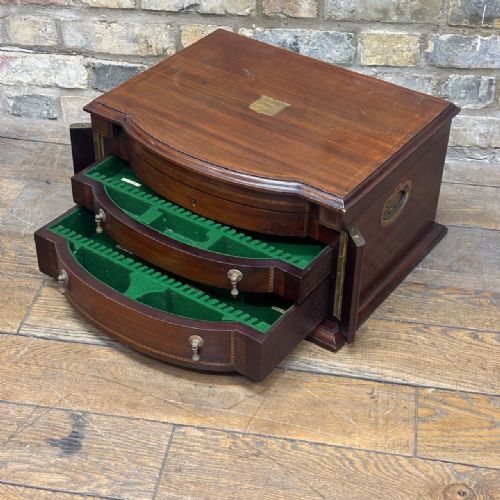
Hardware and interior fittings indicate the original grade of the piece, with heavy cast brass carrying handles, original locks, and fitted internal compartments marking out finer workshops. Finer boxes retain their original patination and untreated timber surfaces over centuries of handling.
The Georgian Brown Box Glossary
- Cofer bach
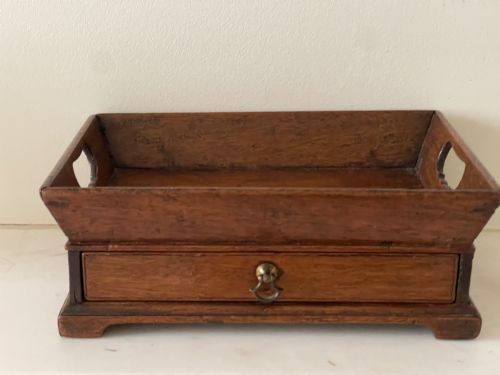
- A small Welsh oak chest raised on short feet or a stand, traditionally made as a marriage gift or dowry chest. These miniature coffers often feature a single lower drawer beneath the main compartment.
- Cellarette
- A formal timber wine cooler designed to hold bottles securely inside a dining room. They frequently take sarcophagus or urn shapes mounted on pedestals.
- Apprentice piece
- A miniature furniture item created by a craftsman to demonstrate skill for guild membership or training qualification. They mirror full sized chests of drawers with precise dovetailing.
- Tea caddy
- A lidded box partitioned internally for storing loose tea leaves securely under lock and key. Tea was a high value commodity in the period.
- Mule chest
- A storage chest fitted with one or more working drawers across the base beneath the primary trunk space. This form bridges the evolution between the simple coffer and the chest of drawers.
Georgian Brown Box: Frequently Asked Questions
What is a georgian brown box used for?
These timber containers served diverse domestic functions, ranging from tea and spice storage to keeping important documents or personal valuables secure.
Today, they function as decorative accent pieces that provide hidden storage surfaces within modern living spaces.
How do I date a timber box?
Dating relies on observing construction methods, timber species, and hardware styles such as hinges and locks. Hand cut dovetails and native oak point towards earlier eighteenth century vernacular origins.
Later nineteenth century pieces often incorporate machine sawn elements and standardised brass fittings.
Where should I place a coffer?
Blanket chests and coffers suit hallways, living rooms, or bedrooms where their flat lids provide supplementary surface display areas.
Keep them away from direct heat sources and strong sunlight to prevent the timber panels from splitting.
Are apprentice chests real furniture?
Apprentice pieces are fully functional miniature chests constructed with the same rigorous joinery techniques as standard domestic furniture. Craftsmen created them as scale models of larger pieces.
They offer collectors the presence of period cabinetry in a compact footprint.