



Georgian Bright Cut Flatware
Georgian bright cut flatware brings together sterling silver spoons and ladles decorated with engraved facets that catch the light.
Georgian Bright Cut Flatware
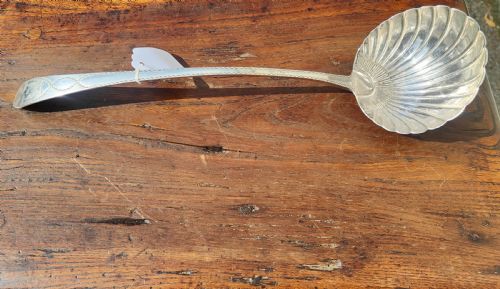
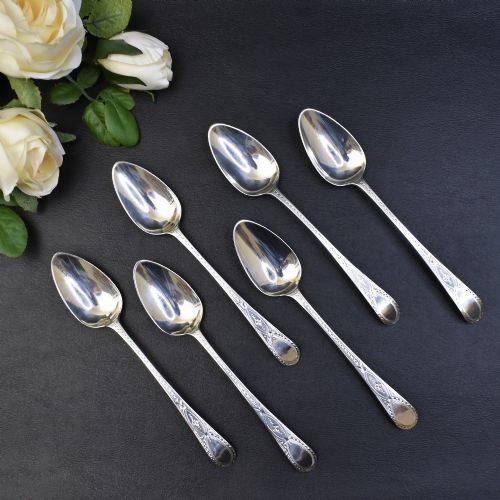
When you search for georgian bright cut flatware, you encounter sterling silver items created during the Georgian period and around eighteen hundred. These pieces encompass caddy spoons, teaspoons, dessert spoons, serving spoons, ladles, and strainer basting spoons.
How they were made
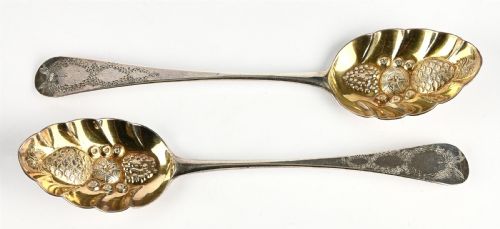
The pieces are fashioned from sterling silver, occasionally incorporating gold gilt, and presented with engraved bright-cut decoration. Makers shaped the metal into forms such as the Celtic point and Old English pattern.
Engravers used flat gravers to cut faceted patterns into the silver surface, producing geometric borders and light-reflecting angles. Hallmarks stamped into the metal record the assay office, date, and maker.
Georgian Bright Cut Flatware Retail Price Guide 2026
Typical asking prices for georgian bright cut flatware among the pieces listed under this phrase on Sellingantiques today, from the lower quarter to the upper quarter. They describe what is for sale here now, not the wider market.
Listings feature sterling silver objects from the Georgian period, including Dublin and London hallmarks dated between seventeen ninety-one and eighteen hundred and eight.
What varies in quality
Quality rests upon the crispness of the bright-cut engraving and the preservation of the original surface details. Pieces retain greater distinction when the faceted cuts remain sharp and deep rather than worn down by centuries of polishing.
The integrity of the maker marks and assay stamps also influences the character of each spoon or ladle. Complete sets, matched pairs, and pieces bearing clear crests or provenance stand apart from worn individual items.
John Pittar·Peter and Anne Bateman·P A W Bateman·Michael Smith
The Georgian Bright Cut Flatware Glossary
- Bright-cut
- An engraving technique utilising faceted cuts made with a flat graver to produce shimmering geometric patterns. This surface decoration reflects light from multiple angles.
- Caddy spoon
- A short-handled spoon designed for measuring loose tea from a caddy into a teapot. These items frequently display detailed engraving on the bowl and handle.
- Sterling silver
- A silver alloy containing ninety-two point five percent silver by mass and seven point five percent other metals, chiefly copper. This standard alloy provides durability for functional tableware.
- Celtic point
- A tapered spoon handle shape ending in a sharp point. This regional style appears frequently on Irish silver from the period.
- Old English pattern
- A traditional spoon handle design featuring a downward-turned end and a distinct mid-rib. It remains a standard shape across many Georgian silver services.
Georgian Bright Cut Flatware: Frequently Asked Questions
How do I clean georgian silver?
Clean these sterling silver pieces gently using warm water, mild soap, and a soft cloth to protect the delicate bright-cut engraving. Avoid harsh chemical dips that strip the natural patina accumulated over centuries.
Store each spoon or ladle in a tarnish-resistant pouch or lined drawer away from direct humidity. Proper care preserves both the sharpness of the facets and the historical hallmarks.
What is a caddy spoon used for?
A caddy spoon measures loose tea leaves from a storage container into the brewing pot. Their compact bowls and decorated handles made them decorative accessories for the tea table.
Many examples feature shell-shaped or shovel bowls paired with bright-cut stems. They represent a distinct collecting category within Georgian silver flatware.
How do I read silver hallmarks?
Hallmarks stamped into the silver indicate the assay office, the year of manufacture, and the silversmith's mark. London pieces feature a leopard's head, while Dublin pieces show a figure of Hibernia.
Date letters change annually according to specific alphabetic cycles used by each assay office. These tiny stamped symbols provide the primary evidence for dating individual spoons and ladles.
What is bright-cut engraving?
Bright-cut engraving is a surface decoration technique where small facets are cut into the silver at various angles. These angled cuts act like tiny mirrors to catch and reflect light.
Silversmiths applied this method to create borders, zigzags, and floral motifs on spoons and ladles. The technique reached its height of popularity during the late eighteenth century.
Are these items usable today?
These sterling silver spoons and ladles remain durable enough for occasional dining and tea service use. Their solid silver construction has survived centuries of handling.
Many collectors prefer to display sets of teaspoons or serving utensils while reserving them for special occasions. Hand washing is essential to protect the antique metal and engraved surfaces.