

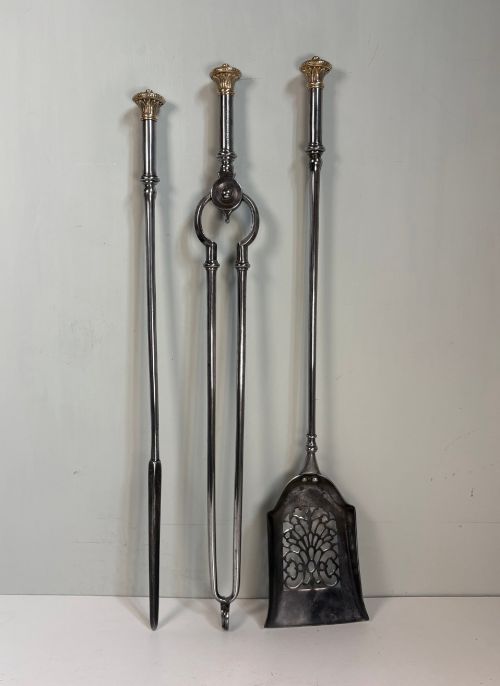
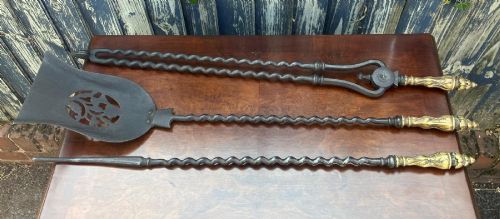


Georgian Brass Poker
A georgian brass poker brings a purposeful touch of hearthside history to any traditional fireplace.
Georgian Brass Poker
A georgian brass poker belongs to a broader tradition of fireplace tools and fire irons designed for managing coal or wood fires. These implements range from standalone items to parts of complete sets including tongs and shovels.
The materials recorded in these listings combine functional metals with decorative finishes, spanning brass, steel, iron, and gilt brass. Alongside the metal shafts, some associated pieces incorporate wood or rosewood components.
Examples on this page span several overlapping periods including Georgian, Regency, George III, Victorian, and the nineteenth century. Buyers encounter these hearth implements alongside related accessories such as fire screens and fireside suites.
Materials and construction
Makers constructed these fireplace tools using durable combinations of steel and iron for the main shafts to withstand intense heat. Brass and gilt brass provided decorative handles or accents that caught the firelight in a formal parlour.
Workmanship often involved forging the durable iron or steel core before finishing the piece with decorative brass elements. Certain items also featured turned wood or rosewood sections to provide a comfortable grip away from the heat.
Georgian Brass Poker Retail Price Guide 2026
Typical asking prices for georgian brass poker among the pieces listed under this phrase on Sellingantiques today, from the lower quarter to the upper quarter. They describe what is for sale here now, not the wider market.
Assessing quality and craftsmanship
Superior examples display a harmonious balance between the structural iron or steel and the decorative brass components. Finer sets show careful proportioning in the handles and shafts, indicating skilled metalworking rather than mass production.
The integration of materials such as gilt brass or rosewood elevates certain pieces above standard utility items. Condition and integrity of the original joints and decorative surfaces ultimately determine the standing of each hearth tool.
The Georgian Brass Poker Glossary
- Brass
- A copper and zinc alloy valued for its bright, golden appearance and resistance to corrosion near a hearth. It forms the decorative or primary material on many period fireplace tools.
- Gilt brass
- Brass that has been treated with a thin layer of gold or gold-coloured finish to enhance its lustre. This treatment appears on finer Regency and Georgian fire irons.
- Fire irons
- A collective term for the matching set of poker, tongs, and shovel used to tend a coal or wood fire. They usually hang together on a stand or rest against the hearth.
- Rosewood
- A dense, richly coloured timber occasionally used for the handles of period fire tools. It provides a tactile contrast to the cold metal shafts.
Georgian Brass Poker: Frequently Asked Questions
How are these pokers used?
These pokers were designed to stir, break up, and adjust logs or coal within an open fireplace. They allowed people to manage the fire safely from a distance.
Over time, many of these implements transitioned from purely utilitarian workshop items into decorative drawing room accessories.
What periods do these pieces span?
The pieces span the eighteenth and nineteenth centuries, including Georgian, Regency, George III, and Victorian eras. Stylistic cues often align with the prevailing design trends of those decades.
Makers frequently combined traditional forging techniques with the decorative metalwork popular during the Regency and Victorian periods.
Are these sold individually?
While some listings feature standalone tools, many historic examples appear as part of matched sets or fireside suites. These sets typically include companion tools like tongs and shovels.
Complete matched sets reflect the formal furnishing practices of period drawing rooms and parlours.
How do I maintain brass fire tools?
Maintaining brass and steel involves gentle cleaning to preserve the historic surface without stripping the natural patina. Avoid harsh abrasive compounds that can damage gilt or polished finishes.
Keeping the metal dry prevents corrosion, especially on the iron and steel components that remained exposed near active hearths.