





Georgian Brass Hardware
Georgian brass hardware brings substance and period detail to a room, offering functional metalwork shaped by centuries of use.
Georgian Brass Hardware
Georgian brass hardware encompasses the heavy metal fixtures used for doors, furniture, and window treatments during the eighteenth and early nineteenth centuries. The selections found here focus primarily on functional fittings such as door knobs, bell pulls, knockers, and cabinet brasses that define the period aesthetic.
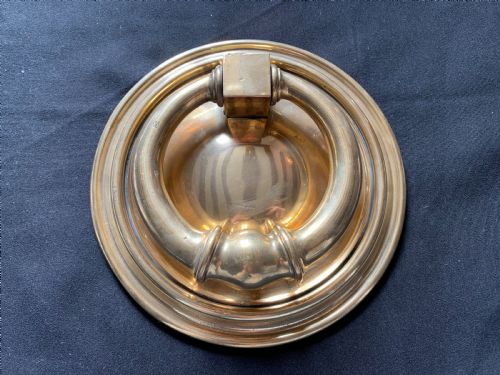
Buyers encountering this search phrase will regularly find items spanning the Georgian, Regency, and Victorian eras, alongside later interpretations. Door furniture forms the largest group, featuring oval and ovular knobs, centre door pulls, and heavy knockers in cast and solid brass.
Beyond structural door components, the inventory includes curtain tie-backs and chest furniture incorporating brass elements mounted on walnut carcases. These pieces demonstrate how utilitarian metalwork received decorative attention during the Georgian period, shifting from simple iron to polished yellow metal.
Materials and construction methods
Makers utilised solid brass, cast brass, and bronze as the primary metallic mediums, creating weighty components designed for heavy daily use. Iron, enamel, and horn appear as secondary materials, often combined with brass embellishments on locks, finger plates, and bell ringers.
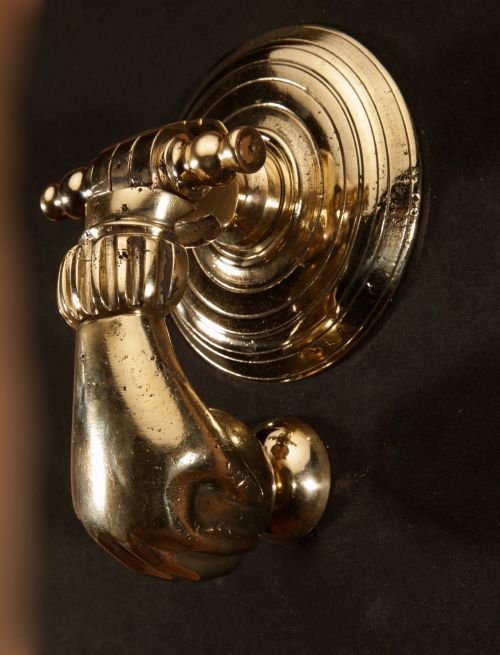
Casting techniques allowed workshops to produce robust door knockers in figurative shapes like hands, as well as geometric octagonal pulls and oval plates. Surface finishes range from bright gilt metal to aged bronze, showing the natural patination acquired through decades of handling.
The listings combine Georgian, Regency, and Victorian styles with occasional 1940s interpretations, spanning solid brass, bronze, walnut, and enamel.
Assessing quality in period hardware
The distinction between standard utility hardware and superior examples lies in the crispness of the casting and the weight of the metal. Finer pieces display sharply defined mouldings on backplates and door knobs, whereas utilitarian items tend to feature softer contours and simpler profiles.
Material composition also dictates the grade of the piece, with solid brass and heavy bronze castings outlasting plated or lighter alloys. The retention of original mounting plates, screws, and internal mechanisms preserves the integrity of the hardware.
The Georgian Brass Hardware Glossary
- Bell pull
- A mechanical fixture mounted beside a doorway connected by wire to a bell inside the house. Georgian versions often feature ornate brass handles or ringers.
- Finger plate
- A flat decorative sheet screwed to a door near the handle to protect the wood from marks. Single brass examples survive from the Georgian period.
- Centre door knob
- A large pull fixed to the middle of an exterior door rather than the edge. These were common during the Regency and Georgian eras.
- Curtain tie back
- A wall-mounted fixture used to hold drapery aside. Eighteenth century examples incorporate enamel and gilt metal.
- Box lock
- A self-contained surface-mounted lock enclosed in a metal case. Georgian steel variants frequently featured brass embellishments and keeps.
Georgian Brass Hardware: Frequently Asked Questions
How do I date brass door hardware?
Dating relies on stylistic markers, manufacturing techniques, and the form of the backplate or screw heads. Georgian and Regency pieces typically show hand-finished surfaces and heavier gauge metal than twentieth-century reproductions.
Comparing the object to documented period room layouts and architectural manuals helps confirm its original century of production.
Can I install antique door knobs today?
Most antique door furniture can be fitted to standard modern doors with minor adjustments to the spindle and latch mechanisms. Solid brass components from the eighteenth and nineteenth centuries are durable enough for daily household use.
Care should be taken to preserve original threaded spindles and mounting plates during any contemporary installation process.
What is a doctors knocker?
A doctors knocker is a specific upright brass door knocker featuring a hinged upper hammer striking a lower plate. This style gained popularity in the medical profession during the nineteenth and twentieth centuries.
They provide a distinct acoustic ring compared to traditional ring or drop knockers mounted on entrance doors.
How should I clean antique brass?
Period brass benefits from gentle dusting and minimal intervention to preserve the dark, accumulated patination built up over centuries. Aggressive polishing removes the historical surface skin that collectors value.
If cleaning is necessary, a soft cloth and mild soap solution remove surface grime without stripping the underlying metal character.