

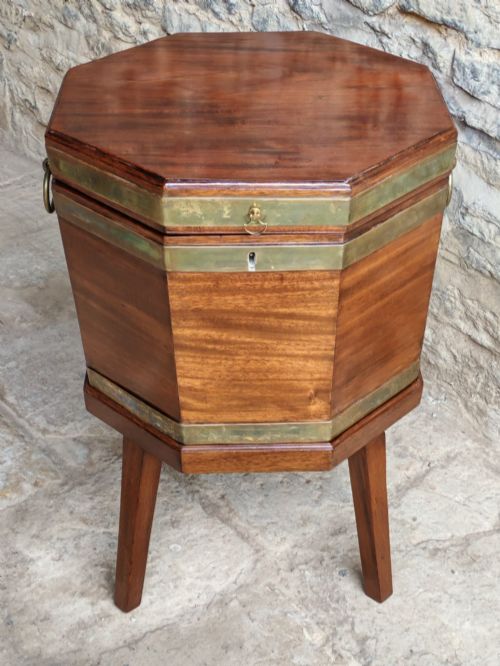
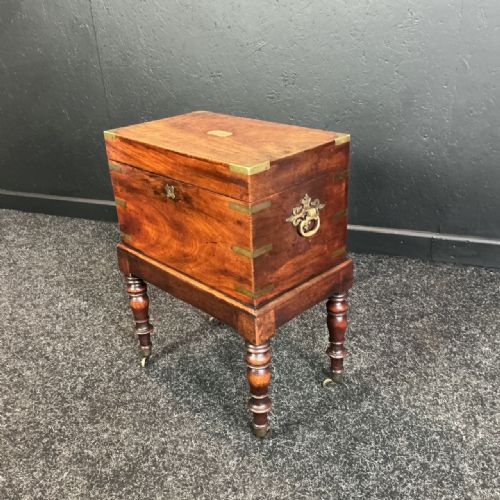

Georgian Brass Bound Chest
A georgian brass bound chest provides robust storage with structural metal mounts, forged for travel and stately interiors alike.
Georgian Brass Bound Chest
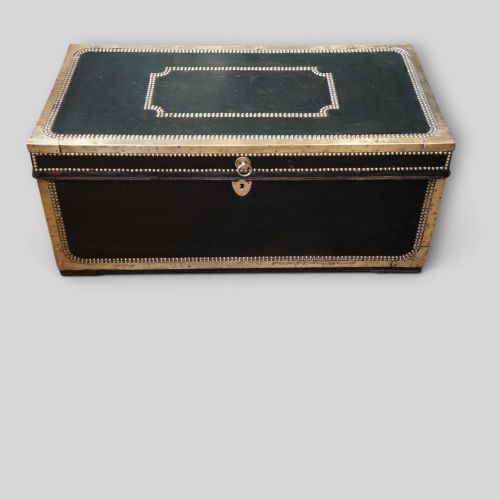
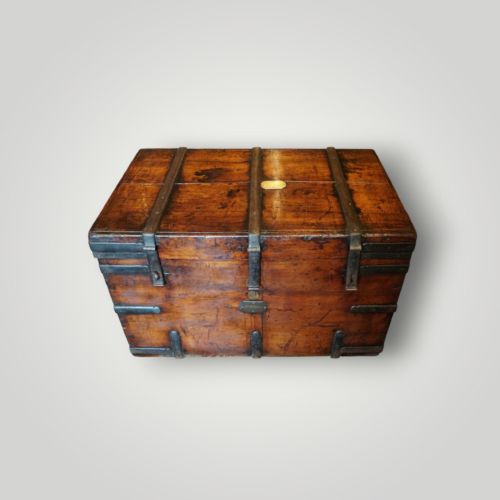
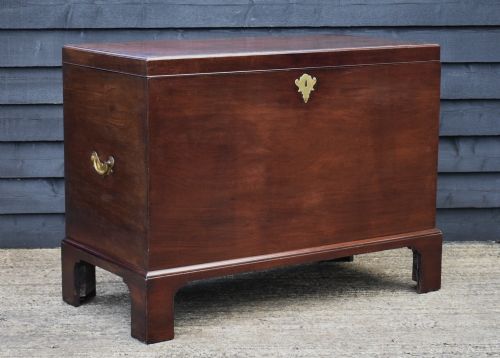
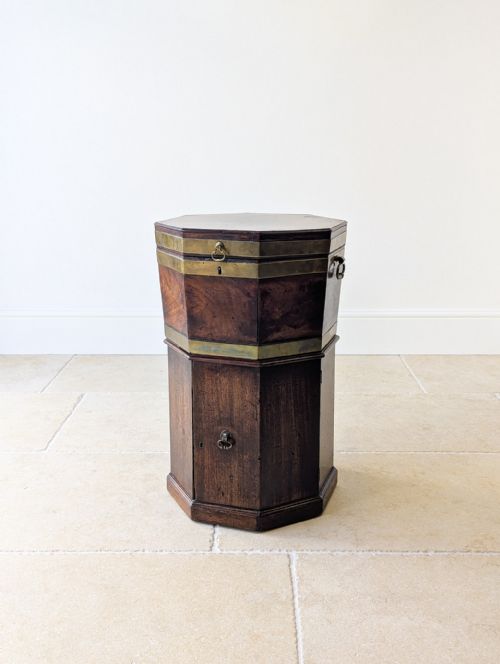
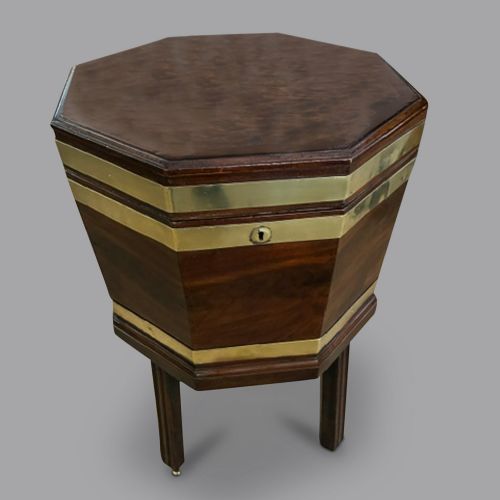
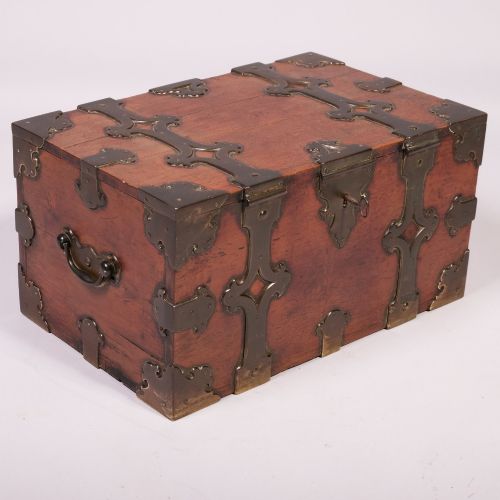
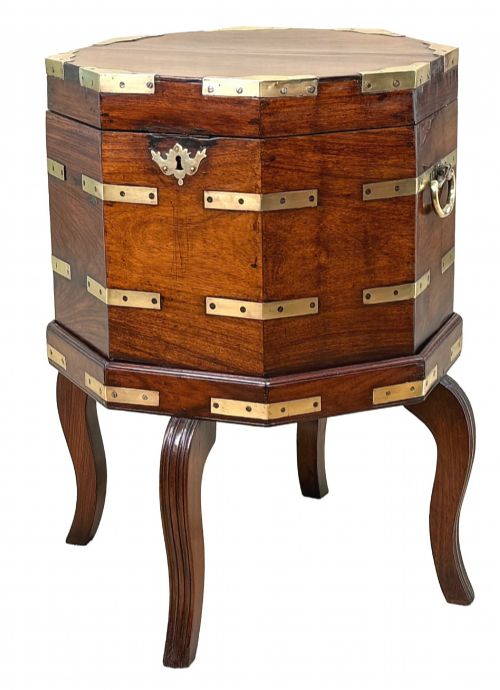
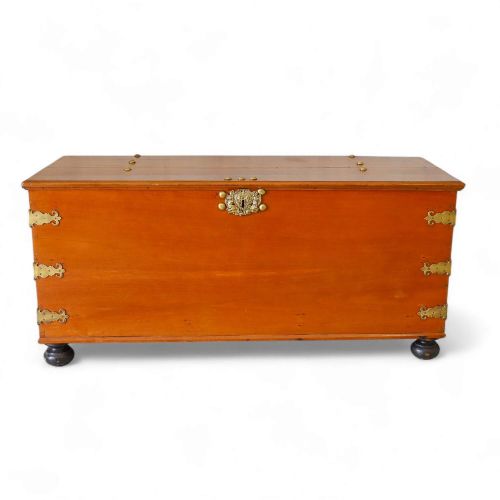
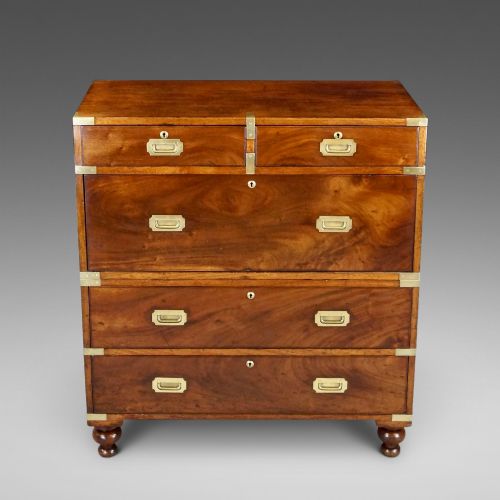
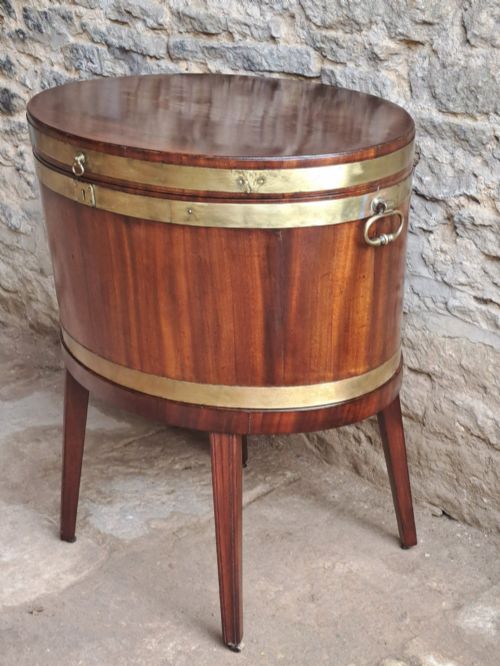
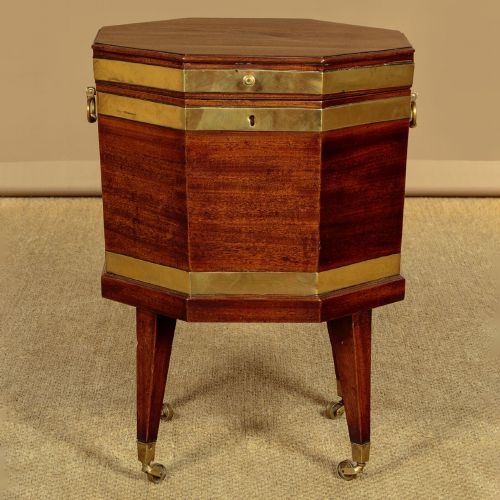
A georgian brass bound chest encompasses heavy timber trunks, travelling cases, and cellarettes reinforced with brass straps, corners, and mounts. These objects originate from periods spanning the eighteenth and nineteenth centuries, reflecting domestic storage and military travel needs.
The buyer meets mahogany, walnut, and padouk forms most frequently on this page, often built in octagonal, rectangular, or sarcophagus profiles. Many examples bear association with campaign use, colonial trade, or formal dining rooms where wine coolers held bottles.
Makers and makers' marks occasionally identify specific provenance, linking trunks to notable historical figures, officers, or esteemed cabinet makers from London workshops.
Materials and construction
Cabinet makers utilised dense hardwoods such as mahogany, walnut, camphorwood, and padouk to withstand long journeys and heavy usage. These timbers were selected for stability and rich grain, then joined with dovetail corners to ensure structural integrity.
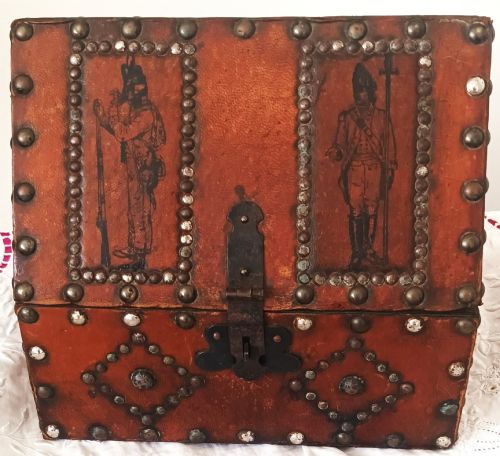
Brass straps, corner plates, and studwork were screwed or pinned directly into the wood to protect vulnerable edges from impact during transit. Iron fittings and leather coverings appear alongside brass on specific campaign trunks and coaching chests built for harsh travel.
Listings feature woods including mahogany, walnut, padouk, camphorwood, oak, and rosewood paired with brass and iron hardware.
Distinctions in quality
Superior examples display crisp dovetailing, finely cast brass mounts with original patination, and secondary woods that match the primary timber throughout the interior. Finer cellarettes and wine coolers incorporate fitted internal compartments designed to cradle glass bottles securely.
The crispness of the brass work and the integration of recessed carrying handles separate high-tier campaign pieces from utilitarian storage boxes. Original stands, functional locks, and documented provenance elevate the standing of a trunk or chest.
Samuel Pratt·Chapple & Sons·Austin·Seabrook of St.Pauls·Gillows of Lancaster and London
The Georgian Brass Bound Chest Glossary
- Cellarette
- A formal container designed to hold wine bottles, often fitted with internal dividers and lead lining. These vessels sit on stands or floor frames during the Georgian and Regency periods.
- Campaign chest
- A modular storage box made in sections with inset brass hardware and flush handles, built for easy transport by military officers on active service.
- Sarcophagus form
- A burial-vault shape with a domed lid and tapered base, utilised in Regency wine coolers and large caskets to project neoclassical authority.
- Padouk
- An exotic hardwood imported via colonial trade routes, prized for its dense reddish-brown grain and durability in tropical climates.
- Dovetail
- A joint formed by interlocking wedge-shaped fingers, providing immense tensile strength to the corners of trunks and boxes without relying entirely on metal brackets.
Georgian Brass Bound Chest: Frequently Asked Questions
How do I date a brass bound chest?
Dating relies on timber selection, construction methods, and the style of the brass hardware. Earlier eighteenth-century pieces often employ solid mahogany or walnut with hand-forged mounts, whereas Regency and later nineteenth-century trunks feature machine-rolled brass and standardised campaign fittings.
Examining secondary woods inside drawers and inspecting the style of dovetailing helps narrow the period of manufacture further.
What is the difference between a cellarette and a trunk?
A cellarette functions specifically as a dining room container for cooling or storing wine bottles, frequently featuring fitted internal partitions and occasionally a lead-lined base. A trunk serves as a general travel container for clothing, documents, or valuables during long journeys.
Trunks tend to have flat or slightly domed lids with heavy carrying handles on the sides, while cellarettes often adopt octagonal or sarcophagus shapes.
Were these chests used in the military?
Many brass bound chests were commissioned as campaign furniture for officers travelling on military expeditions or colonial postings. The brass banding protected the timber edges from rough handling during transit across land and sea.
Recessed brass handles and split-carcass construction allowed these heavy trunks to be packed and transported efficiently.
How should I care for old mahogany and brass?
Maintaining these pieces involves keeping them away from direct heat sources and sudden humidity changes to prevent timber shrinkage or splitting. Regular dusting and occasional application of appropriate wax preserve the natural sheen of the wood.
Brass mounts benefit from gentle cleaning without abrasive polishes to retain their historic patination.