


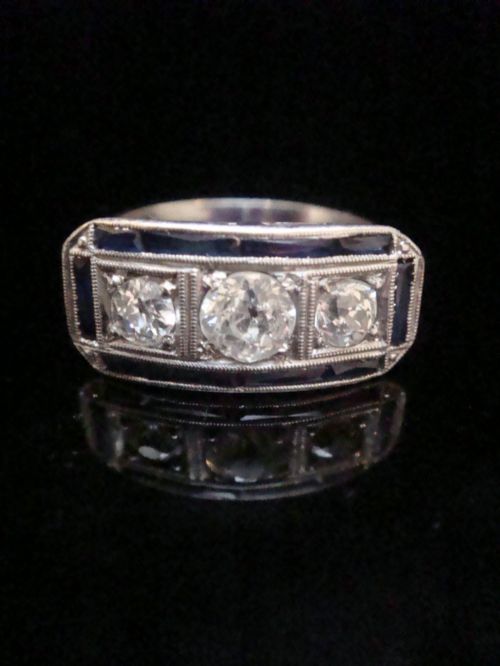


Geometric Sapphire Dress Ring
A geometric sapphire dress ring brings sharp lines and vivid colour together, offering a striking statement for the hand.
Geometric Sapphire Dress Ring
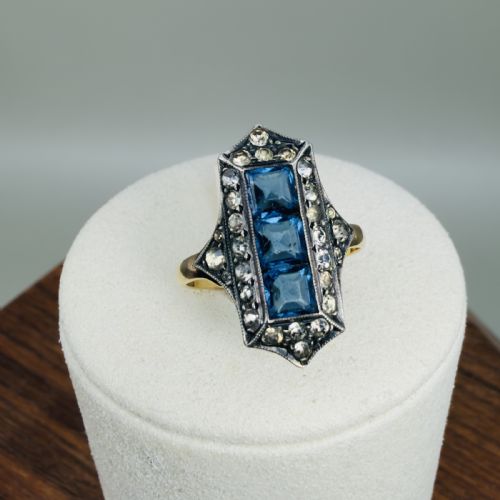
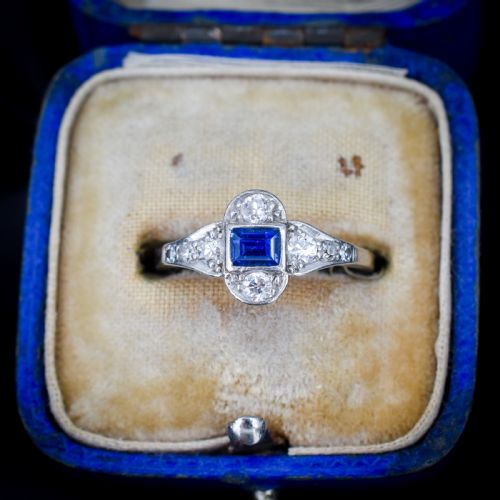
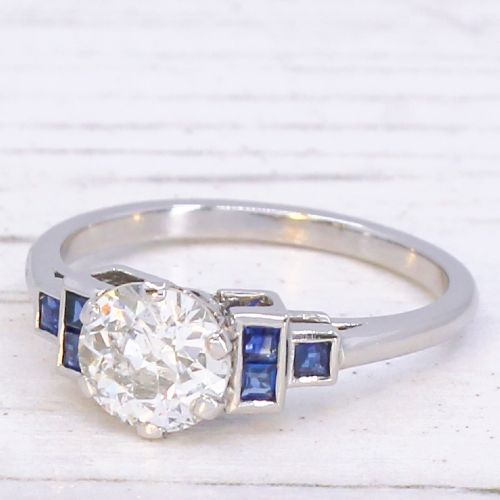
A geometric sapphire dress ring draws the eye with angular designs, straight edges, and contrasting stone arrangements. Most pieces seen here originate from the 1920s and 1930s, capturing the distinct architectural spirit of the Art Deco period.
Buyers encounter cluster, plaque, panel, and chequer forms alongside solitaire configurations. These configurations arrange calibre cut, baguette, and princess stones into crisp squares, rectangles, and multi-tiered shapes.
While the majority belong to the Art Deco era, variations span from the Edwardian period through to later Art Deco Revival examples from the 1960s. The focus remains squarely on precise symmetry and the interplay between deep blue sapphires and sparkling diamonds.
Materials and construction
Platinum serves as the premier metal for mounting these stones, prized for its strength in holding intricate, low-profile geometric settings. Jewellers also utilised 18ct white gold, yellow gold, and occasionally rose gold or silver combinations to frame the gems.
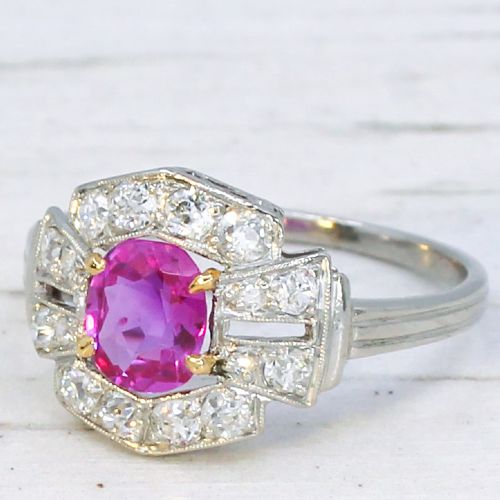
Stones are meticulously shaped to fit precise channels and bezels, featuring calibre, baguette, and princess cuts alongside traditional old cut and transitional cut diamonds. Natural blue sapphires and pink sapphires take centre stage, often accented by white paste or diamonds.
Periods represented span from the Edwardian era through the 1920s and 1930s, up to 1960s revival pieces.
Assessing quality in design and stones
The precision of the stone cutting dictates the sharpness of the overall pattern. Finer examples display tightly fitted calibre or baguette sapphires with minimal gaps, maintaining unbroken geometric lines across the face.
The origin and saturation of the sapphire influence distinction, particularly when untreated Burmese stones or uniform deep blue gems are present. Superior metalwork matches this stone quality with crisp millgraining, secure prong placement, and balanced proportions in platinum or gold.
The Geometric Sapphire Dress Ring Glossary
- Calibre cut
- Stones shaped specifically to fit a tight geometric setting without shared prongs. This technique creates continuous blocks of colour.
- Plaque ring
- A ring featuring a flat, wide face covered in detailed stone settings. It often displays intricate openwork and geometric patterns.
- Transition cut
- A diamond cut used between the old European cut and the modern brilliant cut. It retains a small table and deep pavilion typical of earlier periods.
- Millgraining
- A decorative border of tiny raised metal beads along the edge of a setting. It adds a refined finish characteristic of period jewellery.
Geometric Sapphire Dress Ring: Frequently Asked Questions
How do I care for a vintage sapphire ring?
Sapphres and diamonds possess high hardness, making them suitable for regular wear with sensible precautions. Remove the ring during heavy manual tasks to protect the precious metal setting.
Clean the piece gently using warm water, mild washing liquid, and a soft brush to remove everyday debris from beneath the stones. Avoid harsh chemical dips, particularly if the piece combines gold and silver or contains paste elements.
What defines an Art Deco ring?
Art Deco jewellery relies on strong architectural lines, symmetrical patterns, and high-contrast colour pairings. The style moves away from organic curves towards squares, rectangles, and chequerboard motifs.
In these rings, platinum frames calibre cut sapphires alongside diamonds to create flat, low-profile cluster or panel designs that sit close to the finger.
Are these rings suitable for daily wear?
These pieces function well as daily dress rings provided they receive proper care. Platinum and 18ct gold offer durable foundations for regular use.
Periodic inspection by a jeweller ensures that the tiny settings holding the calibre cut sapphires and diamonds remain secure and undamaged.
How can I tell the period?
Dating relies on a combination of metal choices, cutting styles, and overall design geometry. Edwardian pieces often lean towards delicate white gold and platinum lacework, whereas 1920s and 1930s examples embrace bold, unyielding symmetry.
Later 1960s revival pieces replicate these motifs using contemporary casting methods and distinct gold tones.