




Geometric Sapphire Cluster Ring
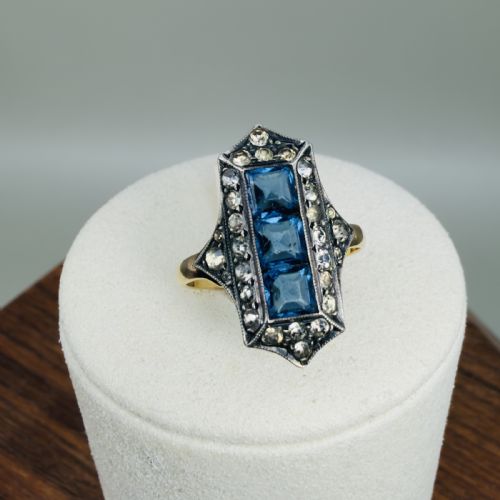
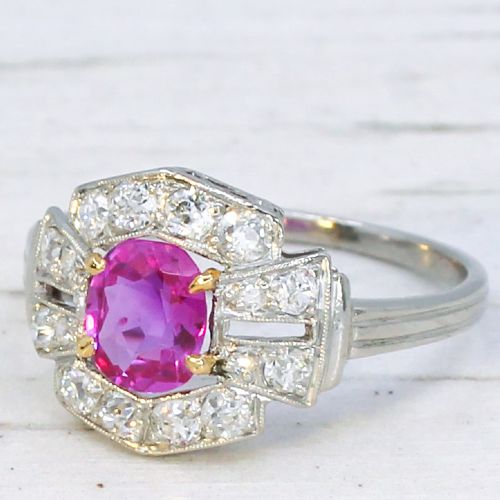
A geometric sapphire cluster ring delivers sharp architectural lines and intense blue colour that command attention on the hand.
Geometric Sapphire Cluster Ring
A geometric sapphire cluster ring brings together angular gemstone arrangements and contrasting diamond borders to create a striking architectural silhouette. When you search for a geometric sapphire cluster ring, you encounter pieces dominated by the Art Deco style, alongside later revivals from the mid-twentieth century.
The most common examples on this page date from the 1920s and 1930s, featuring calibrated or baguette-cut stones set in platinum or white gold. These creations rely on strict symmetry, squares, rectangles, and target motifs rather than flowing organic curves.
Makers of these rings utilised contrasting colour blocks, pairing deep blue sapphires with brilliant white diamonds or paste stones. French workshops contributed significantly to this aesthetic, producing elongated plaque and panel designs that sit flat against the finger.
Materials and construction methods
Platinum and 18ct white gold provide the primary structural foundation for these cluster arrangements, offering the necessary strength to hold intricate stone configurations securely. Yellow and rose gold also appear, sometimes combined with platinum tops to brighten the diamond settings.
Gems receive specialised shaping, including calibre cuts and baguettes, allowing stones to fit tightly together without visible gaps. Master jewellers set diamonds alongside sapphires using meticulous channel, bezel, and millegrain techniques that define the sharp geometric edges.
Several rings conceal tiny geometric galleries beneath their stone clusters, built so precisely that only the wearer ever sees the hidden metalwork.
Assessing quality in cluster rings
The precision of the stone cutting dictates the visual clarity of the geometric pattern, where uniform alignment separates superior examples from simpler work. Stones shaped specifically to fit complex channels demonstrate a higher level of workshop skill than standard commercial cuts.
Metalwork refinement distinguishes the finer pieces, particularly the crispness of millegrain edges and the seamless integration of platinum settings over gold shanks. The saturation and natural origin of the sapphire, combined with the matching quality of the surrounding diamonds, anchor the upper tier of these jewels.
The Geometric Sapphire Cluster Ring Glossary
- Calibre cut
- Gemstones specifically shaped to fit tight, geometric patterns in jewellery mounts. This technique requires exceptional skill from the lapidary.
- Plaque ring
- A flat, wide ring top resembling a small panel or plaque, typical of Art Deco design. These pieces often feature intricate openwork and pave settings.
- Target ring
- A concentric cluster design with a central stone surrounded by contrasting rings of gems. The layout resembles a shooting target.
- Paste
- Faceted lead glass used as a gemstone simulant in antique jewellery. It offers high brilliance and specific colour properties.
- Old cut diamond
- A precursor to the modern brilliant cut, characterised by a smaller table, higher crown, and open culet. These stones display a softer candlelit sparkle.
Geometric Sapphire Cluster Ring: Frequently Asked Questions
What is a geometric sapphire cluster ring?
A geometric sapphire cluster ring is an item of jewellery featuring sapphires and diamonds arranged in strict, angular shapes like squares, rectangles, or concentric circles. These pieces draw heavily on Art Deco design principles.
The style prioritises architectural lines, symmetry, and strong colour contrast over organic floral motifs. Platinum and white gold frequently serve as the foundational metals for these arrangements.
How do I date a geometric cluster ring?
Dating relies on examining the metal combinations, stone cuts, and overall manufacturing techniques used in the mounting. Pieces from the 1920s and 1930s often utilise platinum paired with calibre-cut stones and millegrain decoration.
Later mid-century examples from the 1960s may show different casting methods or heavier gold proportions. Comparing the diamond faceting style, such as old cuts versus modern brilliants, also helps confirm the period.
Are these rings suitable for everyday wear?
These rings can be worn regularly provided they receive appropriate care and periodic checks by a jeweller. Platinum and 18ct gold offer good durability for daily use.
Because many settings feature intricate geometric channels and delicate millegrain work, harsh impacts should be avoided. Removing the ring during heavy manual tasks protects the smaller accent stones.
What distinguishes Art Deco sapphire rings?
Art Deco sapphire rings stand out through their use of sharp symmetry, abstract motifs, and contrasting monochrome metals. Jewellers embraced platinum to create strong, lightweight settings that maximised light transmission.
The incorporation of calibre-cut sapphires tailored to fit precise geometric channels marks a distinct departure from earlier Victorian and Edwardian organic styles.