


Geometric Ring
A geometric ring brings linear symmetry and sharp angles to the hand, drawing on decades of design from Edwardian workshops to mid-century studios.
Geometric Ring
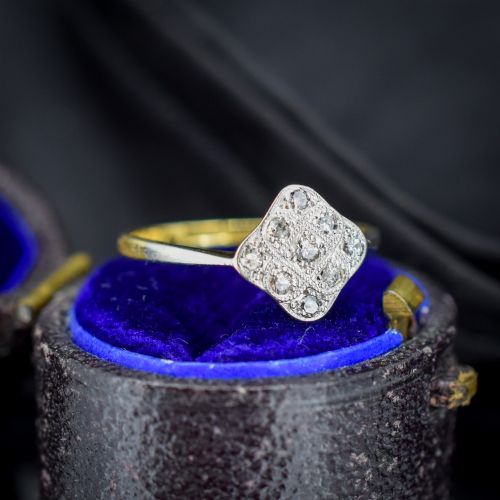
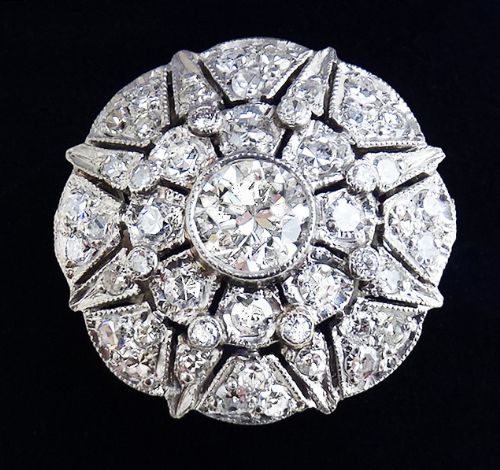
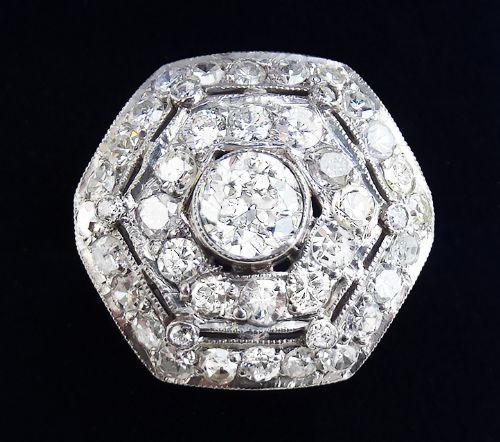
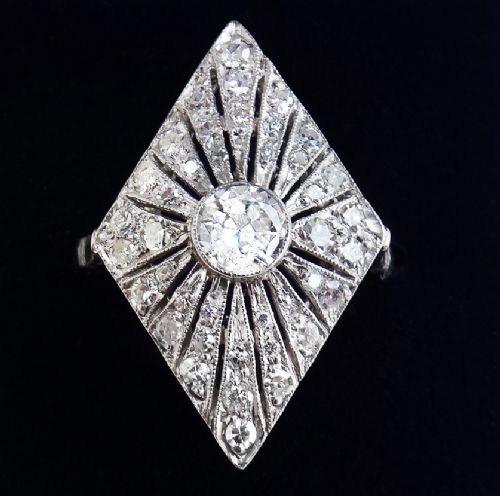
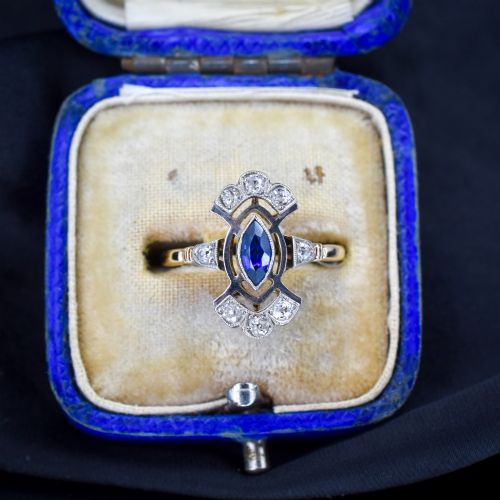
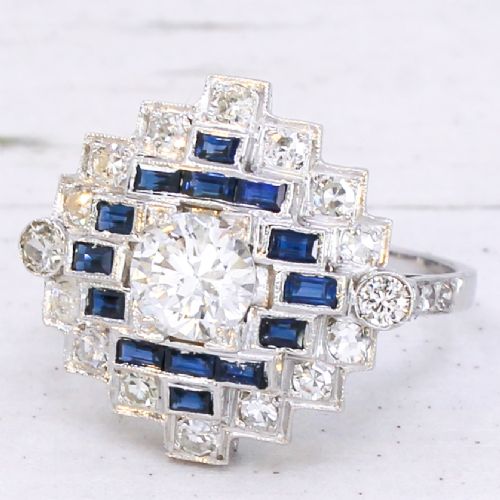
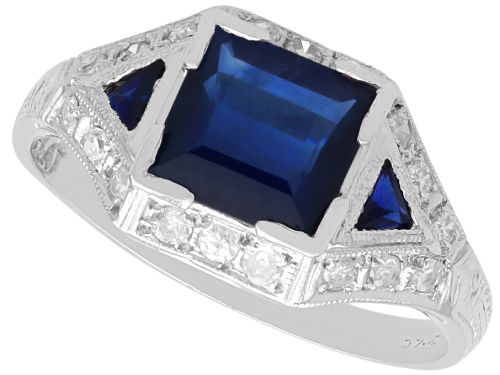
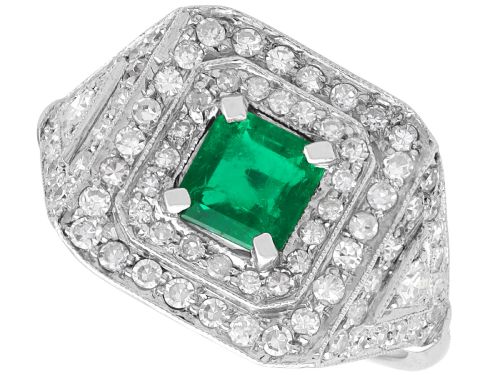
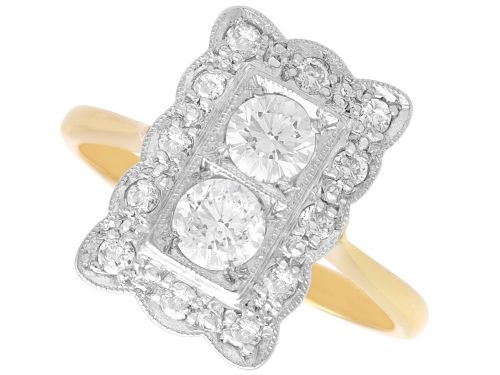
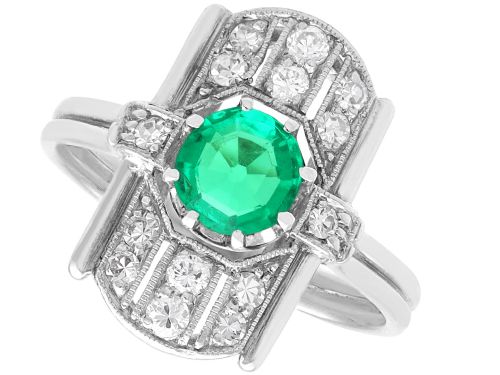
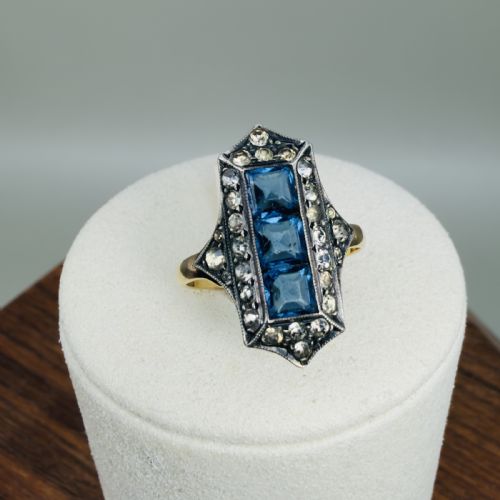
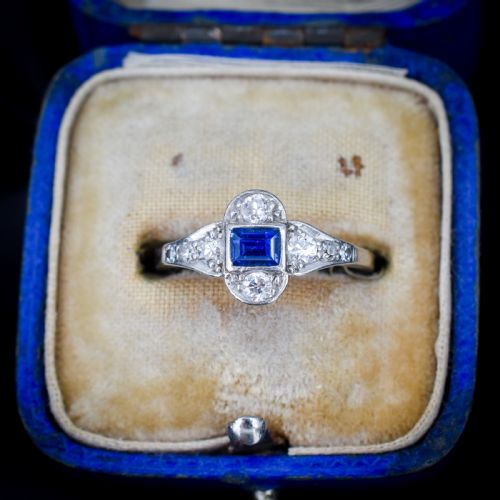
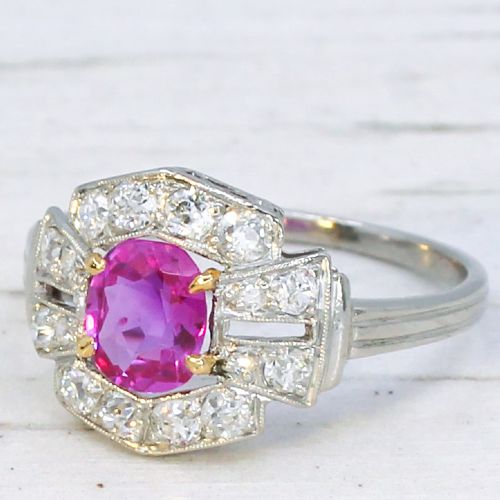
A geometric ring most commonly appears as an Art Deco cluster or navette piece, featuring angular arrangements of diamonds alongside calibré cut sapphires and emeralds. These designs rely on precise squares, rectangles, and triangles rather than organic curves.
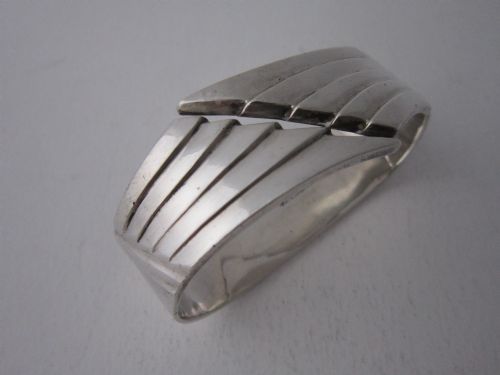
Beyond finger jewellery, the selection encompasses sterling silver napkin rings stamped with hallmarks from the 1930s and 1940s, maintaining clean architectural lines on the dining table. Dress rings and engagement rings dominate the jewellery selection, spanning platinum and various carats of gold.
How They Were Made
Metalworkers utilised platinum and 18ct white gold to construct crisp, rigid settings that could hold stones tightly without heavy prongs. Calibré cut gemstones were precisely shaped to fit flush into channel or invisible settings, creating unbroken bands of colour.
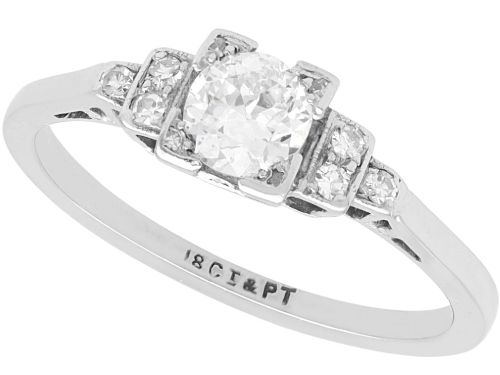
Silversmiths employed stamping and casting techniques to produce rigid napkin rings, often adding engine-turned patterns or minimalist borders. Solitaire and cluster rings combined old cut diamonds with precious metal bases forged by hand or die-struck for durability.
Geometric Ring Retail Price Guide 2026
Typical asking prices for geometric ring among the pieces listed under this phrase on Sellingantiques today, from the lower quarter to the upper quarter. They describe what is for sale here now, not the wider market.
Some dining tables have hosted silver napkin rings for nearly a century while others guarded fingers as glittering cocktail rings.
What Varies in Quality
The precision of the stone cutting dictates the overall standard of a piece, particularly when calibré gems must meet at exact ninety-degree angles. Hand-finished platinum work demonstrates finer claw definition and crisper edges than mass-produced alternatives.
The purity and weight of the mounting metal also influence the piece, with heavy platinum or high-carat gold settings providing structural integrity that lighter alloys lack. Original maker stamps and clear hallmarking add historical reliability to the physical construction.
R. E. Stone·Hermes Paris·Randers Silver
The Geometric Ring Glossary
- Navette
- A boat-shaped stone setting that tapers to sharp points at either end. This form extends visually along the finger.
- Calibré cut
- Gemstones specifically cut and polished to fit a precise geometric channel in a mounting. This technique eliminates gaps between stones.
- Cluster ring
- A central stone surrounded by a tight arrangement of smaller gems. The surrounding stones often form a square or diamond outline.
- Solitaire style
- A mounting holding a single dominant gemstone. This setting emphasises the focal stone without auxiliary side stones.
- White paste
- Glass cut and polished to resemble a diamond. It was frequently utilised in period jewellery to achieve high sparkle at a lower cost.
Geometric Ring: Frequently Asked Questions
What defines a geometric ring?
A geometric ring relies on straight lines, sharp angles, and symmetrical patterns rather than flowing floral motifs. These pieces typically feature square, rectangular, triangular, or star-shaped arrangements.
Such designs dominate Art Deco and mid-century items, distinguishing them from earlier antique periods.
How do I clean an antique ring?
Warm water mixed with mild washing liquid and a soft brush will remove daily grease from platinum and gold settings. Care must be taken with softer stones like opal or emerald.
Harsh chemical dips should be avoided, particularly on items containing enamel or paste stones.
Are these rings suitable for daily wear?
Platinum and high-carat gold mountings provide robust daily wear for most cluster and solitaire rings. Secure bezel and channel settings hold geometric stones firmly in place.
Softer gems or delicate openwork require greater mindfulness to prevent impact damage.
How do I identify an Art Deco piece?
Art Deco pieces display strict symmetry, stepping motifs, and stark colour contrasts between diamonds and sapphires or onyx. Platinum and white gold provide the favoured pale backgrounds for these designs.
Stamps and hallmarks often confirm the 1920s and 1930s manufacturing periods.