


Geometric Plaque Ring
A geometric plaque ring brings flat, architectural symmetry to the hand through fine stones and metalwork.
Geometric Plaque Ring
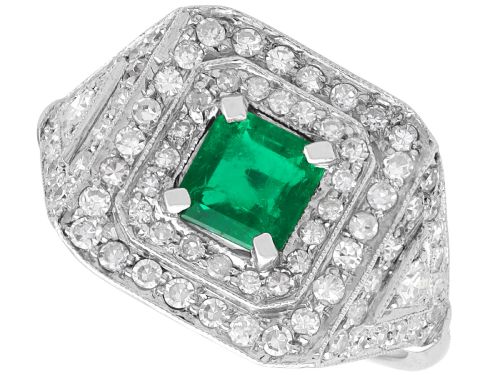
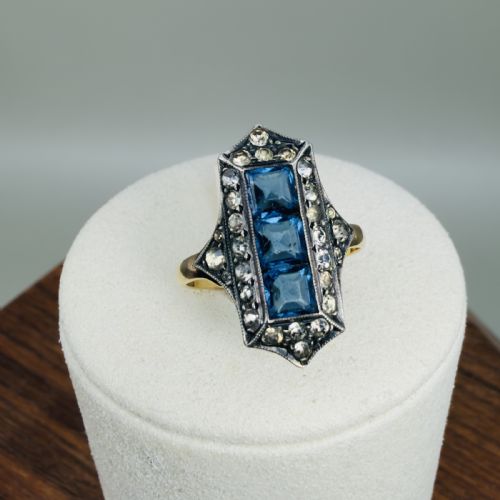
A geometric plaque ring presents a flat, patterned face to the finger, drawing directly from Art Deco and Edwardian design principles. These pieces rely on balanced arrangements of stones to create crisp silhouettes ranging from elongated rectangles to squares and panels.
The versions most commonly met on this page span the 1920s and 1930s, alongside Edwardian examples and later mid-century revivals. They function primarily as dress rings and cocktail rings, designed to sit prominently on the hand with low-profile settings.
Makers shaped these faces using structured clusters, chequer patterns, and border alignments rather than raised mountings. The visual weight rests entirely in the geometric interplay of the central plate.
Materials and Construction
Platinum serves as the backbone for the finest geometric plaque rings, often paired with 18ct gold, 18ct white gold, or yellow gold bases. This dense metal allowed workshops to pierce intricate openwork galleries and secure small stones in micro-pavé or millegrain tracks without adding bulk.
Gems were selected strictly for their geometric utility, combining old cut diamonds with calibrated sapphires, rubies, and contrasting onyx panels. Stones were cut specifically to fill tight channel settings and strict linear borders within the plaque.
Several rings include secret geometric under-galleries designed to catch the light from below the finger.
Distinctions in Quality
The caliber of a geometric plaque ring depends upon the precision of its metal piercing and the uniformity of its stone calibration. Superior examples show meticulous symmetry in the openwork and tight, flush stone settings that leave virtually no open metal gaps.
Finishing details define the upper tier, particularly the presence of crisp millegrain beadwork along platinum edges and clean contrast between stones like onyx and diamond. Lesser pieces show irregular stone spacing and softer, less defined linear boundaries.
The Geometric Plaque Ring Glossary
- Plaque ring
- A ring featuring a flat, ornamental panel that spreads across the finger. This face is typically covered in pavé-set diamonds and gemstones.
- Old cut diamond
- A diamond cut with a small table, high crown, and open culet, common in antique pieces. These stones produce a softer, candlelit sparkle compared to modern brilliant cuts.
- Millegrain
- A decorative technique involving a line of tiny, raised metal beads along the edge of a setting. It adds a refined texture typical of Edwardian and Art Deco work.
- Chequer ring
- A ring design where coloured stones and diamonds alternate in a grid pattern. This layout creates a distinct checkerboard visual effect across the plaque.
Geometric Plaque Ring: Frequently Asked Questions
How do I wear a geometric plaque ring daily?
These rings sit flat against the hand, making them practical for regular wear despite their wide faces. Pairing them with plain wedding bands prevents friction against the delicate millegrain edges.
Store them separately in soft compartments to protect the flat plaque surface from scratching adjacent jewellery.
What periods do these rings come from?
The pieces span the Edwardian era through the Art Deco period of the 1920s, 1930s, and 1940s, with occasional mid-century revivals. Art Deco examples dominate the selection with strong linear motifs.
Edwardian pieces tend towards lighter platinum work with delicate floral and geometric lace patterns, while 1920s and 1930s plaques embrace bold contrast.
How are sapphires and rubies used in these designs?
Coloured stones serve as contrasting borders, central focal points, or chequerboard segments alongside diamonds. Calibrated sapphires and rubies were cut straight to fit exact channel boundaries within the plaque.
Onyx is similarly employed to create sharp black-and-white graphic contrasts against the platinum metal.
What is an elongated plaque ring?
An elongated plaque ring stretches vertically along the length of the finger rather than sitting horizontally across the knuckle. This specific proportion was designed to slenderise the hand.
They often incorporate multiple diamond clusters and calibré-cut gems within their length.