

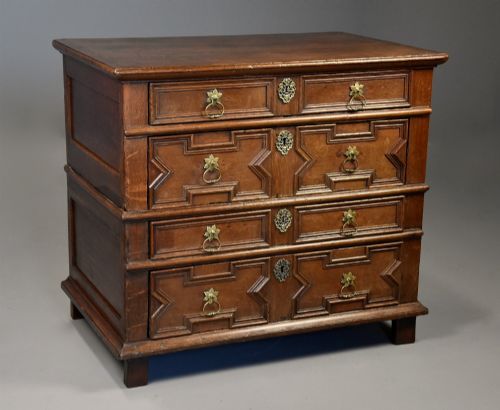
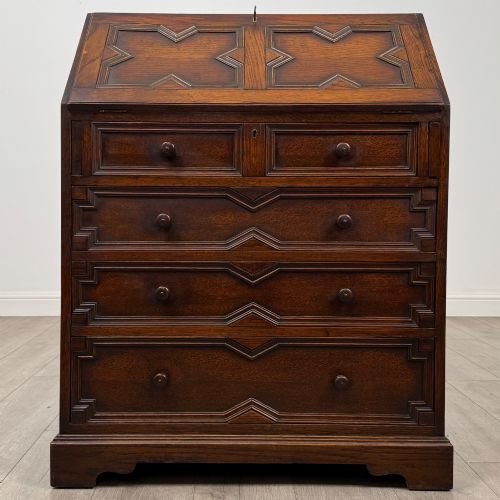
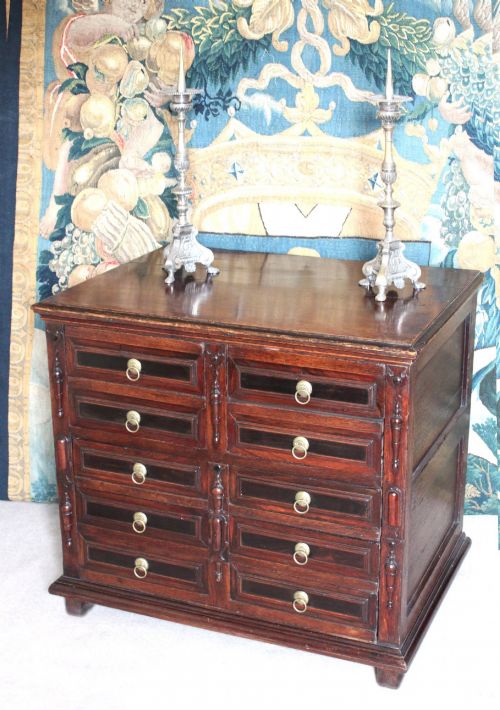
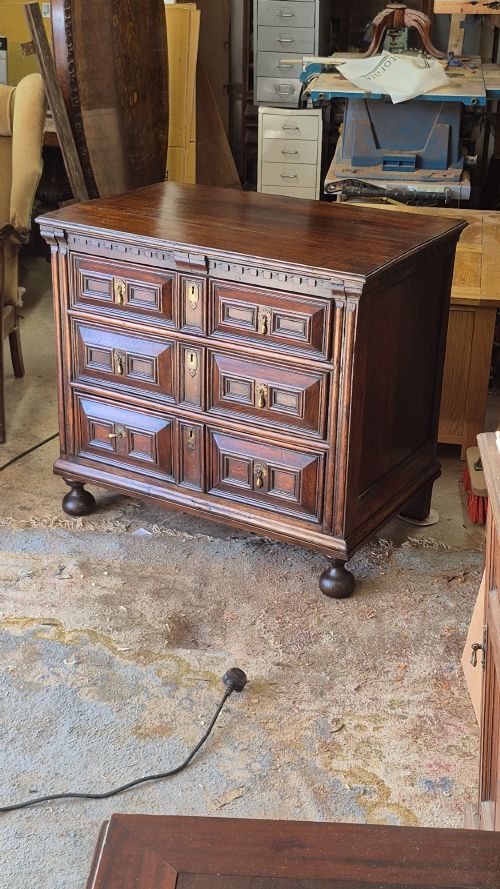
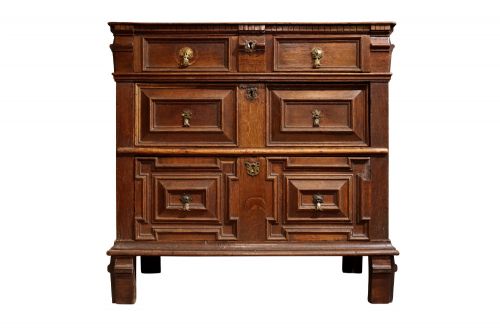


Geometric Front Chest
A geometric front chest combines architectural panel work with practical storage, offering structured decoration that anchors a period room.
Geometric Front Chest
A geometric front chest provides substantial drawer storage framed by applied mouldings or marquetry patterns. These pieces emerge primarily from the seventeenth and eighteenth centuries, alongside later revival interpretations.
The format spans several distinct forms including standard chests of drawers, small cabinets, secretaire desks, and writing bureaux. Oak and walnut form the primary foundations for these robust storage items.
Seventeenth-century examples often display moulded front panels, whilst later pieces incorporate intricate marquetry or decorative fruitwood and snakewood inlay. Buyers frequently encounter oak versions dating from the seventeenth century alongside Edwardian revivals.
Materials and construction
Makers utilised solid oak and walnut as structural timbers, shaping applied geometric mouldings to create depth across drawer fronts. Detailed marquetry employs contrasting fruitwood, snakewood, and various wood inlays to build complex visual patterns.
Carpenters constructed these units using traditional joinery methods suited to heavy timbers, attaching moulded panels directly onto drawer faces and carcase fronts. Painted wood and brass hardware appear on specific nineteenth-century iterations.
Geometric Front Chest Retail Price Guide 2026
Typical asking prices for geometric front chest among the pieces listed under this phrase on Sellingantiques today, from the lower quarter to the upper quarter. They describe what is for sale here now, not the wider market.
Snakewood makes occasional appearances on these chests, bringing a distinctly serpentine grain pattern to seventeenth-century decoration.
Distinctions in quality
Quality rests upon the precision of the applied geometric mouldings and the complexity of the wood inlay or marquetry work. Sharp definition in the moulded panels and careful alignment of timber grain elevate certain examples above simpler constructions.
Original surface patination, such as faded finishes on seventeenth-century oak, significantly influences desirability compared to altered or heavily restored surfaces. The integrity of the original brass handles and fitted interior compartments also distinguishes finer pieces.
The Geometric Front Chest Glossary
- Geometric front
- A style of cabinetwork featuring applied mouldings or inlay arranged in repeating angular patterns across drawer fronts. This technique creates a strong architectural relief.
- Marquetry
- Decorative veneer work arranged in pictorial or geometric patterns using various coloured woods. Craftsmen cut contrasting timbers to fit tightly together within a designated surface area.
- Moulded front
- A furniture facade decorated with shaped strips of wood projecting from the flat surface. These profiles define panels and frame drawer fronts in seventeenth-century pieces.
- Secretaire
- A cabinet or bureau containing a pull-down writing flap and internal small drawers. This form combines storage capacity with a dedicated writing surface.
Geometric Front Chest: Frequently Asked Questions
How do I date a geometric front chest?
Dating relies heavily on timber choice, construction methods, and the specific style of the applied mouldings. Seventeenth-century pieces typically feature solid oak with hand-cut joinery, whilst later revivals show nineteenth- or twentieth-century characteristics.
Examining the drawer linings and backboards reveals construction traits unique to different eras. Stuart and Charles II examples display distinct moulding profiles that differ from later Georgian or Edwardian interpretations.
Where should I place a geometric front chest?
These robust pieces suit hallways, living rooms, or bedrooms where their structured fronts can function as a visual focal point. Their substantial presence requires adequate floor space away from direct heat sources.
Pairing them with plain walls allows the architectural mouldings and wood grain to stand out. Ensure the room's humidity remains stable to protect aged timber and veneer work.
What is the difference between a bureau and a chest?
A chest of drawers provides horizontal storage accessed purely through pull-out drawers stacked vertically. A bureau incorporates an angled or drop-front writing desk above or alongside storage drawers.
Bureaux include fitted internal compartments for correspondence and stationery. Both forms may utilise geometric front decoration on their exterior surfaces.
How do I care for antique oak furniture?
Maintain stable indoor humidity levels and keep wooden surfaces away from direct sunlight and radiators. Regular dusting with a soft, dry cloth preserves the finish without building up residue.
Avoid synthetic polishes and instead use traditional beeswax sparingly if the timber appears dry. Gentle maintenance protects the aged patina built up over centuries.