



Geometric Drawer Fronts
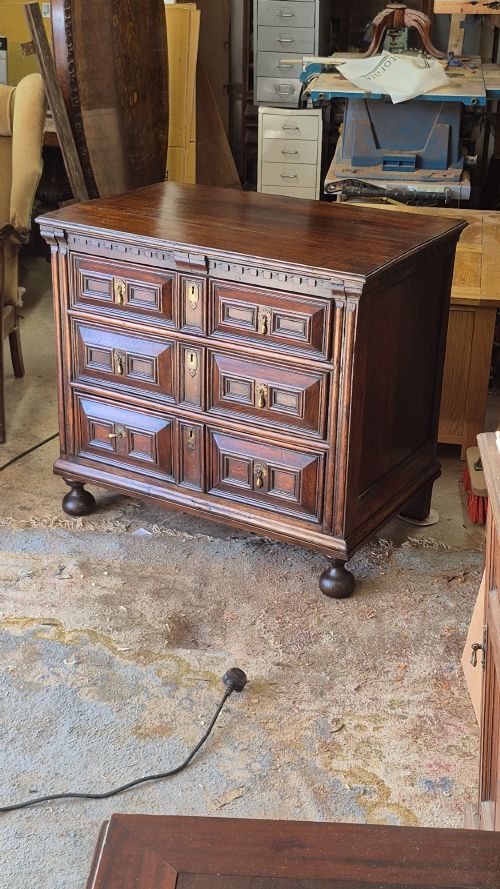
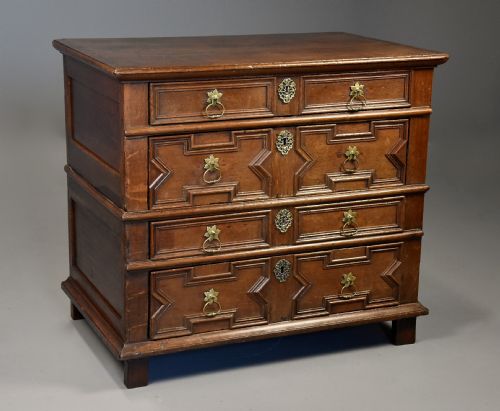
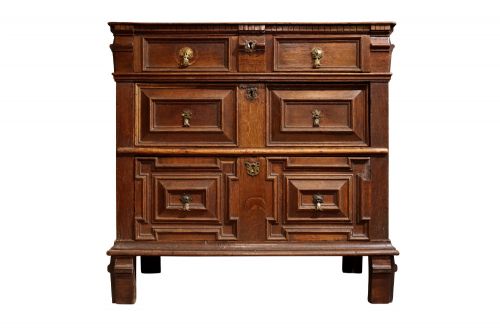
Geometric drawer fronts are tactile timber masterpieces of applied moulding and marquetry, offering layered architectural depth to period storage.
Geometric Drawer Fronts
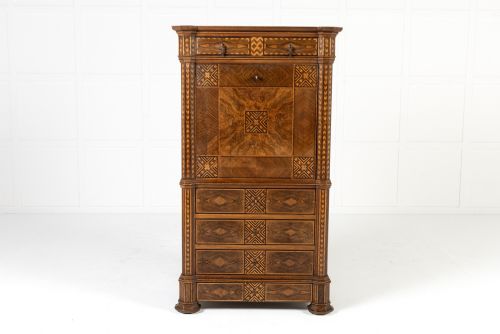
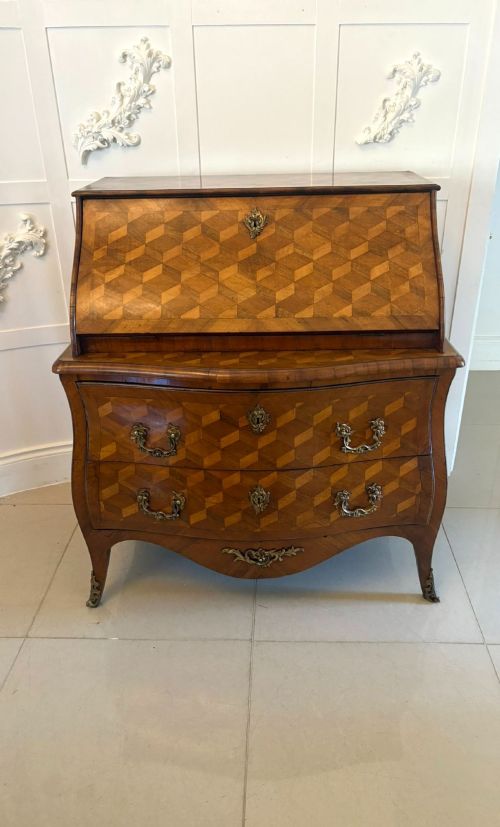
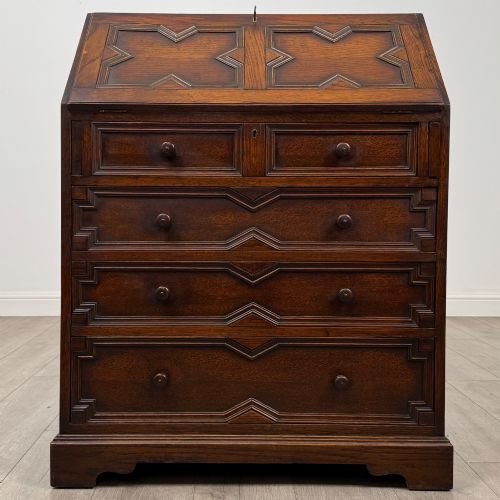
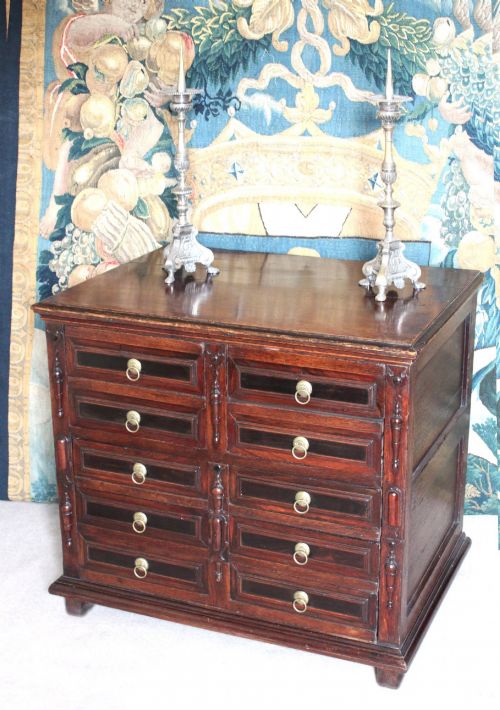
Geometric drawer fronts display striking rectilinear patterns formed by applied mouldings or intricate wood inlays across chests of drawers, bureaux, and servers. Buyers searching for geometric drawer fronts will frequently encounter robust seventeenth-century oak examples featuring moulded panels, alongside lighter eighteenth-century walnut marquetry and nineteenth-century Italian pieces.
The core inventory centres heavily on seventeenth-century English oak chests finished with geometric mouldings, accompanied by revival writing desks from the early twentieth century. These furnishings transform utilitarian storage into sculptural focal points through disciplined repetition and grid-like symmetry.
Materials and construction methods
Craftsmen predominantly worked in native oak for seventeenth-century pieces, applying intricate mitred mouldings directly onto drawer faces to create raised geometric panels. Walnut, fruitwood, and snakewood appeared as contrasting inlays and parquetry veneers on later eighteenth and nineteenth-century bureau and cabinet fronts.
Moulded elements required precise hand-planing and close-fitting joints, whilst marquetry versions relied on delicate timber slicing and gluing over a solid wood carcass. Brass drop handles and escutcheons were then fitted to complement the busy surface geometry without obscuring the pattern.
Geometric Drawer Fronts Retail Price Guide 2026
Typical asking prices for geometric drawer fronts among the pieces listed under this phrase on Sellingantiques today, from the lower quarter to the upper quarter. They describe what is for sale here now, not the wider market.
Makers hid their joinery skill so well in these grid patterns that dusting them thoroughly requires the patience of a watchmaker.
Distinctions in execution and finish
Quality rests in the crispness of the mitred joints and the complexity of the applied timber patterns across the drawer faces. Finer examples display harmonious grain selection in woods like walnut and snakewood, maintaining structural integrity alongside a mellow, untouched surface patina.
Weaker pieces suffer from clumsy timber replacement, poorly aligned geometric grids, or unsympathetic modern stripping that strips the wood of its historic depth and warmth.
The Geometric Drawer Fronts Glossary
- Parquetry
- Geometric wood mosaic work used for floors and cabinet doors or drawer fronts. It employs contrasting timbers to create repeating angular motifs.
- Marquetry
- Elaborate veneer patterns applied to a furniture structure using different coloured woods, metals, or shells to form pictorial or geometric designs.
- Moulded front
- A cabinet face featuring projecting or recessed strips of timber shaped with contours, frequently arranged in geometric grids on seventeenth-century oak chests.
- Bombe
- A swelling, convex outward curve found on the lower parts of cabinets and bureaus, common in eighteenth-century continental furniture design.
Geometric Drawer Fronts: Frequently Asked Questions
What periods do these pieces date from?
The selection spans primarily from the seventeenth century through to the early twentieth century, including revival pieces.
Seventeenth-century examples rely on heavy oak mouldings, whereas later items incorporate walnut, parquetry, and painted finishes.
How were these drawers constructed?
Cabinetmakers applied small, precisely cut lengths of timber in geometric patterns directly onto the solid drawer faces.
More elaborate iterations utilised fine veneers and fruitwood inlays to achieve complex parquetry designs across curved surfaces.
Where do these items fit in a room?
These chests of drawers and bureaux serve well as primary storage in bedrooms or as statement side tables in hallways.
Their highly textured facades provide a strong focal point against neutral walls, contrasting well with plain modern furnishings.
How do I care for historic timber surfaces?
Keep these items away from direct sunlight and sudden temperature changes to prevent the timber veneers and mouldings from cracking.
Apply traditional beeswax occasionally to nourish the dry wood and maintain the natural patina built up over centuries.